


Antidepressant Side Effect Comparison Tool
Find Your Alternative
Select your current antidepressant to see alternatives with lower sexual side effect risk.
More than a third of people taking antidepressants experience sexual side effects. For many, this isn't just a small inconvenience-it can strain relationships and make depression feel even harder to manage. The good news? There are proven ways to address these issues. SSRIs (selective serotonin reuptake inhibitors) are a common class of antidepressants. They work by increasing serotonin levels in the brain, which stabilizes mood but can also inhibit dopamine and norepinephrine pathways needed for sexual function. This interference happens because serotonin affects how the brain processes sexual signals. Think of it like a traffic jam: too much serotonin blocks the messages that tell your body to respond sexually.
Why Antidepressants Cause Sexual Side Effects
When antidepressants boost serotonin, they help lift depression. But serotonin also controls other brain functions. It suppresses dopamine (which drives desire) and norepinephrine (which helps with arousal). This is why men often report decreased desire (64%), erectile problems (58%), and delayed ejaculation (53%). Women frequently experience reduced lubrication (52%), anorgasmia (49%), and lower desire (61%), based on data from 25 clinical trials analyzed by the American Academy of Family Physicians in 2004. Crucially, these issues aren't always from the depression itself. About 35-50% of people with untreated depression already have sexual difficulties, but antidepressants can make them worse or create new ones.
How Different Antidepressants Compare
| Antidepressant Type | Example Medications | Risk Level | Key Notes |
|---|---|---|---|
| SSRIs | Paroxetine (Paxil) | High | Most likely to cause sexual side effects; number needed to harm (NNH) of 2-4 for orgasmic dysfunction |
| SSRIs | Sertraline (Zoloft) | Moderate | Commonly prescribed; NNH of 3-5 for sexual dysfunction |
| SNRIs | Venlafaxine (Effexor XR) | Moderate | Similar risk to SSRIs; may cause more nausea and insomnia |
| Atypical | Bupropion (Wellbutrin) | Low | 4 times less likely to cause sexual issues than SSRIs; often used as a switch option |
| Atypical | Mirtazapine (Remeron) | Low | May improve sleep but can cause weight gain; less sexual side effects than SSRIs |
Not all antidepressants carry the same risk. Paroxetine (Paxil) has the highest risk among SSRIs. Studies show for every 2-4 people taking paroxetine, one will experience sexual side effects that wouldn't happen otherwise. In contrast, bupropion (Wellbutrin) has much lower risk. A 2004 review found it caused fewer sexual issues than sertraline or fluoxetine in head-to-head trials. The difference is clear: when switching from paroxetine to bupropion, 68% of patients saw improvement in sexual function. Cost is another factor-generic bupropion XL 150mg costs about $15.72 per month, while brand-name Zoloft runs $57.84.
Solutions That Work
For men with erectile problems, adding sildenafil (Viagra) can help. Studies show 65-70% of men on SSRIs improved with sildenafil, compared to only 25% on placebo. Women with anorgasmia may benefit from adding bupropion at 150mg daily. A 2019 study found 58% of women saw improvement. Another option is cyproheptadine (4mg nightly), which helped 52% of women with SSRI-induced anorgasmia in a 2021 study.
Adjusting your dose might also work. Reducing the antidepressant dose by 20-30% helps 20-30% of patients, but this must be done carefully to avoid worsening depression. Some doctors suggest short "drug holidays"-taking a break from medication for a day or two-but this isn't safe for everyone. Short-acting SSRIs like paroxetine (half-life 21 hours) can cause severe withdrawal symptoms if stopped suddenly. Always work with your doctor on these changes.

What to Discuss with Your Doctor
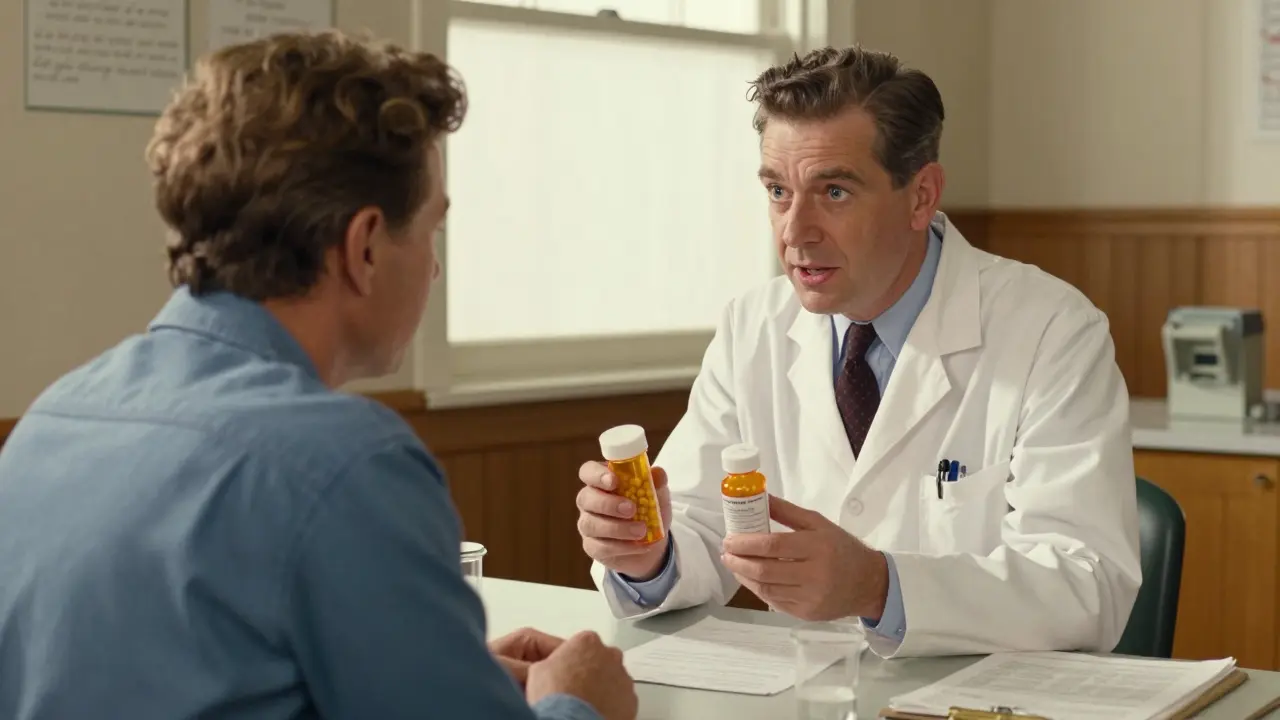
When starting antidepressants, ask about sexual side effects upfront. Doctors often don't bring it up unless you do. The American Psychiatric Association recommends using a simple screening tool called the Arizona Sexual Experience Scale (ASEX), which detects dysfunction with 89% accuracy. This tool asks questions like "How often do you have sexual thoughts?" and "How satisfied are you with your sexual activity?"
Be specific about your symptoms. Instead of saying "I'm having issues," say "I'm having trouble getting an erection" or "I don't feel desire anymore." This helps your doctor choose the best solution. If you're considering switching medications, discuss cross-tapering-gradually reducing the old drug while adding the new one-to avoid withdrawal symptoms. For example, switching from paroxetine requires careful timing to prevent dizziness, nausea, or "brain zaps."
Frequently Asked Questions
Do sexual side effects go away on their own?
Usually not. Only 18% of patients report improvement after six months without intervention, according to Drugs.com reviews. Most cases require active management, such as switching medications or adding treatments. Don't wait-talk to your doctor early.
Is bupropion a safe alternative?
Yes, for many people. Bupropion (Wellbutrin) has significantly lower rates of sexual side effects compared to SSRIs. A 2004 study found it caused less dysfunction than sertraline or fluoxetine in head-to-head trials. However, it may not work for everyone-about 15-20% of people don't respond well when switching antidepressants. Your doctor can help determine if it's right for you.
Can I take a break from my antidepressant to avoid side effects?
Only under medical supervision. "Drug holidays"-temporarily stopping medication-can work for some, but they carry risks like relapse or withdrawal. Short-acting SSRIs like paroxetine (half-life 21 hours) can cause severe withdrawal symptoms if stopped suddenly. Always consult your doctor before making any changes.
What if I'm taking multiple antidepressants?
Combining antidepressants requires careful planning. For example, adding bupropion to an SSRI can reduce sexual side effects while maintaining antidepressant effects. However, some combinations increase risks like seizures. Your doctor will monitor you closely if you're on multiple medications. The STAR*D trial showed 15-20% of patients experience therapeutic failure when switching antidepressants, so personalized treatment is key.
Are there new treatments on the horizon?
Yes. Researchers are developing newer antidepressants with fewer sexual side effects. For example, esketamine (Spravato) has minimal sexual side effects (3.2% incidence in trials) but is expensive and requires clinic visits. A drug called SEP-227162 is in Phase II trials and showed 87% lower sexual side effects than sertraline in early data. These options may become available in the next few years.


lance black
6 February 2026Bupropion saved my sex life.
Jenna Elliott
7 February 2026Paxil destroyed my sex life. No one tells you this.
Pamela Power
8 February 2026The pharmaceutical industry is pushing dangerous SSRIs. They don't care about your libido. Just take the pills and deal.
Cole Streeper
8 February 2026Big Pharma knows about these side effects but hides them. It's all about the money.
Katharine Meiler
8 February 2026Bupropion's pharmacokinetics avoid serotonin reuptake inhibition, preserving dopaminergic pathways critical for sexual function. Clinical data shows 68% improvement when switching from paroxetine.
one hamzah
10 February 2026Hey! Switched to Wellbutrin! 😊 No more issues! 🌈 Hope this helps others! 🌟
Elliot Alejo
11 February 2026I've been on sertraline for years. Switching to bupropion helped a lot. My doctor recommended it and it's been great.
Sam Salameh
12 February 2026As an American, we need better options. Bupropion is cheaper and works better. USA!
Dina Santorelli
12 February 2026I've been on these meds for years. Sexual side effects ruined my relationships. No one cares. Just another pill to make you feel worse.
Thorben Westerhuys
13 February 2026I'm so frustrated! The sexual side effects from my antidepressant are awful! I can't even function! My doctor doesn't listen! This is terrible! I need help!
Danielle Vila
13 February 2026This whole thing is a scam. The FDA approved these drugs knowing about the side effects. They're in cahoots with Big Pharma. You should read the FDA documents yourself.
Laissa Peixoto
14 February 2026When dealing with sexual side effects from antidepressants, it's crucial to understand that these issues are often treatable and not permanent. Many people assume they have to live with these side effects, but that's not the case. For instance, switching to bupropion can significantly reduce sexual dysfunction while maintaining antidepressant efficacy. Additionally, adding medications like sildenafil or cyproheptadine can help specific issues. It's also important to communicate openly with your healthcare provider. They might not bring up the topic, so you need to initiate the conversation. Using tools like the Arizona Sexual Experience Scale can help quantify the problem. Remember, depression itself can cause sexual difficulties, so it's not always the medication. A comprehensive approach involving therapy, lifestyle changes, and medication adjustments is often the best path. Each person's situation is unique, so personalized treatment is key. Don't be afraid to seek a second opinion. Mental health and sexual health are interconnected; addressing one can improve the other. It's okay to ask for help. You're not alone in this struggle. There are effective solutions available. It's important to advocate for yourself and work with your doctor to find the best solution. Don't give up hope; there are many options to explore. Taking control of your treatment plan is a vital step towards recovery.