
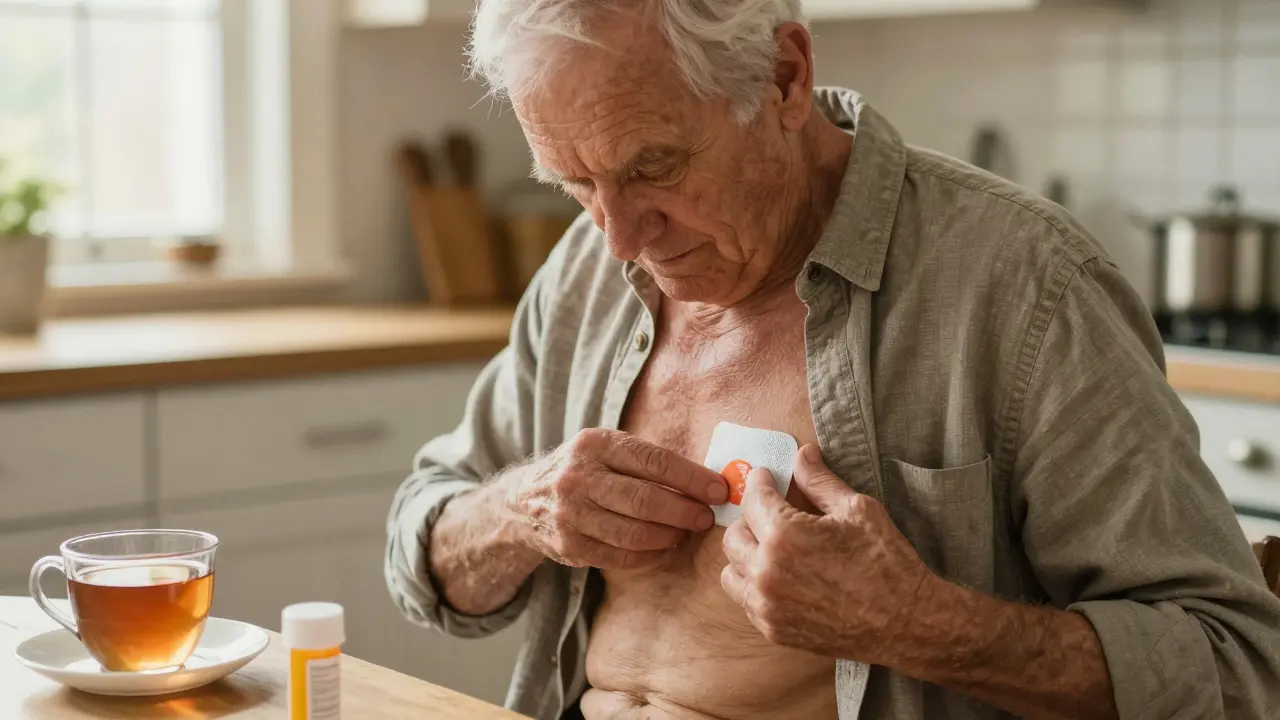

When you have a sore knee, aching shoulder, or nerve pain from shingles, swallowing a pill isn’t always the best option. Oral painkillers can upset your stomach, strain your liver, or interact with other meds-especially if you’re older or taking multiple drugs. That’s where topical analgesics come in. These aren’t just soothing creams you rub on for a quick fix. They’re precise, science-backed treatments that deliver pain relief right where you need it-with almost no effect on the rest of your body.
How Topical Analgesics Work (And Why They’re Different)
Think of your skin as a barrier, not just a surface. Topical analgesics like lidocaine, capsaicin, and NSAID gels don’t just sit on top of your skin. They get absorbed just deep enough to target the nerves and tissues causing pain, without entering your bloodstream in significant amounts. This is why they’re so safe for people who can’t take oral NSAIDs or opioids.
Each type works in a completely different way:
- Lidocaine blocks the electrical signals in your nerves. It’s like flipping a switch that stops pain messages from reaching your brain.
- Capsaicin starts by burning-yes, really. It tricks your nerves into thinking they’re overheated, then exhausts them so they can’t send pain signals anymore.
- NSAID gels (like diclofenac) work where the pain is. They stop your body from making prostaglandins, the chemicals that cause inflammation and swelling right at the joint or muscle.
Unlike oral pills that circulate everywhere, these stay mostly local. Studies using microdialysis show NSAID gels reach tissue concentrations 10 to 100 times higher than in your blood. That means more pain relief where it’s needed, and far fewer side effects.
Lidocaine Patches: The Nerve Blocker
If you have nerve pain-like postherpetic neuralgia from shingles, or a pinched nerve in your back-lidocaine patches are often the first line of defense. The most common version is the 5% lidocaine patch (Lidoderm®), which you wear for 12 hours, then remove for 12 hours. You can use up to three patches a day, but never more.
Here’s what the numbers say: In clinical trials, the number needed to treat (NNT) for lidocaine patches to reduce nerve pain by half is about 6.7. That means for every 7 people who use it, roughly one gets major relief. Not perfect, but when you consider that oral meds like tricyclic antidepressants have an NNT of 3.6 but come with drowsiness, dry mouth, and heart risks, lidocaine looks better.
It’s not flashy. You won’t feel anything special when you put it on. No burning, no cooling. Just quiet relief. The downside? It doesn’t work for deep joint pain. It only reaches about 5-10 millimeters under the skin-so it’s great for a tender spot on your shin or a patch of nerve pain on your ribs, but not for hip or shoulder joint pain.
Side effects are rare. About 5-15% of users get mild redness or itching where the patch was applied. That’s it. No dizziness. No liver stress. No risk of addiction.
Capsaicin: The Burn That Stops the Pain
Capsaicin comes from chili peppers. Yes, the same thing that makes your eyes water when you eat spicy food. But in high doses-like the 8% patch (Qutenza®)-it becomes a powerful painkiller.
Here’s how it works: When you apply it, your nerves go haywire. They flood with calcium and sodium, sending a burning signal to your brain. It’s intense. Most people rate it as a 7 or 8 out of 10 in discomfort. But after 30 to 60 minutes, the nerves get tired. They stop sending pain messages for weeks.
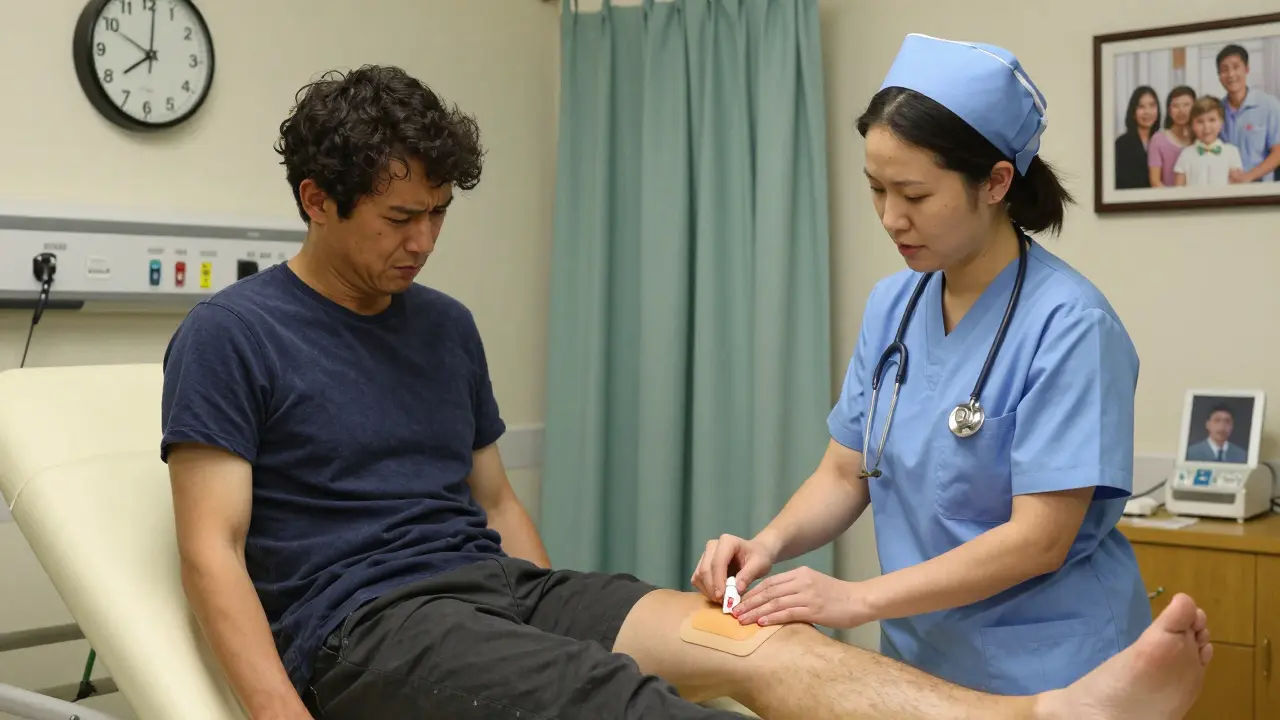
That’s why Qutenza® isn’t sold over the counter. It requires a trained professional to apply it-usually in a clinic. They’ll numb the area first, then put the patch on for exactly 30 minutes. After that, you might feel numbness or tingling for hours, but the pain fades. For postherpetic neuralgia, studies show an NNT of 4.4. That’s better than many oral nerve meds.
Real users report mixed experiences. One Reddit user wrote: “It reduced my PHN pain from 8/10 to 3/10 for 8 weeks. But the application? Excruciating.” That’s the trade-off. You pay a short-term burn for long-term relief.
It’s not for everyone. If you have sensitive skin, open wounds, or are allergic to peppers, skip it. And never, ever get it near your eyes, mouth, or genitals. Even a tiny amount can cause serious irritation.

NSAID Gels: The Anti-Inflammatory Workhorse
For arthritis, sprains, or muscle strains, NSAID gels like Voltaren (diclofenac 1%) are the most studied and widely used. You apply them 4 times a day-about a 2- to 4-inch ribbon each time-massaging gently into the skin.
They work best on shallow joints. A 2023 study found that for knee osteoarthritis, 60% of users had at least 50% pain reduction in 4 weeks. For hips? Only 20%. That’s because the gel can’t reach deep enough.
Compared to oral NSAIDs, the safety profile is dramatically better. Oral NSAIDs cause stomach ulcers in about 1.5% of users per year. Topical versions? Less than 0.03%. No kidney strain. No liver overload. Even people with mild heart conditions can often use them safely-though the FDA does require a warning label about cardiovascular risk, even for topical forms.
But here’s the catch: You have to use them right. A survey of 250 chronic pain patients found 60% applied too little. Others didn’t massage it in. Some applied it to broken skin. All of that cuts effectiveness. It also takes time. Most people don’t feel relief until 45 minutes after application, and it lasts about 6 hours.
One user on Drugs.com wrote: “It takes forever to sink in, and it’s messy. But no stomach pain. Worth it.” That’s the story for most people who stick with it.
What’s Missing? Menthol and New Frontiers
You’ll find menthol in a lot of OTC pain creams. It doesn’t fight inflammation. Instead, it activates TRPM8 receptors-the same ones that make you feel cold when you lick a mint. That cooling sensation tricks your brain into thinking the pain is less intense. It’s a distraction, not a cure. But for some, it’s enough.
Researchers are already looking beyond these three. One new drug, resiniferatoxin (RTX), is 1,000 times stronger than capsaicin. Early trials show it can permanently silence pain nerves in arthritic joints. But right now, it can’t get through the skin well enough. Scientists are testing nanoemulsions-tiny oil droplets that carry diclofenac deeper into tissue. One 2023 trial showed 2.3 times more drug reaching the joint compared to regular gel.
The future of pain relief isn’t about stronger pills. It’s about smarter delivery. Targeted. Local. Safe.
Who Should Use These? Who Should Avoid Them?
Topical analgesics shine for:
- Elderly patients with osteoarthritis (42% of Medicare users rely on them)
- People on multiple medications (no drug interactions)
- Those with stomach ulcers, liver disease, or kidney problems
- People avoiding opioids or NSAIDs due to side effects
They’re less helpful for:
- Deep joint pain (hips, shoulders)
- Widespread pain (fibromyalgia, full-body neuropathy)
- People with broken, irritated, or infected skin
Capsaicin isn’t for anyone who can’t tolerate burning. Lidocaine won’t help if the pain is below the skin’s surface. NSAID gels need consistent use-skip doses, and you lose the effect.
Real-World Tips for Better Results
- Wash and dry your skin before applying. Oily or sweaty skin blocks absorption.
- For gels, use the full recommended amount. A pea-sized blob won’t cut it. Use a 2- to 4-inch ribbon.
- Massage gently for 1-2 minutes. Don’t rub hard-it can irritate skin.
- Wait 30 minutes before covering with clothing or bandages.
- Don’t use more than the maximum daily dose. More isn’t better-it’s riskier.
- Keep track of what works. Some people respond better to one type than others.
And if you’re unsure? Talk to your pharmacist. They see these drugs every day. They’ll tell you which one fits your pain, your skin, and your life.
The Bigger Picture: Why This Matters Now
The global market for topical analgesics hit $5.2 billion in 2022 and is expected to hit $8.7 billion by 2028. Why? Because we’re moving away from pills. The opioid crisis forced doctors to find safer options. Aging populations need long-term pain control without harming organs. And patients? They want relief without the side effects.
Topical analgesics aren’t magic. But they’re smart. They’re targeted. And for millions of people with localized pain, they’re the best option they’ve ever had.
Can I use lidocaine patches and capsaicin together?
Yes, but not on the same area at the same time. Lidocaine patches are meant for nerve pain, while capsaicin is for inflammatory or localized pain. Using them on different spots is fine. Never apply capsaicin right after removing a lidocaine patch-the skin may be sensitive. Always wait at least 24 hours between using different topical pain treatments on the same area.
Do topical NSAIDs work as well as oral ones?
For shallow pain-like knee or hand osteoarthritis-yes. Studies show topical NSAIDs work nearly as well as oral ones, with a number needed to treat (NNT) of 2.7 for acute pain. But for deep pain, like hip arthritis or lower back pain, oral NSAIDs still win. Topical versions only penetrate about 5-10 mm into the skin, so they’re not meant for internal joint inflammation.
Why does capsaicin burn so much, and is it dangerous?
Capsaicin triggers TRPV1 receptors, which are the same ones that sense heat. Your brain interprets the signal as burning-even though there’s no actual damage. It’s uncomfortable, but not dangerous. The burning peaks in 30-60 minutes and fades as nerves become desensitized. Never apply it to broken skin or near eyes. If you accidentally get it on sensitive areas, wash with milk or oil (not water)-it helps dissolve the capsaicin.
How long does it take for NSAID gel to work?
Most people feel relief within 45 minutes to an hour, but full effects take 2-4 days of consistent use. Unlike lidocaine or capsaicin, NSAID gels need time to build up in the tissue. Skipping doses or using too little means you won’t get the benefit. Stick to the 4-times-daily schedule, even if you don’t feel pain right away.
Are OTC topical pain creams the same as prescription ones?
Not always. OTC creams often have lower concentrations-like 1% diclofenac or 1% capsaicin-which are milder. Prescription versions like 8% capsaicin (Qutenza®) or 5% lidocaine patches contain enough active ingredient to change how nerves behave. OTC gels are good for mild pain. Prescription ones are for moderate to severe, long-lasting pain. Always check the label for the active ingredient percentage.


APRIL HARRINGTON
9 March 2026I tried lidocaine patches for my shingles pain and honestly? Life changer. No more night sweats from the burning. Just quiet. No drowsiness. No stomach issues. I wore two patches for 12 hours, slept like a baby. The only thing? My skin got a little red where it stuck. But that’s nothing compared to the 8/10 pain I had before. I’m not even gonna go back to pills. Ever.
Leon Hallal
10 March 2026Capsaicin is a scam. You burn for an hour and then nothing. I wasted $80 on that patch. My knee still hurts. Just take the pill. Your liver will be fine.
Judith Manzano
12 March 2026I love how this post breaks down each option. I’ve been using diclofenac gel for my knee arthritis and it’s been great. I didn’t realize how important the massage was though. I was just smearing it on. Now I rub it in for a full minute and the relief lasts longer. Also, washing the area first? Huge difference. I wish more people knew these little tricks.
rafeq khlo
12 March 2026This is a classic example of pharmaceutical marketing masquerading as science. Topical analgesics are not superior. They are merely a way for companies to extend patent life and charge premium prices for diluted versions of drugs that work better orally. The FDA approves these because they are easier to regulate than systemic drugs. Do not be fooled. Your body needs systemic treatment. Localized relief is an illusion.
Morgan Dodgen
13 March 2026Lidocaine patches? Cute. But have you seen the nanoemulsion trials? Diclofenac delivered via lipid nanoparticles? 2.3x deeper penetration? That’s the future. The stuff in stores now is 1990s tech. They’re still using the same formulas from the 80s. Meanwhile, Big Pharma is quietly developing transdermal iontophoresis patches that bypass the stratum corneum entirely. You’re being sold yesterday’s solution while the real breakthroughs are in Phase 3. Stay woke.
Philip Mattawashish
14 March 2026You people are so naive. You think this is about pain relief? No. This is about control. Topical creams are easier to monitor. Less side effects means less ER visits. Less ER visits means less data on adverse reactions. Less data means the FDA doesn’t have to act. And who benefits? The insurance companies. They don’t want you getting better. They want you on a maintenance plan. You’re not being helped. You’re being managed.
Tom Sanders
15 March 2026I used the capsaicin patch. Burned like hell. Felt nothing after. Wasted my time. Just take ibuprofen. It’s cheaper. I don’t need to pay $100 for a 30-minute torture session.
Jazminn Jones
15 March 2026The assertion that topical NSAIDs are ‘dramatically safer’ is statistically misleading. The 0.03% ulcer rate is based on short-term use. Long-term use, particularly in elderly patients with comorbidities, still carries significant systemic absorption. The 2023 meta-analysis in The Lancet Rheumatology demonstrated elevated plasma diclofenac levels in 22% of patients using gel daily for over six months. This is not a safe alternative. It is a deceptive one.
Stephen Rudd
15 March 2026You’re all missing the point. These topicals work because they’re placebos with a chemical twist. The real relief comes from the ritual. Washing the skin. Massaging. Waiting. It gives you control. That’s why people say it works. Not because of the drug. Because they believe. Science doesn’t explain why some people feel better and others don’t. Belief does. You’re treating symptoms, not the fear of pain.
Erica Santos
16 March 2026Oh wow. So we’re celebrating a 5% lidocaine patch like it’s a miracle? Meanwhile, the WHO recommends transcutaneous electrical nerve stimulation (TENS) as first-line for neuropathic pain and it’s 1/10th the cost. But no, let’s all buy $15 patches because it feels like we’re doing something ‘advanced’. How very 2024 of us.
George Vou
18 March 2026I read somewhere that capsaicin patches are made by the same people who make hot sauce. I dont trust it. Also i heard the government is using the data from these patches to track where people have pain. like for surveillance. i dont know if its true but i dont use them anymore. just saying.