

Fluoroquinolone Tendon Rupture Risk Calculator
Your Personalized Risk Assessment
Your Risk Score
Every year, millions of people take fluoroquinolone antibiotics like ciprofloxacin and levofloxacin for urinary infections, pneumonia, or sinusitis. These drugs work fast, and for many, they’re a lifesaver. But behind the relief from infection lies a quiet, dangerous risk: tendon rupture. It doesn’t happen often-but when it does, it changes lives overnight. And the worst part? You might not see it coming until it’s too late.
What Are Fluoroquinolones, and Why Are They Still Prescribed?
Fluoroquinolones are a class of synthetic antibiotics developed in the 1960s. Today, the most common ones include ciprofloxacin (Cipro), levofloxacin (Levaquin), and moxifloxacin (Avelox). They’re powerful-effective against a wide range of bacteria, including stubborn strains that other antibiotics can’t touch. That’s why they’re still used for serious infections like anthrax, complicated urinary tract infections, and certain types of pneumonia. But their power comes with a price. By the 1990s, doctors started noticing unusual cases of tendon pain and rupture in patients taking these drugs. The link became undeniable. In 2008, the U.S. Food and Drug Administration (FDA) slapped on a black-box warning-the strongest possible alert-for fluoroquinolones. It said clearly: These drugs can cause tendon tears, sometimes without warning.Which Tendons Are Most at Risk?
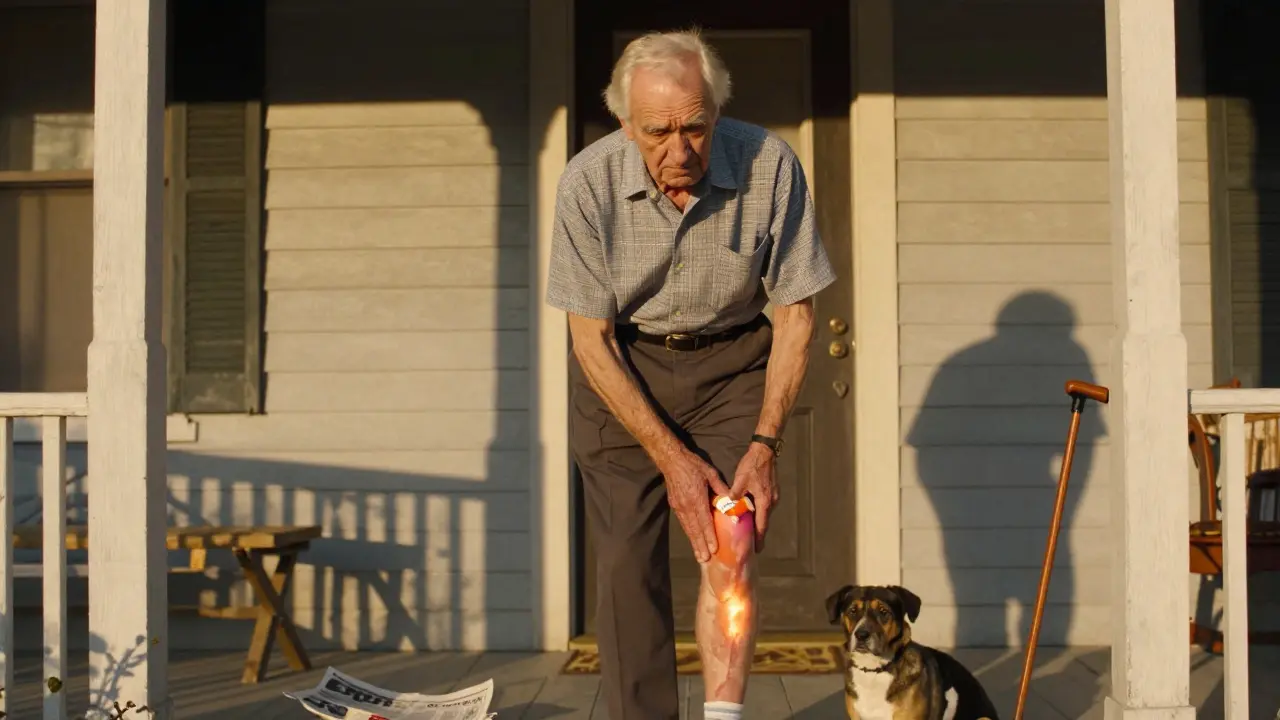
Not all tendons are equally vulnerable. The Achilles tendon, the thick band connecting your calf muscle to your heel, is the most commonly affected. Studies show it accounts for nearly 90% of fluoroquinolone-related tendon injuries. The shoulder, hand, and biceps tendons can also be hit, but far less often. What’s worse? Up to half of all cases involve both tendons at once. So if you feel pain in one Achilles, the other might be in danger too-even if it doesn’t hurt yet.When Does the Damage Happen?
You might think tendon damage only shows up after weeks of taking the drug. But the truth is more urgent. The median time from starting a fluoroquinolone to first symptoms is just six days. Eighty-five percent of cases appear within the first month. And in some rare but documented cases, pain started within two hours of the first pill. Even more alarming: symptoms can show up months after you’ve stopped taking the antibiotic. That means if you had a course of ciprofloxacin three months ago and now feel a sudden twinge in your heel, it could still be related. This delayed onset makes it easy to miss the connection-until you hear a pop and can’t stand on your foot.Who’s Most at Risk?
Not everyone who takes these antibiotics will get tendon damage. But certain people are far more vulnerable:- Age 60 and older: Your tendons naturally weaken with age. Combined with fluoroquinolones, the risk jumps dramatically. People over 80 have a 20-times higher chance of rupture than younger adults.
- On corticosteroids: If you’re taking prednisone or another steroid for arthritis, asthma, or an autoimmune condition, your risk skyrockets. Studies show the chance of rupture increases by up to 46 times when fluoroquinolones and steroids are used together.
- Diabetes or kidney disease: These conditions affect how your body repairs tissue. Fluoroquinolones can interfere with healing even more.
- History of tendon problems: If you’ve had tendinitis or a rupture before, your odds of another one go way up.
- Organ transplant recipients: Immunosuppressants and fluoroquinolones are often used together after transplants, creating a dangerous combo.

Why Do Fluoroquinolones Damage Tendons?
It’s not just one thing-it’s a cascade of biological disruptions. Fluoroquinolones interfere with the normal function of cells in tendons in several ways:- They trigger cell death in tendon tissue, weakening its structure.
- They increase production of toxic chemicals like nitric oxide, which break down collagen-the main protein that gives tendons their strength.
- They disrupt mitochondria, the energy factories in your cells, starving tendon cells of the power they need to repair themselves.
- They bind to magnesium and calcium, minerals needed for proper cell signaling. Without them, tendons can’t respond to stress or heal properly.
The Numbers Don’t Lie
Large studies confirm the danger:- A study of 6.4 million people in the UK found fluoroquinolone users were 4.3 times more likely to develop tendinitis and 2 times more likely to suffer a rupture.
- In Taiwan, researchers tracked over 350,000 patients and found those on fluoroquinolones had more than double the rate of tendon disorders compared to those who didn’t take them.
- According to global drug safety databases, tendon pain and tendinitis rank among the top five most reported side effects of fluoroquinolones-behind only joint pain and general limb discomfort.
What Should You Do If You’re Prescribed a Fluoroquinolone?
Don’t panic. But do ask questions.- Ask if there’s an alternative. For most common infections-like simple UTIs or sinus infections-older, safer antibiotics like amoxicillin or trimethoprim-sulfamethoxazole work just as well.
- Know your risk factors. If you’re over 60, on steroids, or have kidney issues, insist your doctor explain why this drug is necessary.
- Watch for early signs. Pain, swelling, or stiffness in a tendon-especially the Achilles-is not normal. Don’t wait for it to get worse. Stop the medication and call your doctor immediately.
- Never take fluoroquinolones with steroids. This combination is a recipe for disaster. If you need both, your doctor should have a very strong reason-and you should be monitored closely.

What Happens After a Tendon Rupture?
A ruptured Achilles tendon doesn’t just hurt-it can end your ability to walk normally. Many people need surgery. Others require months of physical therapy. Some never fully regain their strength or mobility. Recovery can take six months to a year. And even then, the tendon may never be as strong as it was before. For athletes, manual laborers, or even just active older adults, this can mean the end of a lifestyle they loved.Regulations Have Changed-But Are Doctors Listening?
In 2019, the UK’s drug safety agency (MHRA) restricted fluoroquinolones to only the most serious infections where no other option exists. The European Medicines Agency did the same in 2018. The FDA updated its warnings again in 2018 to emphasize that side effects can be disabling and permanent. Yet, many doctors still prescribe them too freely. Why? Because they’re convenient. They’re broad-spectrum. They’re often covered by insurance. And many prescribers don’t fully appreciate how quickly and severely tendon damage can strike. Patients need to be their own advocates. If your doctor reaches for ciprofloxacin for a mild infection, ask: “Is this really the safest choice?”Final Thoughts: A Drug That Can Save or Break You
Fluoroquinolones aren’t evil drugs. They’ve saved lives in cases of life-threatening infections. But they’re not safe for everyday use. Their risks are real, documented, and severe. And for many people, the danger far outweighs the benefit. If you’re prescribed one, don’t accept it without understanding the stakes. Know your risk. Watch your body. Speak up. A few days of discomfort from an infection is nothing compared to months-or years-of chronic pain and lost mobility. The warning is there. The data is clear. Now it’s up to you to act on it.Can fluoroquinolones cause tendon rupture even after I stop taking them?
Yes. While most tendon issues appear within the first month of use, symptoms-including rupture-can occur weeks or even months after you’ve finished the course. This delayed reaction makes it harder to link the drug to the injury, which is why doctors must warn patients about this risk before prescribing.
Are some fluoroquinolones riskier than others?
Yes. Levofloxacin and ciprofloxacin are the most commonly linked to tendon damage, making up nearly 90% of reported cases. Moxifloxacin carries a lower but still present risk. The exact reason isn’t fully understood, but differences in how these drugs interact with tendon cells may play a role.
Is tendon damage from fluoroquinolones reversible?
Early-stage tendinitis may improve if you stop the drug and rest. But once a tendon ruptures, it rarely heals completely on its own. Surgery and long-term rehab are often needed, and many people are left with permanent weakness or pain. Prevention is far better than treatment.
Why does the Achilles tendon get damaged more than others?
The Achilles tendon bears the most stress during daily movement-it’s constantly under tension when you walk or stand. It also has a relatively poor blood supply, making it slower to heal. Fluoroquinolones further impair healing and weaken collagen, making this already vulnerable tendon the most likely to fail.
What should I do if I feel pain in my tendon while taking a fluoroquinolone?
Stop taking the medication immediately and contact your doctor. Do not wait for the pain to worsen. Rest the affected limb, avoid weight-bearing activities, and get evaluated. Early intervention can prevent a full rupture.
Are there any safe alternatives to fluoroquinolones?
For most common infections-like uncomplicated UTIs, sinus infections, or bronchitis-yes. Antibiotics like amoxicillin, doxycycline, trimethoprim-sulfamethoxazole, or nitrofurantoin are often just as effective and carry far lower risks. Fluoroquinolones should be reserved for life-threatening or drug-resistant infections.
Why do some studies say fluoroquinolones don’t increase tendon rupture risk?
Some studies, like one from Japan in 2022, found no significant link. But these studies often have limitations-small sample sizes, different populations, or methods that don’t capture delayed reactions. The overwhelming majority of large, real-world studies from the U.S., UK, and Taiwan show a clear, significant risk. Regulatory agencies worldwide have acted on this evidence.



jigisha Patel
5 January 2026Fluoroquinolone-induced tendinopathy is a well-documented pharmacokinetic phenomenon rooted in mitochondrial toxicity and collagen dysregulation. The FDA's black-box warning, while overdue, is merely a recognition of data that has been peer-reviewed since the early 2000s. The Achilles tendon’s hypovascularity exacerbates this, as tenocytes cannot regenerate under oxidative stress induced by quinolone chelation of magnesium ions. A 2016 meta-analysis in the British Journal of Clinical Pharmacology confirmed a 3.8-fold increased risk, with age >60 and concurrent steroid use yielding ORs of 19.7 and 46.3 respectively. This isn't anecdotal-it's mechanistic.
Moreover, delayed onset beyond 30 days is not an outlier; it's a feature. The drug's half-life is irrelevant-its epigenetic disruption of collagen synthesis persists. Patients must be counseled that cessation doesn't equate to safety. Monitoring for 6–12 months post-treatment is clinically prudent.
Alternative antibiotics? Yes. First-line for uncomplicated UTIs: nitrofurantoin or fosfomycin. For sinusitis: amoxicillin-clavulanate. Fluoroquinolones belong in the ICU, not the primary care office.
Regulatory inaction elsewhere remains indefensible. The UK’s MHRA restrictions are the bare minimum. We need black-box labeling on all OTC pharmacy displays.
Jason Stafford
5 January 2026They’ve been hiding this for decades. Big Pharma knew. The FDA knew. Your doctor knew. Fluoroquinolones don’t just damage tendons-they sabotage your entire cellular energy system. That’s why people get neurological damage, heart arrhythmias, and chronic pain for years after one course. It’s not a side effect. It’s a chemical weapon disguised as medicine. And they still push it for sinus infections like it’s Advil.
Look at the data-25 million prescriptions a year in the US alone. How many people have been permanently disabled? How many have had their lives stolen because a doctor didn’t care enough to read the warning? This isn’t negligence. It’s corporate murder.
I know someone who ran a marathon after taking cipro. Three days later, both Achilles tendons snapped. She’s in a wheelchair now. And the doctor who prescribed it? Still practicing. Still prescribing.
They don’t want you to know. But now you do. Share this. Fight back.
Justin Lowans
5 January 2026This is one of the most important public health discussions we’re not having. Fluoroquinolones are a classic case of medical convenience overriding patient safety. I’ve seen patients come in with tendon pain after a simple UTI treatment-only to realize they were prescribed cipro because it was quick, cheap, and covered by insurance. No one asked about age, steroid use, or prior tendon history.
The good news? We have better options. Amoxicillin, doxycycline, trimethoprim-sulfamethoxazole-they’re not glamorous, but they’re safe and effective for the vast majority of infections. The real tragedy isn’t the drug itself-it’s the lack of education among prescribers.
Let’s normalize asking: ‘Is there a safer alternative?’ It’s not being difficult. It’s being informed. And if your doctor brushes you off? Get a second opinion. Your tendons will thank you.
Michael Rudge
6 January 2026Oh wow. A 12-page essay on how antibiotics can hurt you. Shocking. I bet you also think water can drown people if you drink too much.
Let me guess-you think every doctor who prescribes cipro is a corporate shill, and every patient who took it and didn’t rupture a tendon is just lucky enough to be part of the 99.9% who didn’t get ‘chemically weaponized.’
Here’s a radical idea: maybe the body can handle a little collateral damage. Maybe not every side effect needs a national panic. Maybe your Achilles tendon isn’t a sacred temple that needs a 2000-word manifesto to protect it.
Also, I’ve taken levofloxacin twice. Still walk. Still run. Still deadlift. Your fear is not my reality.
Ethan Purser
7 January 2026It’s not about the drug. It’s about control.
They give us antibiotics like candy-then when we pay the price, they call it ‘rare.’ But rare doesn’t mean impossible. It means they don’t want to count you.
I remember waking up one morning after a course of cipro and feeling like my heel had been hollowed out. I didn’t cry. I didn’t panic. I just stared at the ceiling and thought-this is what they do to people who trust them.
They want you to believe it’s your fault. That you didn’t read the label. That you should’ve known. But you didn’t sign up for this. No one does.
We’re not patients. We’re test subjects in a system that profits from broken bodies. And the worst part? You’re still reading this because you know it’s true.
They don’t fear the FDA. They fear us talking to each other.
Doreen Pachificus
9 January 2026I took cipro for a UTI last year. Didn’t think twice. Two weeks later, my right Achilles started aching after walks. I figured I was just getting older. Then I read this and realized-I almost ignored the warning signs because I didn’t know it could happen after stopping the drug.
Still no rupture, thank god. But I stopped running. Started stretching. Got an MRI. Nothing torn, but the tendon’s still tender.
So yeah. I’m now the guy who googles every side effect before taking anything. Not because I’m paranoid. Because I’m not stupid anymore.
Cassie Tynan
11 January 2026Oh honey. You think this is about antibiotics? No. This is about how we’ve outsourced our bodies to white coats in white coats who treat us like a spreadsheet.
They don’t care if you walk again. They care if the prescription was filled. If the insurance paid. If the quarterly report looks good.
I used to be a dancer. Now I walk with a limp because some intern thought ‘broad-spectrum’ meant ‘universal solution.’
But here’s the beautiful part: we’re waking up. We’re reading the labels. We’re asking questions. And soon? They won’t be able to sell us poison with a smile and a ‘you’ll be fine.’
They thought we’d forget. We didn’t.
Rory Corrigan
11 January 2026Been there. Done that. Got the scar and the PTSD.
Took cipro for a bad UTI. Three days in-felt a weird pop in my heel. Thought I twisted it. Didn’t think about the meds. Went hiking the next week. Heard another pop. Then silence. Couldn’t stand on my foot.
Surgeon said I was lucky-no full rupture, but the tendon was shredded. 18 months of PT. Still can’t jump. Still get twinges in cold weather.
Now I carry a card in my wallet: ‘Allergic to fluoroquinolones. Do not prescribe.’
And yes. I’ve had doctors roll their eyes. But I don’t care. My body’s not a lab rat.
❤️🩹
Stephen Craig
13 January 2026Fluoroquinolones are a last-resort drug. That’s the rule. If your doctor prescribes it for a sinus infection, ask why. If they say ‘it’s stronger,’ ask for the evidence. Most of the time, they don’t have it.
Simple. No drama. Just ask.
Connor Hale
13 January 2026It’s not black and white. Fluoroquinolones saved my life when I had sepsis from a resistant infection. I’m grateful.
But I also know someone who lost mobility after a UTI. So the answer isn’t to ban them. It’s to use them wisely. Educate patients. Screen for risk. Prescribe alternatives first.
Doctors aren’t villains. They’re overworked. But we can all be better about asking the right questions.
This post? Important. Not fearmongering. Just facts.
Charlotte N
14 January 2026so i took cipro for a bladder infection last year and my heel started hurting after like 5 days and i just thought i was being lazy or something and then i read this and i was like oh wait that’s not normal right? i stopped it and it got better but i never told my doctor and now i’m scared to go back because what if they just give me another one? i mean i’m 32 and healthy and i didn’t think i was at risk but apparently i was? idk i just feel like no one talks about this enough and i’m so glad someone did because now i’m gonna make sure i ask next time but like… what if i need it again? what do i even say? i’m so confused
also i have a cat and she’s asleep on my lap right now and she’s purring and i think she knows i’m stressed
bob bob
14 January 2026I’m a physical therapist. I’ve seen 17 cases of fluoroquinolone-related tendon damage in the last 5 years. All of them were preventable. Most patients had zero warning. They were told it was ‘just a strain.’
Here’s what I tell my clients: if you’re on one of these drugs and feel *any* tendon pain-stop. Rest. Call your doctor. Don’t wait. Don’t ‘see how it goes.’
And if your doctor says ‘it’s probably nothing’? Get a second opinion. Your tendon isn’t just a ‘maybe.’ It’s your body. Protect it.