


When a generic drug hits the shelf, you might assume it’s just a cheaper copy of the brand-name version. But behind that simple label is a complex science designed to make sure it works exactly the same in your body. That’s where bioequivalence testing comes in. It’s not just about matching ingredients-it’s about proving the drug behaves the same way once it’s inside you. And there are two main ways to do that: in vivo and in vitro testing. Knowing when each is used helps explain why some generics are approved quickly while others take years-and why safety isn’t left to chance.
What Bioequivalence Really Means
Bioequivalence isn’t about whether two drugs look the same. It’s about whether they release the same amount of active ingredient at the same rate in your body. The FDA requires that for any generic drug to be approved, its absorption profile must fall within 80% to 125% of the brand-name version. That’s measured using two key numbers: Cmax (how high the drug spikes in your blood) and AUC (how much drug your body is exposed to over time). If both are within that range, the drugs are considered bioequivalent.
But here’s the catch: you can’t always test this by giving the drug to people. Sometimes, it’s safer, faster, and more accurate to test it in a lab. That’s where the split between in vivo and in vitro comes in.
In Vivo Testing: The Human Body as the Lab
In vivo bioequivalence testing means testing the drug inside living humans-usually healthy volunteers. These studies follow strict protocols: a two-period crossover design, where each participant gets both the generic and brand-name drug, separated by a washout period. They fast overnight, then get a single dose. Blood samples are taken every 15 to 30 minutes for up to 48 hours to track how the drug moves through their system.
This method is the gold standard. It captures everything: how stomach acid affects the drug, how food changes absorption, how fast the gut moves, even how individual metabolism varies. It’s why the FDA still requires in vivo studies for drugs with a narrow therapeutic index-like warfarin or levothyroxine-where even a small difference can cause serious side effects or treatment failure.
But it’s expensive. A single in vivo study costs between $500,000 and $1 million. It takes 3 to 6 months from start to finish. You need certified clinical sites, trained staff, ethics board approvals, and electronic data systems that meet FDA’s 21 CFR Part 11 rules. And while it’s ethical and well-regulated, it still involves exposing people to experimental drugs.
In Vitro Testing: The Lab as the Proxy
In vitro bioequivalence testing skips the human body entirely. Instead, scientists test the drug’s physical and chemical properties in controlled lab conditions. Think dissolution testing-how fast the tablet breaks down in simulated stomach fluid-or particle size analysis for inhalers and nasal sprays. These tests measure things like how the drug dissolves at different pH levels, how evenly it’s mixed in the capsule, or how droplets spread in the airway.
These methods are precise. Dissolution tests can have a coefficient of variation under 5%, compared to 10-20% in human studies. They’re faster-results come back in 2 to 4 weeks. And they cost far less: $50,000 to $150,000, not millions.
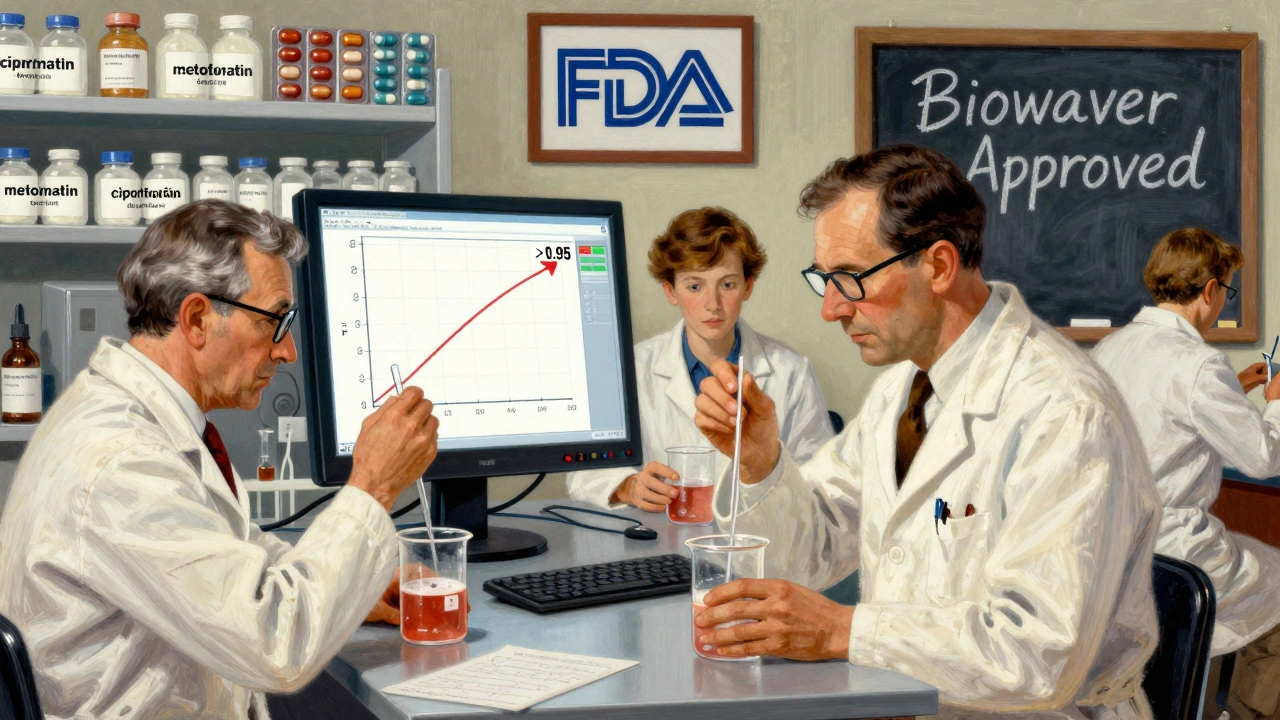
But here’s the key: in vitro tests don’t measure what happens in your body. They measure what happens in a beaker. So they only work when there’s a proven link between lab results and real-world performance. That’s called IVIVC-In Vitro-In Vivo Correlation. When that link is strong (r² > 0.95), regulators trust the lab data as a stand-in for human trials.
When In Vitro Testing Works Best
Not all drugs are created equal. Some are perfect candidates for in vitro testing.
BCS Class I drugs-those that are highly soluble and highly permeable-are the easiest. The FDA granted biowaivers (approval without in vivo testing) for 78% of BCS Class I drugs in 2021. These include common meds like metformin, atenolol, and ciprofloxacin. For these, dissolution testing across pH 1.2 to 6.8 is enough. If the generic dissolves just like the brand in all conditions, it’s assumed to behave the same in the body.
Topical products like creams, gels, or ointments are another big category. Since they’re meant to work on the skin, not in the bloodstream, measuring blood levels makes little sense. Instead, regulators look at how much drug is released from the cream, how evenly it’s spread, and how it penetrates the skin layer. In vitro methods like Franz diffusion cells are standard here.
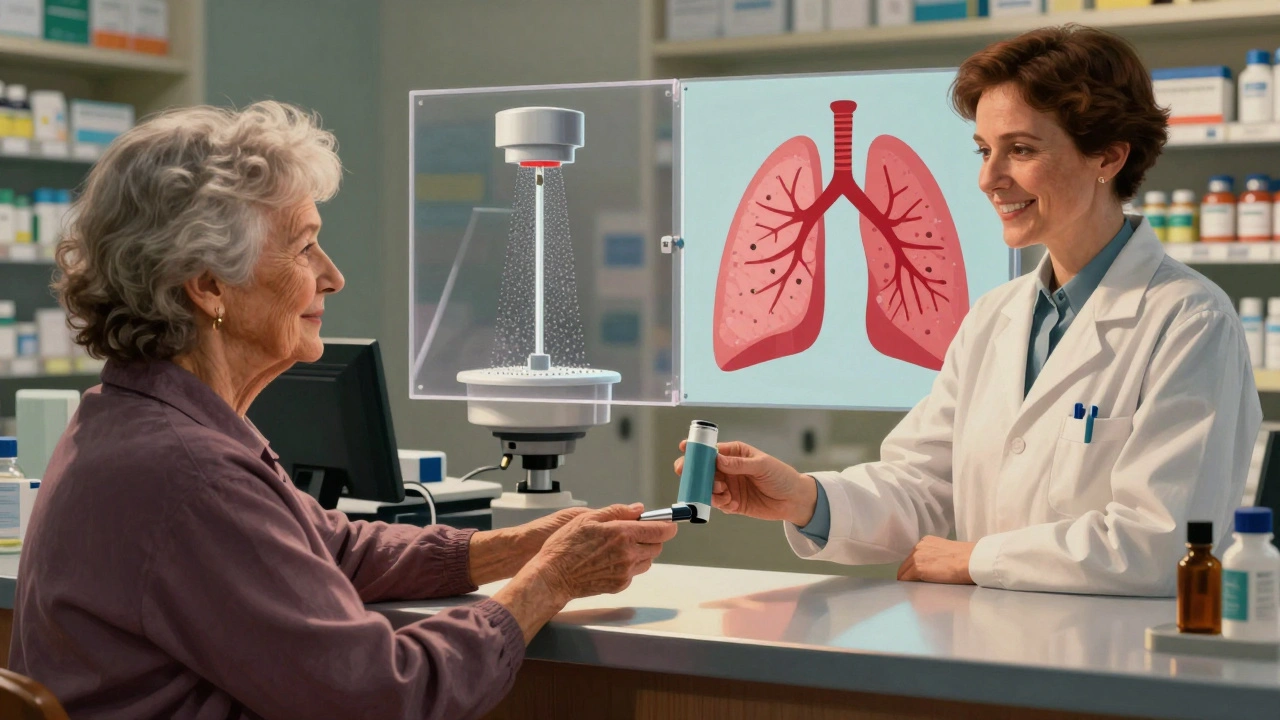
Inhalers and nasal sprays have seen the biggest shift. In 2022, the FDA approved the first generic budesonide nasal spray based solely on in vitro data-no human study needed. How? By using cascade impactors to measure particle size and distribution, and dissolution tests to confirm drug release. These devices are so complex that testing them in people is nearly impossible. Lab tests are the only practical way.
When In Vivo Testing Is Non-Negotiable
Despite advances, in vivo testing still can’t be replaced in many cases.
Narrow therapeutic index drugs require tighter limits-90% to 111.11% instead of 80% to 125%. Even small differences matter. For drugs like digoxin or cyclosporine, the body’s response is too unpredictable to rely on lab models alone.
Drugs with food effects are another example. Some meds absorb much better when taken with food. To prove bioequivalence, you need to test both fasting and fed states. That’s impossible to simulate accurately in a beaker.
Drugs with nonlinear pharmacokinetics behave differently at higher doses. Their absorption isn’t linear, so lab tests can’t predict what happens in the body. You need real human data.
Complex formulations like extended-release tablets or patches often lack strong IVIVC models. Even if dissolution looks good, the drug might release too slowly or unevenly inside the gut. In those cases, regulators still demand human studies.
The Real-World Trade-Offs
Companies aren’t choosing between methods because one is “better.” They’re choosing based on cost, time, and risk.
One Teva scientist saved $1.2 million and eight months by using in vitro testing for a BCS Class I drug. But it took three months just to develop and validate the dissolution method to FDA standards. That’s a trade-off: upfront effort for long-term savings.
On the flip side, a topical antifungal product approved via in vitro testing had to be pulled back for an in vivo study after patients reported reduced effectiveness. The lab test didn’t catch a subtle difference in how the drug penetrated the skin. That post-marketing study cost $850,000 and delayed expansion by 11 months.
For manufacturers, the goal is to use the least invasive, most efficient method that still meets regulatory standards. That’s why 95% of oral solid generics still use in vivo testing-because for those, it’s reliable, well-understood, and rarely challenged. But for inhalers, nasal sprays, and simple soluble drugs? In vitro is becoming the new normal.
What’s Next for Bioequivalence Testing
The future isn’t about choosing one method over the other-it’s about combining them.
The FDA’s 2023 White Paper on Modernizing Bioequivalence envisions a system where in vitro tests, backed by computer modeling (like PBPK models), become the primary tool. These models simulate how a drug moves through the body based on physics, chemistry, and physiology. They’re already being used for some modified-release drugs.
By 2025, the FDA plans to issue two new guidances specifically for in vitro testing of complex products like nasal sprays and transdermal patches. The European Medicines Agency and Japan’s PMDA are moving in the same direction. Regulatory harmonization is making global approval easier.
But the bottom line hasn’t changed: the goal is always patient safety. Whether the test happens in a blood tube or a petri dish, the outcome must be the same-every time.
Why This Matters to You
If you take a generic drug, you’re relying on this science to keep you safe. The fact that in vitro methods are now accepted for inhalers means you’re getting effective, affordable medication faster. The fact that in vivo testing is still required for heart medications means you’re not being exposed to risky shortcuts.
It’s not about cutting corners. It’s about choosing the right tool for the job. And that’s exactly what regulators and manufacturers are learning to do.
Can in vitro testing replace in vivo testing for all generic drugs?
No. In vitro testing works well only for specific drug types-like BCS Class I oral solids, inhalers, and topical products-where there’s a proven link between lab results and how the drug behaves in the body. For drugs with narrow therapeutic indices, food effects, or nonlinear absorption, in vivo testing is still required by the FDA and other regulators.
Why is in vitro testing cheaper than in vivo testing?
In vitro testing avoids the high costs of human studies: no need for clinical sites, volunteer payments, medical staff, or long-term monitoring. A typical in vitro study costs $50,000-$150,000 and takes weeks. In vivo studies cost $500,000-$1 million and take 3-6 months because they involve recruiting volunteers, ethical approvals, blood draws, lab analysis, and data validation.
What is IVIVC and why does it matter?
IVIVC stands for In Vitro-In Vivo Correlation. It’s a mathematical model that shows how lab test results (like dissolution rate) predict how a drug will behave in the human body. If the correlation is strong (r² > 0.95), regulators accept in vitro data as proof of bioequivalence. Without IVIVC, in vitro tests are just physical measurements-they don’t prove the drug works the same inside a person.
Are in vitro methods more accurate than human studies?
Not always. In vitro tests are more precise and consistent because they eliminate human variability. But they don’t capture the full complexity of digestion, blood flow, or metabolism. Human studies are messier but more complete. In vitro methods are better at detecting product differences, but only human studies can prove those differences matter in real life.
How do regulators decide which method to accept?
Regulators like the FDA and EMA look at the drug’s properties: solubility, permeability, dosage form, and intended use. For simple, highly soluble drugs, in vitro testing is preferred. For complex, poorly absorbed, or high-risk drugs, in vivo is mandatory. They also require data showing the in vitro method is validated and reproducible, often through prior studies or published correlations.
What’s the future of bioequivalence testing?
The future is hybrid. In vitro testing, supported by advanced computer modeling (like PBPK), will become the default for most generic drugs. In vivo studies will be reserved for high-risk cases-narrow therapeutic index drugs, complex formulations, or when new data shows a gap in lab predictions. By 2025, the FDA plans to issue new guidances expanding in vitro methods for nasal sprays, inhalers, and transdermal patches.

Ashley Elliott
5 December 2025This was actually really well-explained-I had no idea how much science goes into generics being approved.
I always assumed it was just about matching ingredients, but the whole absorption profile thing? Mind blown.
Also, the part about BCS Class I drugs? I take metformin, and now I feel weirdly proud of my generic.
Heidi Thomas
5 December 2025In vitro is just a cost cut disguised as science and you know it
Dematteo Lasonya
7 December 2025I appreciate how you broke down IVIVC-it’s such a niche concept but so critical. I work in pharma compliance and even I sometimes forget how much math goes into proving a dissolution curve matches human absorption. The r² > 0.95 threshold isn’t arbitrary, it’s a hard-won standard.
Gillian Watson
8 December 2025Fascinating. In the UK we’ve been leaning into this for nasal sprays too-especially since Brexit, we’ve had to get really good at validating in vitro methods without relying on US data. Still, I’d rather have a $1m human trial than a $50k test that misses something subtle like skin penetration differences.
Jordan Wall
8 December 2025PBPK? More like Pseudo-Bullshit Predictive Kool-Aid 😅
Gareth Storer
10 December 2025So let me get this straight-you’re telling me a $50k lab test can replace a $1M human trial... but only if the drug is boring? Meanwhile, my blood pressure med still needs a 6-month study? Sounds like Big Pharma’s favorite game: ‘make it complicated when it benefits us’.
Pavan Kankala
11 December 2025They’re lying. They don’t need in vivo because they’ve already got the data from China or India. The whole FDA system is a shell game. They approve generics based on lab tests because they’re paid off. You think they care if your levothyroxine works? Nah. They care about quarterly profits. Wake up.
Martyn Stuart
13 December 2025Just want to add something important: the reason in vitro works for inhalers isn’t just because they’re complex-it’s because the delivery mechanism is so precisely engineered that you can measure particle size, aerodynamic diameter, and dissolution profile with extreme accuracy.
And yes, the FDA’s 2022 approval of the generic budesonide nasal spray was historic-but only because the sponsor submitted 17 validation studies over 3 years to prove the correlation.
This isn’t a shortcut. It’s a marathon of analytical rigor. The cost savings are real, but the scientific burden? Massive.
Also, for anyone thinking ‘in vitro = less safe’-no. It’s often more reproducible. Human variability introduces noise. A well-validated dissolution test is like a perfect thermometer; a human study is like ten people guessing the temperature with different thermometers.
And yes, IVIVC is the linchpin. Without it, you’re just measuring how fast a tablet dissolves in water. With it? You’re predicting real-world performance.
TL;DR: This isn’t about cutting corners. It’s about cutting out the noise.
Jessica Baydowicz
14 December 2025OMG this is so cool!! I used to think generics were just ‘cheap knockoffs’ but now I’m like… wow, this is actually genius science?? 🤯 Like, who knew a little tablet could have its own personality? Some are chill and dissolve easy (BCS Class I), others are dramatic and need a whole human drama series to understand them (cyclosporine, I’m lookin’ at you). We’re basically watching drug Netflix here and I’m here for it 💊✨