


When your pharmacist hands you a pill that looks completely different from what you’ve been taking, it’s normal to feel uneasy. Maybe it’s a smaller white tablet instead of a large blue one. Maybe it’s labeled with a different company name. You might wonder: is this really the same thing? The short answer is yes - if it’s an FDA-approved generic. But knowing that doesn’t always ease the worry. Switching from a brand-name drug to its generic version is common, safe, and often saves you hundreds of dollars a year. But it’s not always seamless. Here’s what you should actually expect - not just the theory, but the real-world details patients face every day.
Generics Are Not Cheaper Copies - They’re Identical in Effect
Generic drugs aren’t knockoffs. They’re not diluted versions or lower quality. By law, they must contain the exact same active ingredient, in the same strength, and work the same way in your body as the brand-name drug. The FDA requires them to meet the same strict standards for quality, purity, and stability. That means if you’re taking a generic version of metformin for diabetes, it’s chemically identical to Glucophage. The same goes for lisinopril, atorvastatin, or sertraline.
The difference isn’t in what the drug does - it’s in what’s around it. Generics can have different fillers, dyes, or coatings. That’s why your new pill might be round instead of oval, white instead of pink, or even taste slightly different. These inactive ingredients don’t affect how the medicine works, but they can cause confusion - or, rarely, reactions in people with allergies. One patient reported a rash after switching to a generic version of levothyroxine because it contained a dye she was sensitive to. That’s why it’s important to check the patient package insert that comes with your prescription. It lists every ingredient, including the ones that don’t treat your condition.
How Much Money Do You Actually Save?
The cost difference isn’t just noticeable - it’s dramatic. On average, generic drugs cost 80% to 85% less than their brand-name equivalents. For example, the brand-name cholesterol drug Lipitor used to cost over $300 a month. Its generic, atorvastatin, now costs as little as $10 to $15 at most pharmacies. That’s not a small change - it’s life-changing for people on fixed incomes.
According to CMS data from 2022, patients save an average of $378 per prescription annually by choosing generics. Medicare beneficiaries save an average of $1,268 a year. That’s money that can go toward groceries, rent, or filling another prescription. A 2023 GoodRx survey found that 87% of patients who switched to generics improved their medication adherence because they could finally afford to take it every day. One woman in Phoenix told ABC15 she was skipping her cholesterol pills because the brand cost $350 a month. The generic cost $15. She started taking it regularly - and her numbers improved.
When Generics Might Not Be the Best Choice
For most people, generics work just as well. But there are exceptions. The FDA calls them narrow therapeutic index (NTI) drugs. These are medications where even tiny changes in blood levels can cause serious problems - either the drug stops working or causes dangerous side effects.
Common NTI drugs include:
- Levothyroxine (for thyroid disease)
- Warfarin (a blood thinner)
- Phenytoin and carbamazepine (for seizures)
- Lithium (for bipolar disorder)
A 2021 study from the American Epilepsy Society found that 12.7% of patients switching between different generic versions of seizure meds had breakthrough seizures. That’s more than double the rate of those who stayed on one consistent formulation. Some neurologists now recommend sticking with the same manufacturer’s generic - not just any generic - to avoid variability between batches. It’s not about brand vs. generic. It’s about consistency.
Another area where generics can be tricky is complex delivery systems. Inhalers, topical creams, and transdermal patches rely on precise physical properties to deliver the drug correctly. In 2020, the FDA warned that some generic versions of Advair Diskus didn’t disperse the powder the same way as the brand, leading to inconsistent dosing. These aren’t common, but they exist.
What Happens When You Switch - Step by Step
Switching isn’t just a pharmacy transaction. It’s a process. Here’s what to expect:
- Your doctor may prescribe the generic - or your pharmacy may substitute it automatically, depending on state law. In 42 states, pharmacists can switch to a generic unless the doctor writes "dispense as written."
- You’ll get a different-looking pill. Don’t panic. Check the label. The active ingredient name will match your old prescription.
- You’ll receive a Patient Package Insert. This is required by the FDA and lists all ingredients, including dyes and fillers. If you have allergies (like to red dye #40 or lactose), read this carefully.
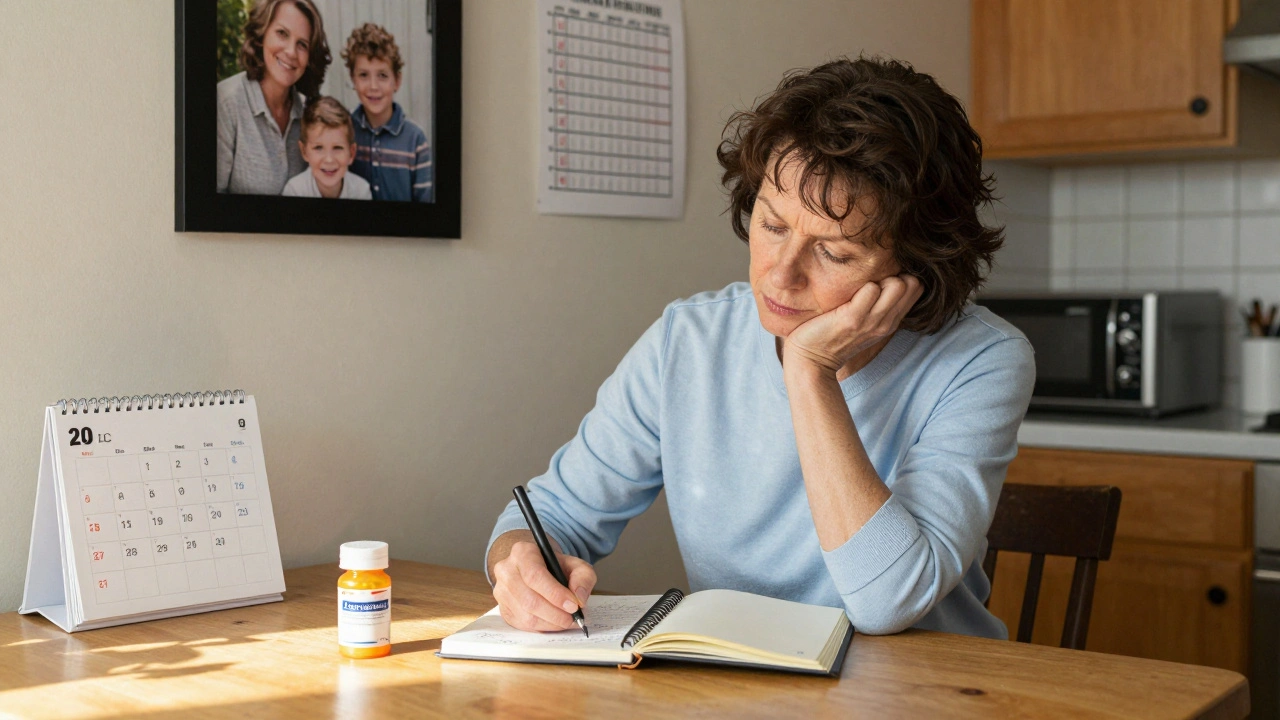
- Monitor for changes. For the first two weeks, keep track of how you feel. Use a simple journal: note energy levels, mood, sleep, or symptoms you’re treating. For diabetes, check your blood sugar. For blood thinners, watch your INR levels. For depression or anxiety, use a quick scale like PHQ-9 or GAD-7.
- Call your doctor or pharmacist if something feels off. Not every change means the drug isn’t working. Sometimes it’s just your body adjusting. But if you notice new side effects, worsening symptoms, or no improvement where there should be some, speak up.
Why Do Some People Have Problems?
Most people - 83% according to a Reddit survey of over 300 patients - report no difference at all after switching. But 17% say something changed. Why?
Some of it is psychological. If you’ve been on a brand-name drug for years, your brain associates the color, shape, and size with feeling better. Change the pill, and your mind wonders if it’s still working. That’s real - and it can affect how you feel.
Other times, it’s physical. A 2022 University of Michigan study found that only 37% of generic drug labels clearly list potential allergens. If you’re sensitive to a dye, preservative, or filler, you might get a rash, stomach upset, or headache. These aren’t common, but they happen.
And then there’s the issue of switching between different generic manufacturers. The FDA allows multiple companies to make the same generic. Each one uses slightly different processes. For NTI drugs, that small difference can matter. That’s why some doctors recommend sticking with the same generic brand - even if it’s not the original brand-name drug.

What You Can Do to Protect Yourself
Switching to a generic is smart - financially and medically - but you need to be proactive.
- Ask your pharmacist: "Is this a generic? Which company makes it?" Write down the name.
- Keep a medication log. Note the date you switched, the pill’s appearance, and how you feel each day for two weeks.
- Check the patient insert. Look for ingredients you know you’re allergic to.
- Don’t assume all generics are equal. If you’ve had a good experience with one manufacturer’s version, ask your pharmacist to stick with it.
- Report problems. If you have a bad reaction, report it to the FDA’s MedWatch program at 1-800-FDA-1088. Your report helps others.
The Bigger Picture: Why Generics Matter
Generics aren’t just about saving money - they’re about access. In 2023, 90% of all prescriptions filled in the U.S. were generics. Yet they made up only 20% of total drug spending. That means billions of dollars are being saved every year, allowing more people to afford treatment. Without generics, millions would skip doses, delay care, or go without.
And the trend is only growing. The Inflation Reduction Act of 2022 requires Medicare to cover all FDA-approved generics without prior authorization starting in 2024. New biosimilars - complex generics for biologic drugs like Humira - are hitting the market. More generics are coming for high-cost medications, and manufacturing is improving. The FDA is investing $1.5 billion to speed up approvals and fix shortages.
For most people, switching to a generic is the best decision they can make for their health and wallet. It’s not magic. It’s science. And it works.
Are generic drugs as effective as brand-name drugs?
Yes, for the vast majority of medications, generic drugs are just as effective as their brand-name counterparts. The FDA requires generics to contain the same active ingredient, in the same strength and dosage form, and to work the same way in the body. Studies, including a 2019 JAMA Internal Medicine analysis of over 2,000 clinical trials, show that generics perform identically in 88% of cases. The only exceptions are certain narrow therapeutic index drugs, where even small differences in absorption can matter.
Why do generic pills look different from brand-name ones?
Federal trademark laws require generic drugs to look different from the brand-name version - so they can’t be confused with the original. That means the color, shape, size, or imprint may change. But these differences are only in inactive ingredients like dyes or coatings, which don’t affect how the drug works. Always check the label to confirm the active ingredient matches your prescription.
Can I switch back to the brand-name drug if I don’t feel well on the generic?
Yes, but you’ll need your doctor to write a new prescription that says "dispense as written" or "no substitution." Some insurance plans may require prior authorization or charge you more if you choose the brand over the generic. If you experience side effects or reduced effectiveness, talk to your doctor before stopping or switching back.
Are there any drugs where generics should be avoided?
For most people, no. But for drugs with a narrow therapeutic index - like levothyroxine, warfarin, phenytoin, or carbamazepine - small differences in how the drug is absorbed can be risky. Some patients report better results staying on one manufacturer’s generic version. If you’re on one of these medications and notice changes after switching, talk to your doctor about sticking with a consistent formulation.
How can I find out which company makes my generic drug?
The manufacturer’s name is printed on the prescription bottle or packaging. You can also ask your pharmacist. Some pharmacies provide this information on their apps or online portals. If you’re concerned about consistency, especially with NTI drugs, ask to refill with the same manufacturer each time.
Do generics have the same side effects as brand-name drugs?
The active ingredient causes the same side effects - so yes, the expected side effects should be identical. But sometimes, differences in inactive ingredients (like dyes or fillers) can cause new reactions in sensitive individuals - such as rashes, stomach upset, or headaches. If you notice new symptoms after switching, check the patient insert for allergens and report them to your pharmacist or doctor.
What’s Next?
If you’re considering switching - or have already switched - keep monitoring how you feel. Don’t ignore small changes. Use your medication log. Talk to your pharmacist. They’re trained to help you through this transition. And remember: saving money doesn’t mean sacrificing care. Generics are one of the most reliable, well-tested tools in modern medicine. For most people, they’re not just a cost-saving option - they’re the smartest choice.




Brian Perry
2 December 2025just switched my levothyroxine and now i feel like a zombie with a headache 😅 guess i’ll be calling my doc tomorrow
Michael Bene
3 December 2025Oh sweet mercy, another person who thinks generics are just ‘the same’? Let me break it down for you - the FDA doesn’t require bioequivalence within 100%, it’s 80-125% range. That’s a 45% swing in absorption. For warfarin? That’s not a ‘slight difference,’ that’s a trip to the ER. And don’t get me started on how the same generic from two different manufacturers can have different dissolution rates because the fillers aren’t regulated the same way. I’ve seen people crash their INR because they switched from Teva to Mylan and nobody told them to retest. This isn’t about saving money - it’s about playing Russian roulette with your life. And yes, I’ve filed three MedWatch reports. You’re welcome.
Sandridge Nelia
4 December 2025Thank you for writing this so clearly! I switched to generic sertraline last year and was terrified - but kept a journal like you suggested. No changes in mood, sleep, or appetite. Just saved $280/month. 🙌 Also, the patient insert saved me - I’m allergic to FD&C Yellow #5 and the generic had it. Called my pharmacist and switched brands. They were super helpful!
Chris Jahmil Ignacio
6 December 2025Generics are a government scam to control the population. The real active ingredient is diluted and replaced with microchips that track your compliance. You think the pill looks different? That’s the RFID coating. Big Pharma and the FDA are in cahoots. You’re being watched. Check your bloodwork - if your levels are ‘normal’ but you feel worse, it’s not the drug. It’s the signal. You’re being conditioned. Wake up. And no, I don’t trust the FDA. They approved Vioxx. They approved OxyContin. They’ll approve anything if the money’s right.
Pamela Mae Ibabao
7 December 2025Okay but let’s be real - if you’re the type to panic over a different-shaped pill, you’re probably the same person who Google-searches every cough and thinks it’s lung cancer. The fact that 83% of people report zero difference should tell you something. Your anxiety is the problem, not the filler. Also, if you’re on levothyroxine and you’re not tracking your TSH monthly, you’re doing it wrong. Blame the system, not the generic.
Paul Corcoran
8 December 2025Hey everyone - I’ve been on generics for 12 years now, from blood pressure meds to antidepressants. I get the fear. I really do. But here’s what I’ve learned: consistency matters more than brand. Once I found a generic manufacturer I tolerated, I stuck with it. I even ask for the same lot number if I can. And I always read the insert - turns out I’m lactose intolerant and didn’t even know it until I saw it in the ingredients. My pharmacist became my hero. You’re not alone in this. Talk to someone. Keep notes. You’ve got this.
Palanivelu Sivanathan
10 December 2025So... we are all just... chemical beings? Controlled by molecules? And the color of the pill... it's not just color, it's a symbol, a ritual, a psychological anchor... the blue pill meant 'I am safe'... now it's white... and suddenly I am not... is this not the tragedy of modern medicine? We replaced the soul of the cure with the efficiency of the algorithm. The pill doesn't care if you believe in it... but you... you still need to believe. And that... that is the last thing they can't patent.
Pooja Surnar
11 December 2025you people are so naive. generics are made in china and india with dirt and rat hair. my cousin’s dad died because his generic blood thinner had 20% less active ingredient. you think the FDA checks? they’re bribed. stop being sheep. ask for the brand or die poor and sick. and don’t come crying to me when your kidneys fail.
Erik van Hees
13 December 2025Bro I’ve been tracking every generic switch since 2018. 14 different meds. 3 different manufacturers per drug. I’ve got a spreadsheet with TSH levels, INR, mood scores, sleep hours, and even bowel movements. Guess what? The only time I had issues was when I switched from one generic to another generic - not from brand to generic. My neurologist told me to lock in on Teva’s levothyroxine and never move. Now I’m stable. If you’re on an NTI drug, don’t gamble. Be a data nerd. Your life depends on it.
Colin Mitchell
13 December 2025Just wanted to say thanks to everyone sharing their stories - this thread is actually super helpful. I was nervous about switching my metformin, but reading your experiences made me feel way less alone. I’m gonna start a little journal like Sandridge suggested. And hey - if anyone wants to swap notes on which generic brands work best for thyroid or blood pressure, DM me. We’re all in this together 💪