


When you walk into a pharmacy to pick up a generic version of your prescription, you probably don’t think about how many companies make it. But the number of manufacturers behind that pill is one of the biggest reasons your bill is so low. The more companies making the same generic drug, the lower the price tends to be. It’s basic economics: more sellers, less power for any one of them to charge high prices.
Why More Manufacturers Mean Lower Prices
When a brand-name drug’s patent expires, other companies can legally make identical versions. These are called generics. They contain the same active ingredient, work the same way, and are held to the same safety standards. But they don’t carry the research and marketing costs of the original brand. That’s why they’re cheaper - but only if there’s real competition.
Here’s the reality: one generic manufacturer? Prices stay high. Two? Slight drop. Three or more? Prices plummet. A 2021 study published in JAMA Network Open looked at 50 brand-name drugs and tracked what happened when generics entered the market. The results were clear:
- First generic competitor: 17% price drop
- Two competitors: 39.5% drop
- Three competitors: 52.5% drop
- Four or more competitors: 70.2% drop
That’s not a guess. That’s data from Medicare spending records between 2015 and 2019. The more companies fighting to sell the same drug, the harder they push to undercut each other. It’s like a sale that never ends.
Real-World Examples of Price Drops
Take metformin, the most common diabetes drug. It’s been off-patent for years. Today, at least eight different manufacturers make it. You can buy a 90-day supply for under $10 at many pharmacies. Compare that to the brand-name version, Glucophage, which still costs over $100. The difference? Competition.
Now look at levetiracetam, an antiseizure medication. A few years ago, five companies made it. Prices were stable. Then two manufacturers quit the market. Within months, the price jumped 300%. Patients who relied on it had to switch drugs - some because they couldn’t afford it, others because their pharmacy couldn’t get it in stock. This isn’t rare. Reddit threads and patient forums are full of stories like this: one or two makers → price spikes. Three or more → affordable.
The FDA estimates that generic drugs saved the U.S. healthcare system $1.7 trillion between 2010 and 2019. That’s not magic. That’s competition.
Where Competition Fails
Not all generic drugs follow this pattern. Some drugs - especially injectables, complex formulations, or biosimilars (the generic version of biologic drugs like insulin or Humira) - don’t see the same price drops. Why? Because it’s harder and more expensive to make them. Fewer companies can enter the market.
For example, a 2021 study found that biosimilars under Medicare Part B had minimal impact on prices. Even when approved, they didn’t displace the original drug the way small-molecule generics do. The reason? Complex manufacturing, regulatory hurdles, and payer policies that don’t favor substitution.
Another problem: consolidation. Between 2014 and 2016, nearly 100 generic drug companies merged or were bought. Today, more than half of all generic drugs are made by just two manufacturers. Forty percent have only one. That’s not competition. That’s a monopoly in disguise.
When only one company makes a drug, they can raise prices without fear of losing customers. When two companies make it, they might quietly agree not to undercut each other too much. This is called “oligopoly pricing.” It’s legal - but it hurts patients.
How the System Was Designed to Work
The Hatch-Waxman Act of 1984 created the modern generic drug system. It let companies skip expensive clinical trials if they could prove their version was the same as the brand. In return, brand companies got extra patent time to make up for delays in approval. The goal? More generics. Lower prices. More access.
For decades, it worked. By 2022, generics made up 90% of all prescriptions filled in the U.S. But only 23% of total drug spending. That’s the power of competition.
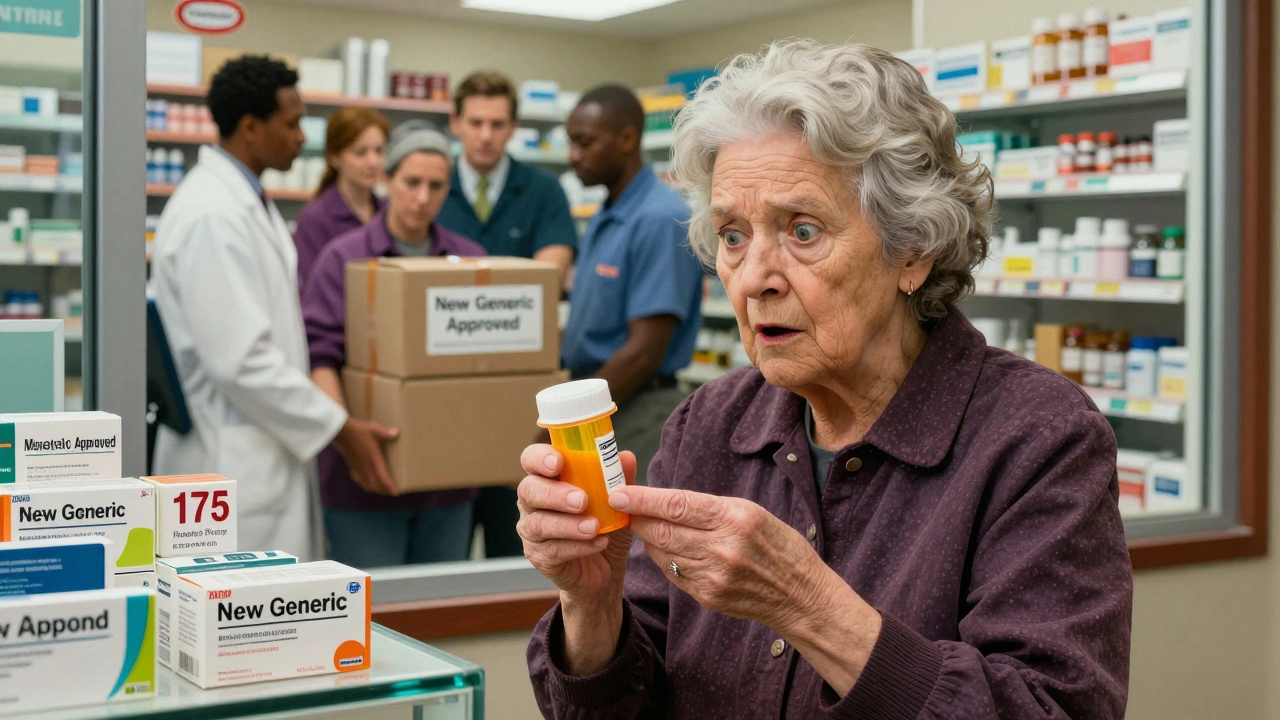
The FDA still pushes for more generic approvals. In 2022 alone, they approved 742 new generic applications - expected to save $14.5 billion that year. But they’re also warning: consolidation is eroding the system. That’s why they launched the Drug Competition Action Plan in 2017 and supported the CREATES Act in 2019, which stops brand companies from blocking generic makers from getting samples needed for testing.
What You Can Do
As a patient, you can’t control how many companies make your drug. But you can control what you do with that information.
- Check your prescription: Is it a generic? If not, ask your doctor if a generic version exists.
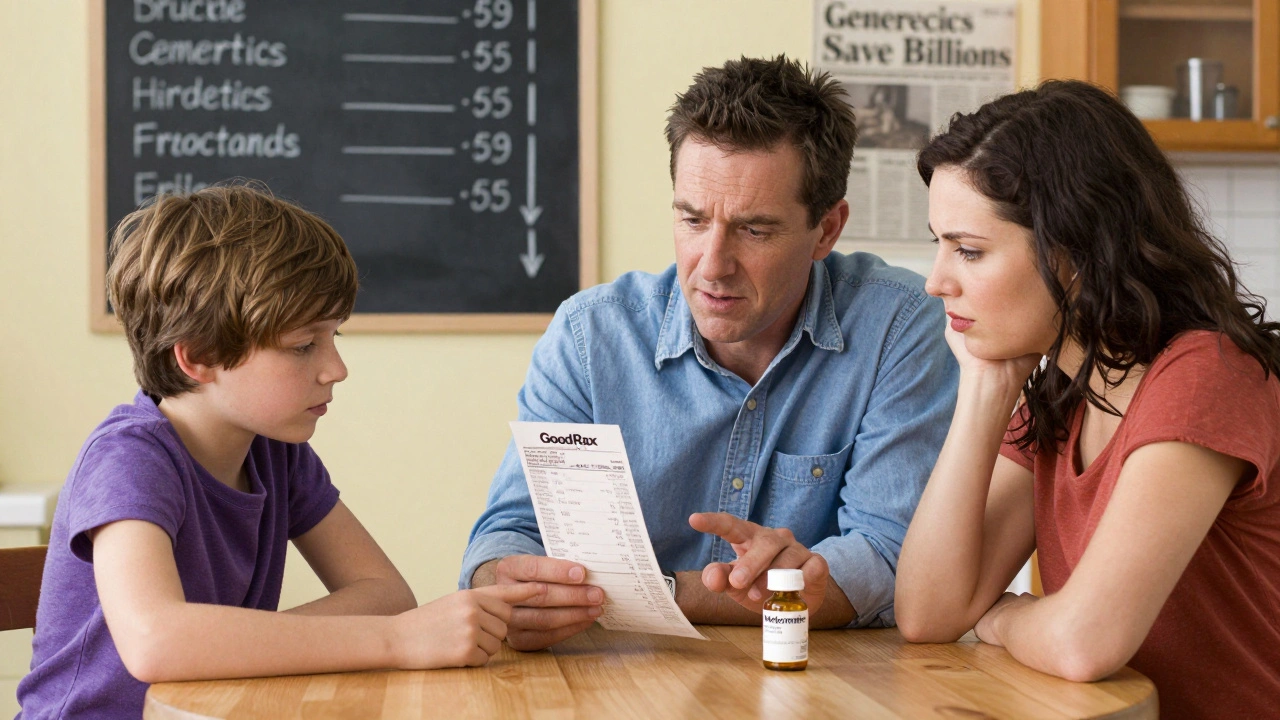
- Use GoodRx or similar tools: They show price differences between pharmacies and brands. Sometimes the brand is cheaper than the generic - because the generic has no competition and the price spiked.
- Ask your pharmacist: Can they switch you to a different generic manufacturer? Sometimes one maker’s version is cheaper than another’s, even if they’re both approved.
- Know your therapeutic equivalence: The FDA’s Orange Book lists drugs with an “AB” rating. That means they’re interchangeable. Don’t assume all generics are the same - but if they’re AB-rated, they are.
Don’t be afraid to push back. If your price suddenly jumps, ask why. It might be because the manufacturer left the market. If that happens, your pharmacist or doctor can help you find alternatives.
The Bigger Picture
Generic drug competition isn’t just about saving money. It’s about access. When insulin or blood pressure pills are affordable, people take them. When they’re not, people skip doses. That leads to hospital visits, complications, and higher costs down the line.
Right now, the system is working well for simple, oral generics - the kind you swallow every day. But for complex drugs, the rules are broken. And when a few companies control the market, patients pay the price - literally.
The solution isn’t to ban generics. It’s to protect competition. More manufacturers. Fewer mergers. Stronger oversight. The data shows it works. The question is: will policymakers act before more patients are left behind?
Why are some generic drugs more expensive than others?
It’s not about quality - it’s about competition. If only one or two companies make a generic drug, they can charge more. If eight companies make it, they compete on price. For example, metformin with eight manufacturers costs under $10. A similar drug with only one maker might cost $50 or more. The FDA’s Orange Book shows which generics are interchangeable, but not which are cheapest.
Can I ask my pharmacist to switch to a cheaper generic?
Yes. In most states, pharmacists can substitute one generic for another if they’re rated as therapeutically equivalent (AB-rated). But some drugs - like seizure meds or blood thinners - have narrow therapeutic windows, so your doctor may need to approve the switch. Always ask your pharmacist to check if a cheaper version is available.
Do generic drugs work as well as brand-name drugs?
Yes. The FDA requires generics to have the same active ingredient, strength, dosage form, and route of administration as the brand. They must also be absorbed into the body at the same rate and extent. Thousands of studies confirm this. The only differences are in inactive ingredients like fillers or colors - which rarely affect how the drug works.
Why do generic drug prices spike suddenly?
It usually happens when a manufacturer stops making the drug - often because it’s not profitable. If only one or two companies make it, their exit leaves no one to compete. Prices can jump 300% or more overnight. This has happened with drugs like levetiracetam and doxycycline. The solution is more manufacturers entering the market - but that’s getting harder due to consolidation.
Is there a way to know how many companies make my generic drug?
Not easily - but you can find clues. Use GoodRx to compare prices across pharmacies. If prices vary widely, it’s likely only one or two manufacturers are making it. If prices are low and consistent, many are competing. You can also check the FDA’s Orange Book to see how many approved manufacturers exist for your drug. If there are more than four, you’re likely in a competitive market.

Ashley Skipp
11 December 2025My insulin went from $30 to $450 in 6 months because one company bought the other two making it
Robert Webb
12 December 2025It’s fascinating how the market dynamics here mirror what we see in other commoditized industries-like lightbulbs or batteries-but with life-or-death stakes. The Hatch-Waxman Act was genius in theory, but the reality is that consolidation, regulatory capture, and manufacturing barriers have turned what should be a competitive free-for-all into a quiet cartel. When you look at the data-seven manufacturers driving prices down 70% versus one manufacturer hiking them 300%-it’s not just economics, it’s ethics. And yet, we still let big pharma quietly buy up small generics players because it’s ‘legal.’ Legal doesn’t mean right. The FDA’s Orange Book is a start, but patients shouldn’t need a PhD in pharmacology just to afford their meds.
Rob Purvis
12 December 2025I love how this post breaks it down so clearly! Seriously, I didn’t realize that metformin being under $10 was because there are like 8 companies fighting over it-my pharmacist told me last week that one of the brands I was getting was suddenly $60 because the other two manufacturers had stopped making it. I switched to a different one and saved $50. Also, the FDA’s Orange Book is a total goldmine if you know how to use it-just search your drug and look for the ‘AB’ rating. And yes, sometimes the brand is cheaper than the generic if the generic has no competition. Mind blown.
Laura Weemering
13 December 2025It’s all orchestrated… the FDA… the mergers… the ‘approved’ generics… they let just enough competition in to make it look fair, but the real players are the same conglomerates behind the brand names. You think you’re saving money? You’re just paying a different version of the same monopoly. The CREATES Act? A PR stunt. The Drug Competition Action Plan? A Band-Aid on a hemorrhage. They want you to think it’s about ‘choice’-but choice is an illusion when only two corporations control 80% of the market. And don’t get me started on how they manipulate supply chains to trigger shortages… it’s predatory capitalism dressed in white coats.
Stacy Foster
14 December 2025They’re lying. The ‘generic’ drugs are made in India and China. The FDA doesn’t inspect those factories. The active ingredients are cut with filler. The pills are barely bioavailable. You think you’re getting the same thing? You’re getting a placebo with a different label. And the ‘price drops’? That’s just the companies selling low-quality versions to Medicaid and Medicare while the real stuff goes to private insurers. This whole system is a scam. I’ve seen people get seizures because their ‘generic’ levetiracetam didn’t work. No one’s talking about that.
Reshma Sinha
15 December 2025As someone from India where generics are the backbone of healthcare, I can say this system is the reason millions can afford treatment. The US has the tech and the science-but the profit model is broken. When I was in med school, we called this ‘pharma democracy’-the idea that competition equals access. It’s not perfect, but when 8 companies make metformin, it’s not a drug anymore-it’s a commodity. And commodities don’t kill people. Monopolies do. We need more transparency, not more regulation. Let patients see who makes what and why the price jumps. Knowledge is power-and right now, pharmacies are hiding it.
Lawrence Armstrong
16 December 2025Just checked my last prescription-$12 for 90 days of generic lisinopril. Had no idea there were 12 manufacturers making it. GoodRx showed me a $4 option at Walmart. 😊 I always assumed generics were all the same. Learned something today. Thanks for the Orange Book tip! 🙌
Donna Anderson
17 December 2025OMG I just looked up my blood pressure med and there’s 6 makers!! I’ve been paying $50 for no reason… going to switch tomorrow. Also, why does no one tell you this stuff?? I feel so dumb for never asking my pharmacist if there was a cheaper version. Thanks for the wake up call!! 💪
Levi Cooper
18 December 2025This is why America is falling apart. We let foreign companies make our medicine and then pretend it’s safe. We used to make everything here. Now we’re dependent on China and India for our lifesaving drugs. And you want to celebrate competition? Competition doesn’t mean safety. It means cheaper, weaker, unregulated pills. We need to bring manufacturing back to the US, not celebrate how many foreign factories can undercut us. This isn’t progress-it’s national insecurity.