


When you pick up a prescription, you might not think twice if the pharmacist hands you a different-looking pill than what your doctor prescribed. That’s because in the U.S., most generic drugs are legally allowed to replace brand-name medications - but only if they meet strict standards. The FDA uses a system called therapeutic equivalence codes to decide which generics can be swapped without risk. These codes, published in the Orange Book, are the backbone of generic drug substitution in America. They tell pharmacists, doctors, and insurers exactly which drugs are safe to exchange - and which ones aren’t.
What Are Therapeutic Equivalence Codes?
Therapeutic equivalence codes are two-letter ratings assigned by the FDA to multisource prescription drugs. The first letter tells you if a generic is considered interchangeable with the brand-name version. The second letter, if present, gives extra details about the drug’s form or potential issues. This system exists because not all generics are created equal - even if they contain the same active ingredient. A drug gets a therapeutic equivalence code only if it’s been reviewed for three things: pharmaceutical equivalence, bioequivalence, and clinical safety. Pharmaceutical equivalence means the generic has the same active ingredient, strength, dosage form, and route of administration as the brand. Bioequivalence means it releases the drug into your bloodstream at the same rate and amount as the original. And clinical safety? That’s the final check: does it work the same way in real patients?The Meaning Behind the Letters: A and B Ratings
If you see an A at the start of the code, you’re looking at a drug the FDA says can be substituted without hesitation. The most common is AB. This means the generic has passed all required bioequivalence tests - usually through blood level studies - and is considered a direct replacement. For example, a generic version of Lipitor with an AB rating can be swapped in without any changes to your treatment. But here’s where it gets tricky. Sometimes you’ll see AB1, AB2, or even AB4. That happens when there’s more than one brand-name drug serving as the reference. Each AB number points to which specific brand the generic was tested against. If you’re on a brand that’s no longer on the market, your pharmacist needs to match your prescription to the right AB group. Now, if you see a B, that’s a red flag - but not a dealbreaker. A B-rated drug means the FDA hasn’t confirmed it’s interchangeable. That doesn’t mean it’s unsafe. It just means there’s not enough proof yet. Common B codes include:- BC - Extended-release formulations with unclear bioequivalence
- BT - Topical products like creams or gels where absorption is hard to measure
- BD - Active ingredients with known bioequivalence problems
- BN - Aerosol or nebulizer products
- BX - Not enough data to make a call
Why This System Matters
The U.S. spends about $370 billion a year on generic drugs, saving patients and insurers billions. Without therapeutic equivalence codes, pharmacists wouldn’t know which generics they could swap. State laws back this up: 49 out of 50 states allow pharmacists to substitute A-rated generics without asking the doctor first. That’s why your $150 brand-name pill might turn into a $5 generic at the counter. But the system isn’t perfect. A 2022 survey found that 42% of doctors were confused by B codes. Some thought they meant the drug was unsafe, when really it just meant the FDA needed more data. Meanwhile, pharmacists spend an average of 2.7 minutes per prescription checking the Orange Book. That adds up - but it’s worth it. The American Pharmacists Association estimates this system saves the U.S. healthcare system $1.2 billion a year just by enabling proper substitutions.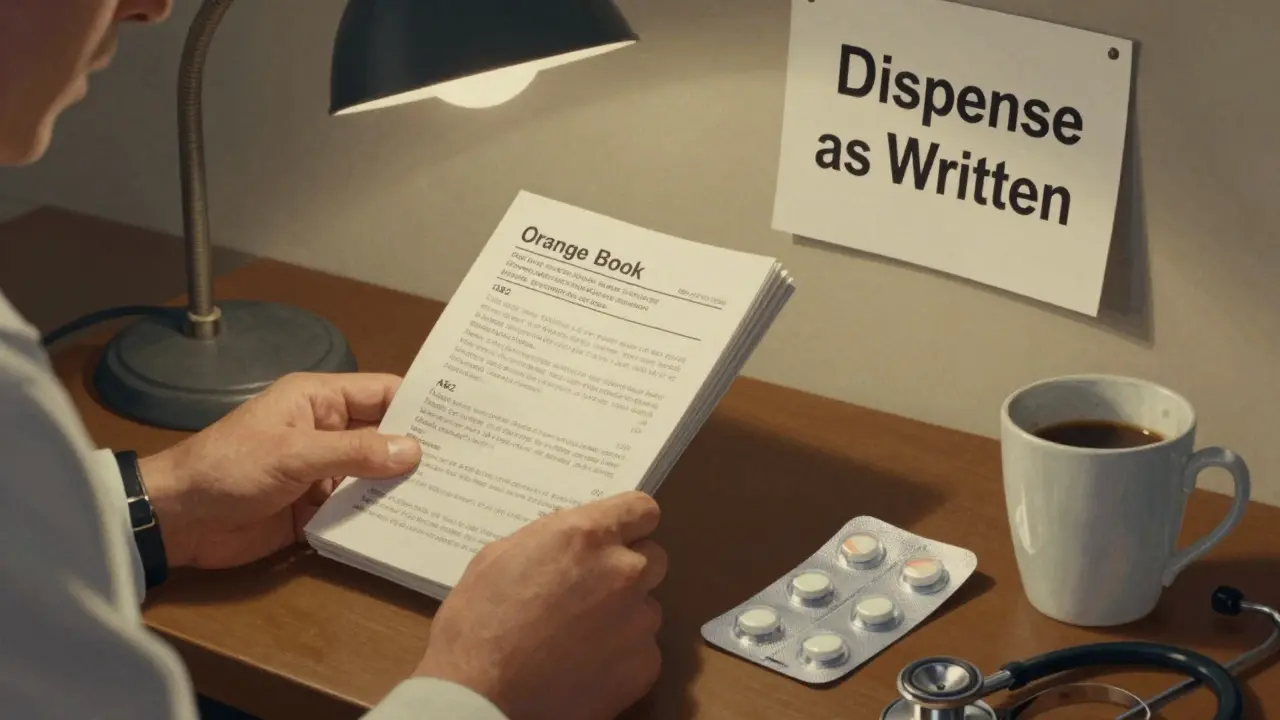
What About Complex Drugs?
The biggest challenge today is complex generics. These include injectables, inhalers, topical creams, and extended-release pills. The FDA has seen a 22% increase in B-rated applications for these products between 2018 and 2022. Why? Because traditional bioequivalence studies - which measure drug levels in blood - don’t always reflect what happens in the body. For example, two inhalers might release the same amount of drug into the blood, but one might deposit more in the lungs. That difference could matter for asthma patients. The FDA admits this gap. In its 2022 draft guidance, the agency said it’s working on better ways to test these complex products - using in vitro tests, imaging, and even real-world data from patients. Dr. Duxin Sun from the University of Michigan put it bluntly: “Current TE codes for topical and inhaled products may not reflect true therapeutic equivalence.” The FDA’s goal? Reduce B ratings for complex generics by 30% by 2027. That means more options for patients - and fewer surprises.How Pharmacists Use the Orange Book
Every pharmacy has access to the FDA’s Orange Book, either online or through software. Pharmacists check it before swapping any generic. They don’t just look at the name - they look at the code. If it’s AB, they swap. If it’s B, they call the prescriber. In 38 states, they’re legally required to notify the doctor if they substitute a B-rated product. The Orange Book isn’t static. It updates every month. A drug might go from B to A if new studies come in. Or a brand might get pulled, changing which AB group the generic belongs to. That’s why pharmacists check weekly - 73% say they consult the Orange Book at least once a week, according to the National Community Pharmacists Association.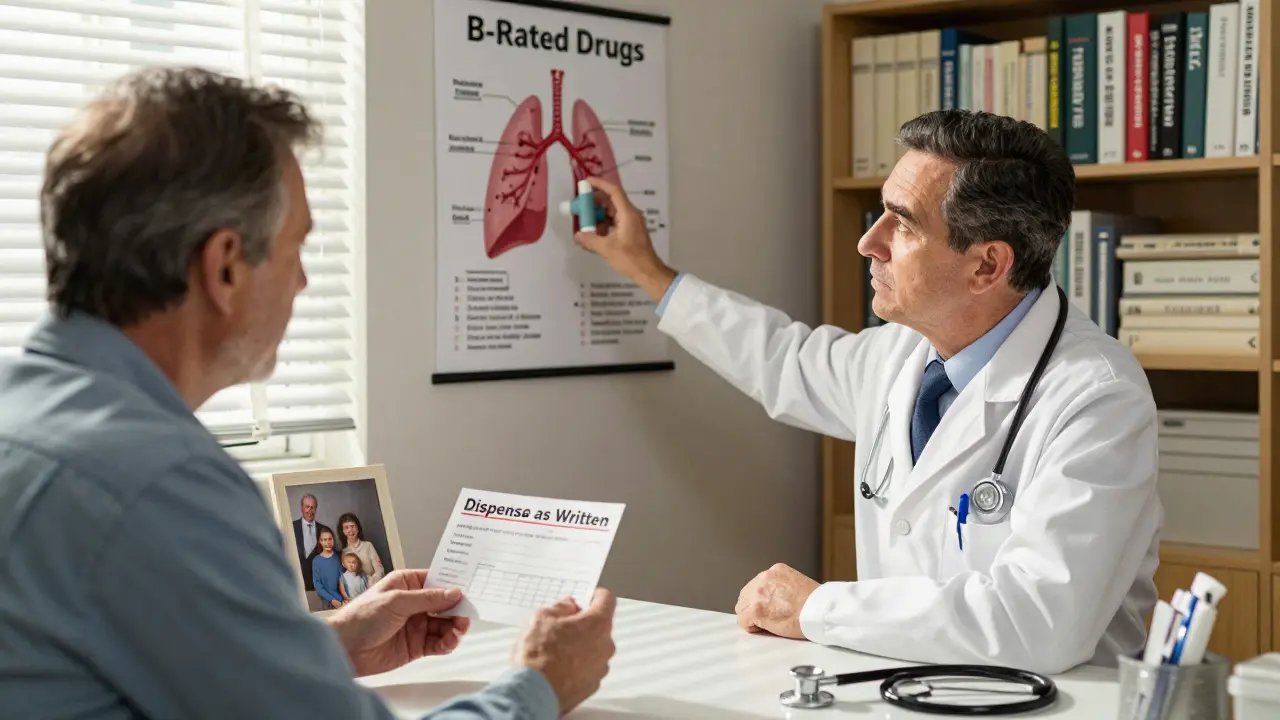
How This Compares to Other Countries
The U.S. system is unique. The European Medicines Agency (EMA) doesn’t use codes like AB or B. Instead, they publish detailed scientific reviews for each generic. That’s more thorough - but harder to use quickly at the pharmacy counter. The FDA’s coding system is designed for speed and clarity. It’s why 90% of U.S. generics have an A rating - the system works. But it’s not meant to replace clinical judgment. If a patient has a bad reaction to a generic, even an A-rated one, the doctor can write “Dispense as Written” on the prescription. That’s a legal way to block substitution - and it’s used when needed.What’s Next for Therapeutic Equivalence?
The FDA is pushing to modernize the system. With 1,850 Product-Specific Guidances now available, they’re giving manufacturers clearer rules on how to prove bioequivalence for tricky drugs. They’re also exploring real-world evidence - like patient outcomes from electronic health records - to support decisions. The goal isn’t to make more A-rated drugs just for the sake of it. It’s to make sure that when a patient gets a generic, they get the same results - no matter the brand. The system has worked for 40 years. Now, it’s adapting to the next generation of medicines.Can a pharmacist substitute a generic drug without my doctor’s permission?
Yes, if the generic has an A-rated therapeutic equivalence code and your doctor hasn’t written "Dispense as Written" on the prescription. Forty-nine U.S. states allow pharmacists to substitute A-rated generics automatically. But if the code is B, most states require the pharmacist to contact the prescriber first.
Are all generic drugs rated with therapeutic equivalence codes?
No. Only multisource prescription drugs - those with more than one manufacturer - get TE codes. Single-source brand-name drugs (505(b)(1) NDAs) are listed as Reference Listed Drugs but don’t get codes. Over-the-counter drugs, dietary supplements, and biologics also don’t receive TE codes.
If a generic has a B rating, is it unsafe?
Not necessarily. A B rating means the FDA doesn’t have enough data to confirm it’s interchangeable with the brand. The drug may still be safe and effective - it just hasn’t passed the full bioequivalence tests required for an A rating. Some B-rated drugs are used successfully every day, but substitutions require extra caution.
How often is the Orange Book updated?
The FDA updates the Orange Book monthly. New drugs are added, codes are changed, and withdrawn products are removed. Pharmacists rely on these updates to make accurate substitution decisions. The online version is searchable and free to access at the FDA’s website.
Why do some generics have AB1, AB2, or AB3 codes?
These numbers indicate which brand-name drug the generic was tested against. If multiple brand versions exist for the same drug (like different manufacturers of the original), each gets its own AB group. AB1 means it matches the first listed brand, AB2 the second, and so on. This ensures the generic is truly equivalent to the exact product your doctor prescribed.





Laura Arnal
30 January 2026Love this breakdown! 🙌 Finally, someone explained the Orange Book in a way that doesn’t make me want to nap. AB ratings = my bank account’s best friend. B ratings? Yeah, I’ll let the pharmacist handle those. Thanks for making pharmacology feel human!
Ryan Pagan
30 January 2026Let’s be real - the FDA’s TE codes are one of the few things in healthcare that actually WORK. AB? Swap it. B? Hold up. Simple. Clean. No corporate BS. And the fact that 90% of generics are A-rated? That’s not luck - that’s regulatory rigor. Kudos to the scientists grinding in the background. 💪
DHARMAN CHELLANI
30 January 2026generic drugs are just ripoffs. why do u think brand name works better? its magic. also FDA is owned by big pharma. lol.
Kacey Yates
1 February 2026B codes are a joke my pharmacist told me a B rated inhaler gave her asthma patient chest pains and they still let it fly because the FDA said it was bioequivalent lmao
ryan Sifontes
1 February 2026they’re watching us through the pills. every time you take a generic, your data gets sent to a server in Virginia. you think the TE codes are about safety? nah. they’re about tracking. they already know if you took your meds.
Jasneet Minhas
3 February 2026Ah yes, the sacred Orange Book. 📖 A monument to bureaucratic elegance in a system otherwise run by chaos. Truly, nothing says ‘American healthcare’ like a two-letter code determining whether your life-saving inhaler gets swapped like a baseball card. 😌
Megan Brooks
5 February 2026It’s fascinating how a system built on empirical data can become so emotionally loaded. We treat these codes like divine decrees - AB = good, B = dangerous - when in reality, they’re just snapshots of incomplete science. The real question isn’t whether the drug works… it’s whether we’re willing to accept uncertainty in medicine.
kabir das
5 February 2026Ugh. Another post pretending this system is flawless. AB ratings? Please. I’ve seen generics that taste different, look different, and make people feel different - and the FDA just shrugs and says ‘bioequivalent’. Bioequivalent doesn’t mean ‘same experience’. And don’t even get me started on the fact that some B-rated drugs are actually BETTER for certain people… but we’re forced to use the ‘approved’ one. This isn’t science - it’s capitalism with a lab coat.
And who decides what ‘enough data’ is? A committee that gets paid by the same companies that make the brand drugs? Yeah. Right.
My grandma took a B-rated blood thinner for 8 years - no issues. Then they switched her to an AB one - she got dizzy, almost fell. Guess what? The code didn’t care. The code doesn’t know her. The code doesn’t care.
Stop glorifying bureaucracy. This isn’t safety - it’s standardization. And standardization kills nuance. And nuance is what saves lives.
Also - why do you all act like pharmacists are some kind of heroes? They’re just following a checklist. They don’t know your history. They don’t know your body. They don’t even know your name half the time.
And yes - I know I’m over-punctuating. But if you’re going to talk about life and death, you better damn well use the right punctuation.
Paul Adler
6 February 2026While the therapeutic equivalence system is statistically sound and economically vital, it’s worth acknowledging its limitations in clinical practice. The gap between population-level bioequivalence and individual patient response remains under-addressed. A drug may meet FDA thresholds for interchangeability, yet still produce divergent outcomes in patients with comorbidities, altered metabolism, or polypharmacy.
The current model assumes homogeneity - but human biology is not a spreadsheet. We need more granular data, personalized risk assessments, and perhaps even patient-reported outcome integration into future revisions of the Orange Book.
For now, the system serves its purpose - but we must not confuse utility with perfection.
Doug Gray
7 February 2026It’s interesting how we’ve anthropomorphized regulatory frameworks - treating TE codes as if they possess moral agency. AB = righteous. B = fallen. But these are just algorithmic outputs, not ethical verdicts. We’ve outsourced clinical judgment to a database, and now we’re surprised when the machine doesn’t account for the soul of the patient.
The real crisis isn’t B-rated drugs. It’s the erosion of physician-patient trust in the name of efficiency. When a pharmacist substitutes without consent - even if legally permitted - we’re not saving money. We’re commodifying care.
And yet… here we are. Optimizing for cost, not consciousness.
Eli In
8 February 2026Just wanted to say thank you for explaining this so clearly - I’ve been on a B-rated topical cream for years and always wondered why my doctor never swapped it. Now I get it. 🙏 Also, I love how the FDA is finally trying to update methods for inhalers and creams - that’s huge for people like me with chronic skin and lung issues. Hope they keep listening to real patients, not just lab data. 🌿❤️