

Opioid Dose Calculator for Liver Disease
This tool calculates safe opioid dose adjustments based on liver impairment severity. Always consult your healthcare provider before changing medications.
Adjusted Dose Recommendation
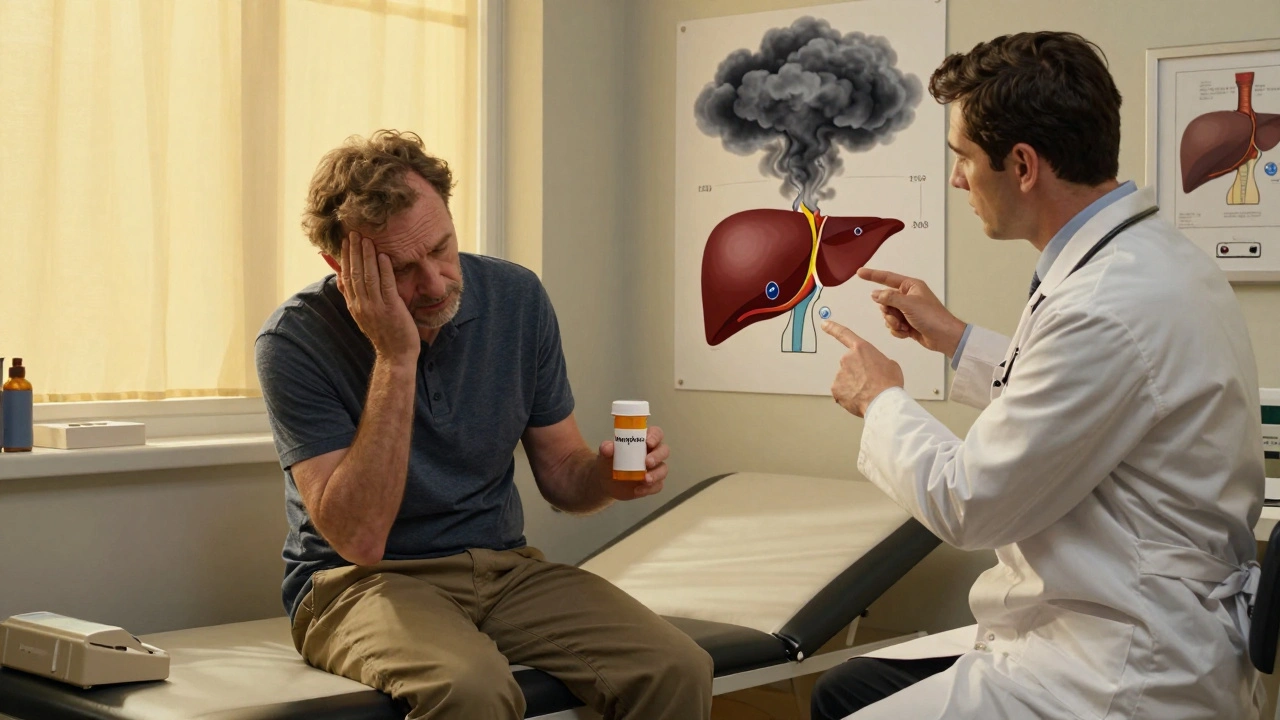
When someone has liver disease, taking opioids isn’t just risky-it’s like driving a car with faulty brakes and no idea how fast you’re going. The liver doesn’t just filter toxins; it’s the main factory that breaks down most opioids. When it’s damaged, those drugs don’t get cleared properly. They build up. And that buildup can turn pain relief into a life-threatening situation.
How the Liver Normally Processes Opioids
The liver uses two main systems to handle opioids: cytochrome P450 enzymes and glucuronidation. These are the body’s way of turning drugs into water-soluble molecules so they can be flushed out through urine or bile. For example, morphine gets turned into morphine-6-glucuronide (M6G), which still relieves pain, and morphine-3-glucuronide (M3G), which can cause seizures and confusion. Oxycodone is broken down mainly by CYP3A4 and CYP2D6. These enzymes aren’t perfect-they vary slightly between people-but in a healthy liver, they do their job reliably.
But when the liver is scarred from cirrhosis, fatty liver, or long-term alcohol use, these systems slow down-or sometimes stop working altogether. That’s when opioids start accumulating. The half-life of oxycodone, which is normally about 3.5 hours, can stretch to 14 hours on average in severe liver disease. In some cases, it’s been measured as long as 24.4 hours. That means a single dose can linger in the bloodstream for days instead of hours.
Why Morphine Is Especially Dangerous in Liver Disease
Morphine is one of the most commonly prescribed opioids for chronic pain. But in liver disease, it’s also one of the most dangerous. Unlike many other opioids, morphine doesn’t rely heavily on CYP enzymes. Instead, it’s processed by glucuronidation, a pathway that’s heavily impaired in advanced liver disease.
When glucuronidation slows, morphine builds up. But worse, so does M3G-the toxic metabolite. Studies show that people with cirrhosis have up to 70% higher levels of M3G compared to healthy individuals. That’s not just a small increase. It’s enough to raise the risk of neurological side effects like hallucinations, muscle twitching, and even seizures. Even if the pain is under control, the brain is being exposed to a hidden poison.
Guidelines recommend cutting morphine doses by at least half in early liver disease and using much longer intervals between doses in advanced cases. But many clinicians still prescribe it at standard doses, assuming it’s safe because it’s "old" and "well-studied." That’s a dangerous assumption.
Oxycodone: A Risky Alternative
Oxycodone is often chosen as a "safer" option for people with liver problems because it’s thought to be more predictable. But that’s not true. In severe liver impairment, the maximum concentration of oxycodone in the blood can jump by 40%. The drug’s half-life triples or even quadruples. That means someone who takes 10 mg every 6 hours might end up with the equivalent of 40 mg in their system by the end of the day.
Experts now say that if you must use oxycodone in someone with advanced liver disease, start with only 30% to 50% of the usual dose. And even then, monitor closely for sedation, slow breathing, or confusion. Many patients are discharged from the hospital on full doses, with no follow-up plan. That’s how overdoses happen.

Other Opioids: What We Know and What We Don’t
Methadone is tricky. It’s metabolized by multiple CYP enzymes, so it’s less likely to be affected by a single enzyme deficiency. But there are no clear dosing guidelines for liver disease. Doctors often guess. And guessing with methadone can be deadly-it has a long, unpredictable half-life and can cause fatal heart rhythm changes even at low doses.
Fentanyl and buprenorphine are often seen as safer because they’re given as patches or films that bypass the liver on first pass. That’s true-transdermal fentanyl avoids the "first-pass effect," where the liver destroys a big chunk of the drug before it enters circulation. But once in the blood, they still get processed by the liver. In cirrhosis, clearance drops by 30% to 50%. That means even patches can lead to buildup over time.
There’s almost no data on how hydromorphone, codeine, or tramadol behave in advanced liver disease. Tramadol is especially risky because it depends on CYP2D6 to become active. In liver disease, that conversion becomes erratic-some patients get no pain relief, others get too much. There’s no way to predict who’s who.
More Than Just Metabolism: The Gut-Liver Connection
It’s not just about enzymes. Chronic opioid use changes the gut microbiome-the trillions of bacteria living in your intestines. These bacteria help regulate inflammation and liver health. When opioids disrupt them, harmful bacteria grow, and the gut lining becomes leaky. Toxins from the gut then travel straight to the liver through the portal vein.
This creates a vicious cycle: liver disease makes opioids dangerous → opioids worsen gut health → worse gut health worsens liver damage → opioids become even more toxic. It’s not just pharmacology-it’s physiology. And it’s happening in real time in patients with cirrhosis or non-alcoholic fatty liver disease (NAFLD).
Studies show that people with NAFLD have lower CYP3A4 activity, making them more sensitive to drugs like oxycodone. At the same time, alcohol-related liver disease increases CYP2E1 activity, which can turn some opioids into more toxic forms. So two people with liver disease might need completely different opioid strategies, depending on what caused their damage.

What Should Doctors Do?
There’s no perfect opioid for liver disease. But there are clear steps to reduce harm:
- Start low, go slow. Use 30% to 50% of the usual starting dose for any opioid.
- Avoid morphine. Especially in moderate to severe liver impairment. It’s not worth the risk.
- Prefer transdermal options. Fentanyl patches or buprenorphine films reduce first-pass metabolism, but still monitor closely.
- Extend dosing intervals. Don’t just lower the dose-space out the doses. A dose every 8-12 hours instead of every 4-6 hours can make a huge difference.
- Monitor for sedation and breathing changes. Use a pulse oximeter at home if possible. Check for confusion or drowsiness. These aren’t "side effects"-they’re warning signs.
- Reassess every week. Liver function can change fast. A dose that was safe last month might be dangerous now.
Many patients with liver disease are on opioids for chronic pain-back pain, arthritis, neuropathy. But few are ever told the real risks. They’re handed a prescription and sent home. That’s not care. That’s negligence.
The Bottom Line
Opioids aren’t off-limits in liver disease-but they need to be treated like nuclear material. They’re powerful. They’re unpredictable. And when the liver is damaged, the margin for error disappears. The biggest mistake isn’t giving opioids-it’s giving them without understanding how the body will handle them.
There’s no one-size-fits-all answer. But there is a clear path forward: respect the liver’s limits. Reduce doses. Extend intervals. Avoid morphine. Choose patches over pills when possible. And always, always watch for signs of toxicity.
For patients, this means asking: "Is this safe for my liver?" For doctors, it means stopping the habit of treating liver disease like a footnote in a pain management plan. It’s the center of the problem.
Can I take opioids if I have cirrhosis?
Yes, but only with extreme caution. Doses must be cut by at least half, and dosing intervals must be extended. Morphine should be avoided. Oxycodone and transdermal fentanyl are options but require close monitoring. Never start opioids without discussing your liver health with your doctor.
Why is morphine risky in liver disease?
Morphine is broken down by glucuronidation, a liver process that slows dramatically in cirrhosis. This causes morphine and its toxic byproduct, M3G, to build up in the blood. High levels of M3G can cause seizures, confusion, and muscle twitching-even when pain is well-controlled.
Does liver disease affect all opioids the same way?
No. Morphine is most affected because it relies on glucuronidation. Oxycodone and methadone depend on CYP enzymes, which behave differently depending on the cause of liver disease. For example, CYP3A4 drops in fatty liver, while CYP2E1 rises in alcohol-related disease. Fentanyl and buprenorphine are safer when given as patches because they bypass first-pass metabolism.
What are the signs of opioid toxicity in liver disease?
Excessive drowsiness, slow or shallow breathing, confusion, slurred speech, muscle twitching, and hallucinations. These aren’t normal side effects-they’re red flags. If someone on opioids shows these signs, seek help immediately. Toxicity can develop faster in liver disease than in healthy people.
Can opioids make liver disease worse?
Yes. Chronic opioid use disrupts gut bacteria, leading to a leaky gut. Toxins from the gut then travel to the liver, increasing inflammation and scarring. This is especially dangerous in fatty liver disease and alcohol-related liver disease, where inflammation is already a major problem.


Arun Kumar Raut
10 December 2025Man, this is the kind of post that should be handed out with every liver disease diagnosis. I’ve seen friends get prescribed morphine like it’s aspirin, and then wonder why they’re zoning out or seeing things. The gut-liver connection part? Mind blown. We need way more awareness around this.
Carina M
11 December 2025It is, regrettably, a matter of profound concern that the medical community continues to perpetuate the assumption that opioids are benign in the context of hepatic dysfunction. The pharmacokinetic alterations wrought by cirrhosis are neither trivial nor negligible, and the failure to implement evidence-based dosing protocols constitutes a systemic failure of clinical governance.
Tejas Bubane
13 December 2025Everyone’s acting like this is news. Morphine in liver patients? Duh. I’ve seen ER docs prescribe it like it’s candy. And now we’re surprised when people OD? The real problem isn’t the drug-it’s the doctors who don’t bother to read the damn guidelines.
Ajit Kumar Singh
14 December 2025India has 40 million people with fatty liver and no access to proper pain care so they just suffer or get opioids without monitoring and nobody cares. This post is right but where’s the policy change? Where’s the government? We need free liver panels with every opioid script. No more guessing. No more deaths because someone didn’t get a blood test. End the silence.
Sabrina Thurn
15 December 2025While transdermal fentanyl and buprenorphine do mitigate first-pass metabolism, it’s critical to recognize that hepatic clearance of these agents remains compromised in advanced cirrhosis due to reduced cytochrome activity and diminished hepatic blood flow. The pharmacodynamic sensitivity to mu-opioid receptor agonism is also amplified in uremic and inflammatory states commonly comorbid with liver disease, necessitating ultra-conservative titration.
iswarya bala
16 December 2025i never knew opioids could mess up your gut and make your liver worse?? like wow. i thought it was just about the liver. now i get why my uncle kept getting sicker even though he was on low doses. thanks for explainin this so clear :)
Philippa Barraclough
16 December 2025It is intriguing to observe the interplay between hepatic enzyme activity and the gut-liver axis in the context of chronic opioid administration. One might hypothesize that the dysbiosis induced by prolonged opioid use could exacerbate portal hypertension through increased endotoxin translocation, thereby accelerating fibrogenesis. However, the literature on this specific mechanistic pathway remains sparse, and longitudinal studies correlating microbial diversity with opioid metabolite accumulation in cirrhotic cohorts are notably absent.
Tim Tinh
18 December 2025my aunt had cirrhosis and they gave her oxycodone for back pain… she was fine for a week then started nodding off at dinner. we thought she was just tired. turns out her levels were sky high. they didn’t even adjust the dose. this needs to be common knowledge. if you’re on liver meds, ask your doc: "is this safe for my liver?" don’t wait till it’s too late.
Tiffany Sowby
19 December 2025Why are we even still talking about opioids for liver patients? America’s painkiller obsession is killing people. This isn’t a medical issue-it’s a cultural one. We treat pain like a crime to be eradicated, not a symptom to be managed. Stop prescribing. Stop enabling. Let people suffer a little. Maybe then they’ll stop asking for pills.
Brianna Black
21 December 2025This is not just a medical imperative-it is a moral one. Every time a patient with cirrhosis is handed a script for morphine without a full discussion of risk, we fail them. We fail their families. We fail the very foundation of medical ethics. The liver is not a footnote. It is the silent sentinel. And when it whispers, we must listen-not prescribe.