
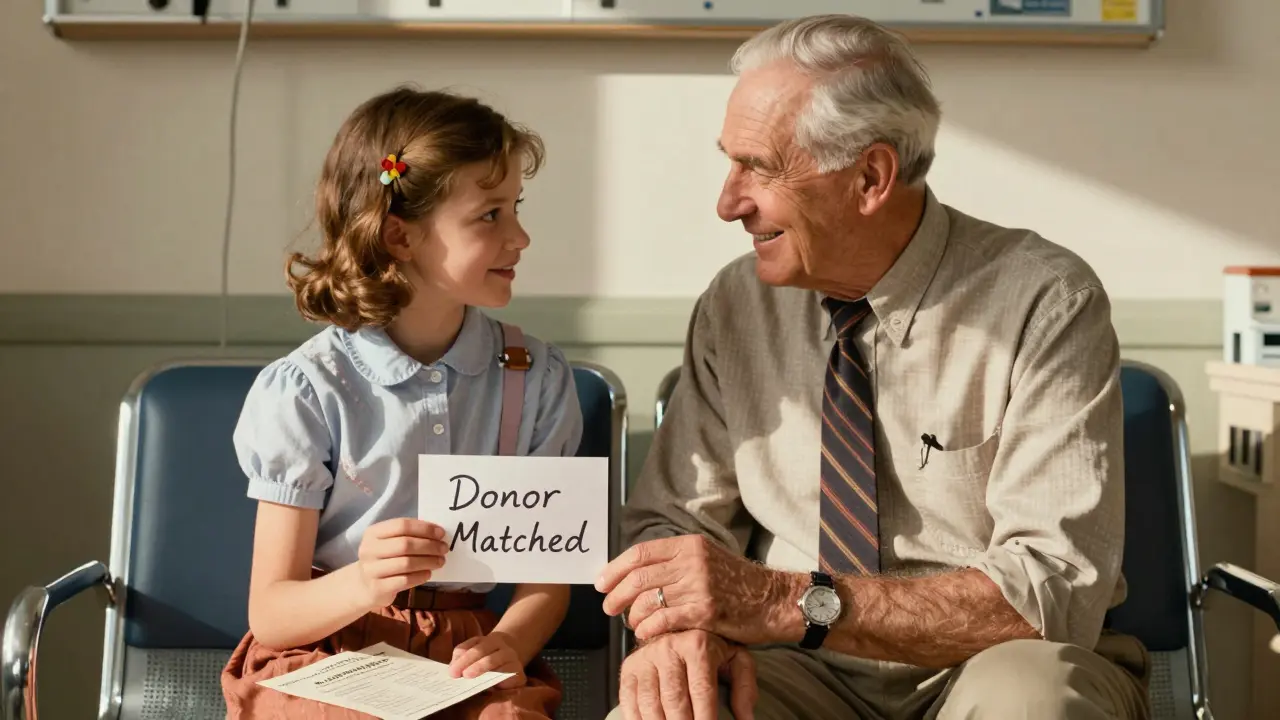

When your kidneys fail, life changes fast. Dialysis keeps you alive, but it’s not a cure. It’s exhausting, time-consuming, and doesn’t let you live like you used to. For many people with end-stage renal disease (ESRD), a kidney transplant is the best path forward-not just to survive, but to truly live again. The numbers don’t lie: if you get a transplant, you’re about 35% more likely to be alive five years later than if you stay on dialysis. That’s not a small difference. That’s life versus a daily routine that steals your energy, your time, and your freedom.
Who Can Get a Kidney Transplant?
Not everyone with kidney failure qualifies. It’s not just about how bad your kidneys are-it’s about whether your whole body can handle the surgery and the lifelong treatment that comes after. Most transplant centers agree on one thing: you need to have ESRD. That means your kidneys are working at 15% or less of normal function, measured by a glomerular filtration rate (GFR) of 15 mL/min/1.73m² or lower. Some centers, like Mayo Clinic, may consider you even if your GFR is as high as 20-25 mL/min, especially if your kidney function is dropping fast or you have a living donor ready to go.Age isn’t a hard stop. There’s no universal cutoff. While Vanderbilt University Medical Center says age 75 or older is a red flag, UCLA and others look at the whole picture. A healthy 80-year-old with strong bones, good heart function, and solid family support might be a better candidate than a 60-year-old with diabetes, heart disease, and no one to help them take pills every day.
Weight matters too. A BMI over 35 raises your risk of complications during surgery and after. Over 45? Most centers won’t even consider you until you lose weight. Why? Fat doesn’t just make surgery harder-it increases the chance of infection, delays healing, and raises the risk that the new kidney will fail. One study found that obese patients have a 20% higher chance of graft failure. Losing even 10-15% of body weight can get you on the list.
Your heart and lungs have to be strong enough to survive surgery. If you have severe pulmonary hypertension-meaning high pressure in the arteries leading to your lungs-you’re likely not a candidate. Mayo Clinic draws the line at a right ventricle systolic pressure (RVSP) over 50 mm Hg. Vanderbilt is stricter: anything above 70 mm Hg is an automatic disqualifier. If you need oxygen all the time because of COPD or another lung disease, that’s also a barrier. Your heart needs to pump well too. An ejection fraction below 35-40% usually means you need cardiac treatment first, maybe even a stent or bypass, before you can even think about a transplant.
What Disqualifies You?
Some things are absolute deal-breakers. You can’t get a transplant if you have:- Active cancer-unless you’ve been cancer-free for a set number of years (usually 2-5, depending on the type). A tumor that could grow back under immunosuppression? Too risky.
- Untreated infections-like active tuberculosis, hepatitis B with high viral load, or HIV with CD4 count under 200. These can’t be controlled well enough after transplant.
- Severe mental illness-if you can’t manage your own care, take pills on time, or attend appointments, the transplant team won’t put you on the list. Depression or anxiety? Fine. If you’re refusing meds or can’t remember them? Not okay.
- Active drug or alcohol abuse-you need to be sober for at least six months before evaluation. Relapse after transplant? The new kidney won’t last.
The National Health Service in the UK puts it simply: you must be well enough to handle major surgery, and the transplant must have a good chance of working. That’s the bottom line.

The Surgery: What Happens?
The operation itself takes 3 to 4 hours. You’re under full anesthesia. The surgeon places the new kidney in your lower belly-not where your old kidneys are, but on the side, near your pelvis. The donor kidney’s blood vessels are connected to your artery and vein. The ureter (the tube that carries urine) is attached to your bladder. Your own kidneys? Usually left in place. Unless they’re causing infections, pain, or high blood pressure, there’s no reason to remove them.The new kidney often starts making urine right away. But sometimes, especially with kidneys from deceased donors, it takes a few days to wake up. About 1 in 5 of these transplants need temporary dialysis after surgery. That doesn’t mean it failed. It just means the kidney needed time to adjust.
Living donor transplants are the gold standard. A kidney from a healthy living person-often a family member or friend-has better outcomes. The 1-year survival rate for living donor kidneys is 97%. For deceased donor kidneys? 93%. Why? Because living donor kidneys are healthier, better matched, and don’t spend time in cold storage before transplant. They’re also usually transplanted before the recipient even starts dialysis, which gives them a huge advantage.
Life After the Transplant: The Real Work Begins
Getting the kidney is only half the battle. The other half? Keeping it alive.You’ll be on immunosuppressants for life. These drugs stop your immune system from attacking the new kidney. But they also lower your defenses against infections, cancer, and other illnesses. The standard combo? A calcineurin inhibitor (like tacrolimus), an antiproliferative drug (like mycophenolate), and a steroid (like prednisone). Some people get extra drugs at the start-induction therapy-to give the new kidney a smoother landing.
Side effects are real. You might gain weight, get high blood pressure, develop diabetes, or have shaky hands. Some people get acne or hair growth. These aren’t just inconveniences-they can lead to long-term problems if not managed. That’s why follow-up is non-negotiable.
Right after surgery, you’ll go in weekly. Then monthly for the next few months. After that? Every three months. And once a year, forever. Blood tests, urine checks, and sometimes biopsies to check for early signs of rejection. You’ll also get regular screenings for skin cancer, lymphoma, and other cancers that immunosuppressants increase your risk for.
One study found that 5-year graft survival is 85% for living donor transplants and 78% for deceased donor ones. That means 1 in 5 deceased donor kidneys fail within five years. But even then, many people live longer and better than they did on dialysis.
The Hidden Support System
You can’t do this alone. Nebraska Medicine requires every transplant patient to have a designated care partner-someone who drives you to appointments, reminds you to take pills, and calls the doctor if something feels off. That’s not optional. That’s survival.Psychological health is just as important as physical health. If you’re depressed, anxious, or isolated, you’re more likely to miss doses. Miss doses? Rejection. Rejection? Loss of the kidney. Transplant centers now use frailty assessments to catch people who might struggle. They look at grip strength, walking speed, weight loss, and energy levels. If you’re too frail, they’ll help you build strength before surgery.
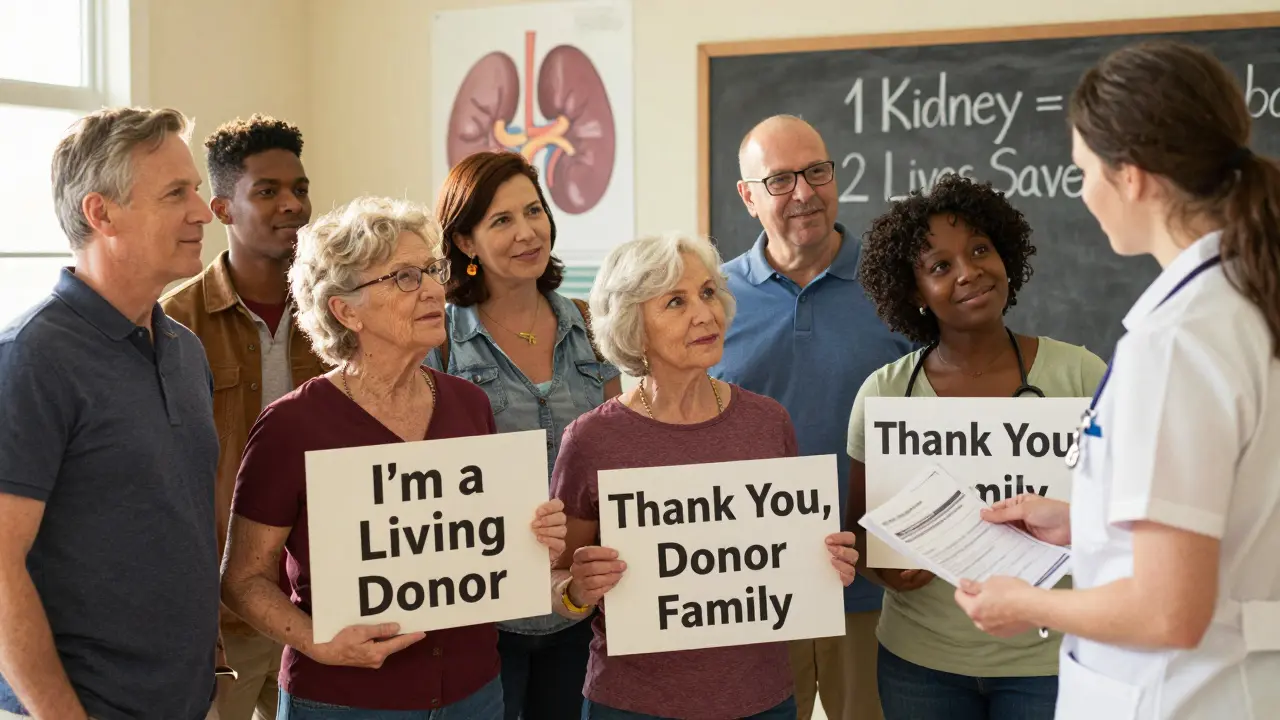
And yes-there’s still a waiting list. In the U.S., over 100,000 people are waiting for a kidney. The average wait is 3-5 years. But living donors change the game. If you have someone willing to donate, you can skip the list. That’s why public awareness matters. One donor can save a life-and free up a deceased donor kidney for someone else.
What’s Next? The Future of Transplants
New tools are changing the game. The Kidney Donor Profile Index (KDPI) helps match kidneys with the longest expected life to patients who need them most. A high-KDPI kidney might come from an older donor or someone with a history of high blood pressure. But even those kidneys give patients a better shot at life than staying on dialysis.Researchers are working on ways to reduce or even eliminate lifelong immunosuppression. Clinical trials at Stanford and the University of Minnesota are testing tolerance-inducing therapies-training the immune system to accept the new kidney without drugs. If it works, it could change everything. Imagine a transplant where you don’t need daily pills. That’s not science fiction anymore. It’s on the horizon.
For now, the best thing you can do is get evaluated early. Don’t wait until you’re on dialysis. Talk to your nephrologist. Ask about transplant. Find out if you qualify. And if you’re healthy enough, consider becoming a living donor. One kidney can give someone back their life.
Can you get a kidney transplant if you’re over 70?
Yes, age alone doesn’t disqualify you. Many centers evaluate older patients based on overall health-not just age. If you’re physically strong, have good heart and lung function, and have support at home, you can be a candidate. But frailty, not age, is the real concern. Transplant teams use tests like grip strength and walking speed to assess whether you can handle recovery.
What happens if the new kidney fails?
If the transplanted kidney fails, you go back to dialysis. You can be re-listed for another transplant, but your chances depend on your health, how long you’ve been on dialysis since the first transplant, and whether you still meet eligibility criteria. Many people successfully get a second transplant. Some even get a third. It’s harder each time, but it’s possible.
Do you have to take immunosuppressants forever?
Right now, yes. Lifelong immunosuppressants are required to prevent rejection. But research is moving fast. Clinical trials are testing ways to train the immune system to accept the new kidney without drugs. Some patients in early trials have gone months or years without medication. While not available yet, this could become standard in the next 5-10 years.
Can you drink alcohol after a kidney transplant?
Moderate alcohol is usually okay-like one drink a day for women, two for men. But heavy drinking is dangerous. It stresses the liver, raises blood pressure, and interferes with immunosuppressant drugs. Some medications, like tacrolimus, are processed by the liver, and alcohol can throw off the balance. Always check with your transplant team before drinking.
How long does a transplanted kidney last?
On average, a kidney from a living donor lasts about 15-20 years. One from a deceased donor lasts 10-15 years. But these are averages. Some last 30 years or more. Others fail in just a few years. It depends on how well you take your meds, manage your blood pressure and diabetes, avoid infections, and stick to follow-up care. The better you care for it, the longer it lasts.



Susan Kwan
8 February 2026So let me get this straight - you’re telling me I need to be a perfect human with a perfect body, a perfect support system, and perfect mental health just to get a second chance at life? Meanwhile, people with three heart stents and a vape habit get a free pass to the ER every Tuesday. The system’s a joke. I’ve seen it. I’ve lived it. And no, I don’t care how ‘well-researched’ this is. It’s still a lottery rigged for the privileged.
Random Guy
10 February 2026yo so like... i just read this whole thing and my brain is like ‘wait so i have to not be fat and not smoke and not be sad and not have cancer and have someone to remind me to take pills??’ like. bro. i can barely remember to charge my phone. how am i supposed to remember to take a pill that makes me break out and gain 20 lbs? this is less ‘medical procedure’ and more ‘obstacle course for saints’
Ryan Vargas
11 February 2026Let’s interrogate the underlying assumption here: that a transplant is a ‘solution’ rather than a commodification of biological vulnerability. The entire system is predicated on the idea that the body is a machine that can be upgraded - but what if the body isn’t a machine? What if the kidney isn’t a part to be replaced, but a symbol of systemic neglect? The fact that we treat organ donation as a ‘gift’ while 100,000 people wait in silence suggests we’ve turned medicine into a theology of scarcity. And the immunosuppressants? They’re not just drugs - they’re the price of admission to a society that still believes in merit, even when it’s clear the game is rigged. We don’t need more transplants. We need a healthcare system that doesn’t require you to be near death to earn basic dignity.
Tasha Lake
12 February 2026The GFR threshold variability across centers is fascinating from a clinical epidemiology standpoint. Mayo’s 20-25 mL/min threshold for pre-emptive transplants aligns with recent KDIGO guidelines emphasizing early referral, while Vanderbilt’s 15 cutoff reflects conservative risk stratification. What’s under-discussed is the impact of social determinants on GFR trajectory - low-income patients often present with faster decline due to delayed care access. Also, the 20% graft failure increase in BMI >35 is statistically significant (p<0.01 in the 2021 AJT meta-analysis), but the causality is murky - is it adipose-mediated inflammation, surgical complexity, or medication pharmacokinetics? The real bottleneck isn’t eligibility - it’s the 3–5 year waitlist for deceased donors. We need structural reform, not just individual optimization.
Sam Dickison
13 February 2026Honestly? This is the most accurate breakdown I’ve seen. I’ve been on the list for 2 years. The ‘care partner’ requirement isn’t bureaucracy - it’s survival. My sister drives me to every appointment, checks my meds, and calls the nurse if I’m off by even a half-hour. Without her? I’d be back on dialysis in a month. And yeah, the meds wreck you - I’ve got steroid moon face and a new diabetes diagnosis. But I can walk my dog now. I can sleep through the night. That’s worth every side effect.
Brett Pouser
14 February 2026In Nigeria, we don’t have transplant centers like this. My cousin had to sell her land to fly to India for a kidney. No insurance. No support system. Just hope. This article makes it sound like it’s a choice - but for most of the world, it’s a miracle. I’m glad you’re talking about living donors. We need more people to understand: one kidney doesn’t kill you. Not having one? That kills people slowly, quietly, and without fanfare.
Karianne Jackson
15 February 2026I just cried reading this. My mom got a kidney last year. She’s 78. She’s got a walker and a bad hip. But she’s baking pies again. I can’t even explain how much that means.
Andy Cortez
16 February 2026so like... i read this and i’m like ‘wait so they’re saying if you’re poor and overweight and have depression you just deserve to die?’. what’s next? are they gonna make us take a personality test before we get a liver? this is eugenics with a stethoscope. and don’t even get me started on ‘living donors’ - what if the donor dies? then what? they just say ‘oops’? and who’s paying for the funeral? hmm? hmm? someone answer me.
John Sonnenberg
18 February 2026The 97% one-year survival rate for living donor transplants is misleading. It doesn’t account for long-term psychosocial collapse. Studies show 42% of transplant recipients develop clinical depression within 18 months. The ‘freedom’ narrative ignores the psychological burden of lifelong vigilance. You’re not living - you’re managing a ticking time bomb with a spreadsheet and a pharmacy.
Joshua Smith
18 February 2026I’m a nurse on the transplant floor. This is spot on. The most common reason people lose their graft? They stop taking meds. Not because they’re lazy. Because they’re tired. Because they’re scared. Because they don’t have transportation. Because their job doesn’t give them time off. We need to stop blaming patients and start fixing systems.
Kathryn Lenn
19 February 2026Let’s not pretend this isn’t a profit-driven machine. Hospitals make millions on transplants. Pharma makes billions on immunosuppressants. The ‘research’ into tolerance induction? It’s funded by the same companies that sell you lifelong drugs. They don’t want a cure. They want a subscription. Wake up. This isn’t medicine - it’s a financial instrument disguised as hope.
John Watts
20 February 2026To anyone reading this and thinking ‘I’m too old’ or ‘I’m too sick’ - you’re not. Talk to your nephrologist. Ask for a referral. Even if you’re 80. Even if you’re on dialysis. Even if you’ve been told ‘no’ before. One phone call can change everything. I’ve seen it. I’ve been there. You’re not a burden. You’re a candidate. And you deserve to try.
Chima Ifeanyi
22 February 2026The data is cherry-picked. You cite 35% higher survival - but you ignore the 25% mortality rate within 1 year for patients over 70 with comorbidities. You glorify living donors while ignoring the ethical minefield of coercion, financial exploitation, and organ trafficking in the Global South. The US system is not a model - it’s a luxury product for the insured. Meanwhile, in Lagos, a kidney transplant costs $2000 - and the donor disappears afterward. So yes, this article is technically accurate. But it’s also a propaganda piece for a broken system.