
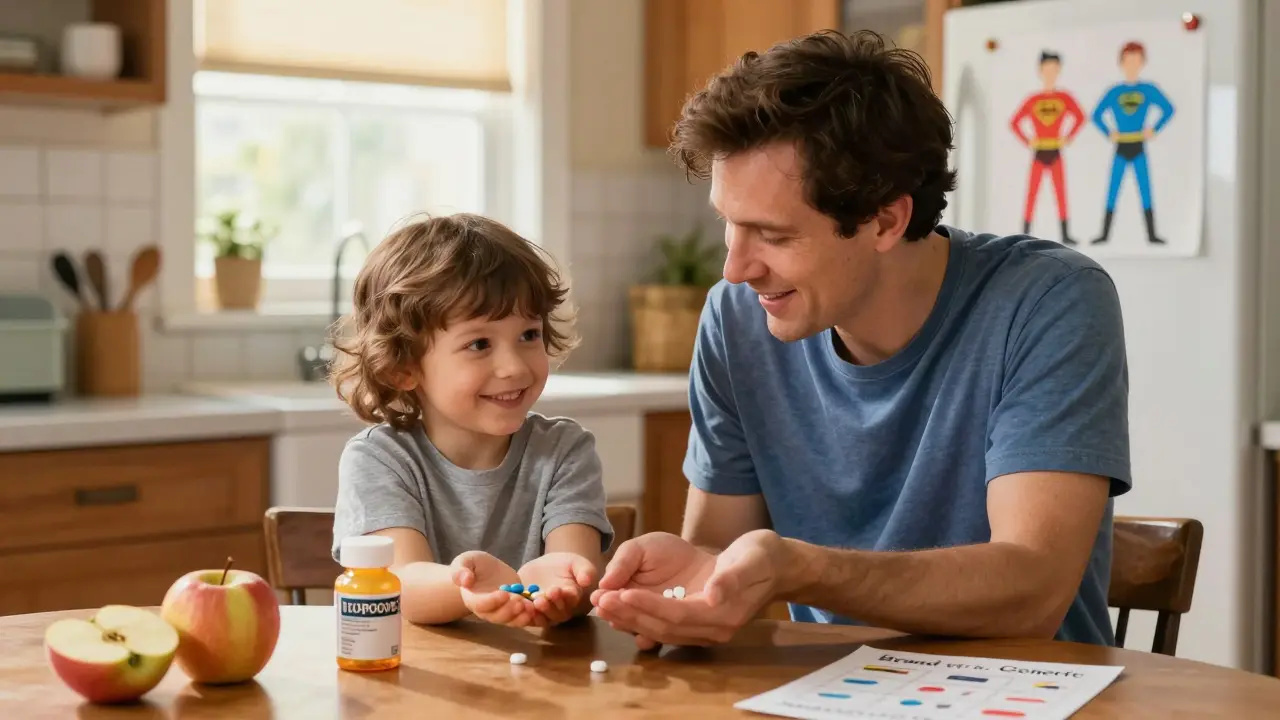

When your child asks why their medicine looks different from the last time, or why the bottle says generic instead of a brand name, it’s not just a question about pills-it’s a chance to build trust, safety, and understanding. Many parents and teachers assume kids don’t need to know the difference between brand-name and generic drugs. But in reality, children notice these things. And if they don’t understand why, they might start to worry, or worse, think there’s something wrong with the medicine they’re taking.
What Are Generic Drugs, Really?
Generic drugs are the same as brand-name drugs in every important way: they have the same active ingredient, work the same way in the body, and are just as safe and effective. The only differences are the name, the color or shape of the pill, and the price. Generic versions cost far less because the company didn’t pay to create the drug from scratch. Once a brand-name drug’s patent runs out, other companies can make copies. That’s how we get generics.
Think of it like this: a branded cereal might be called Fruity Crunch, but the store brand is just Breakfast Flakes. Same ingredients, same taste, different box. The same goes for medicine. Ibuprofen is ibuprofen-whether it’s sold as Advil or as a store brand. The body doesn’t care what the label says.
Why Teach Kids About Generic Drugs?
Most children aren’t taught about generics at school. But they’re exposed to them every day. They see different pill shapes at home. They hear adults say, “We’re switching to the cheaper one.” They might even hear rumors like, “The generic one doesn’t work as well.”
Without clear, simple explanations, kids can develop misunderstandings. Some think generic means “bad” or “fake.” Others worry their medicine is less powerful. These fears can lead to refusal to take medication, hiding pills, or even experimenting with medicines they don’t understand.
Teaching kids about generics helps them:
- Feel confident about their treatment
- Understand that medicine isn’t about branding-it’s about what’s inside
- Ask smart questions instead of making assumptions
- Recognize that saving money on medicine doesn’t mean cutting corners on health
How to Explain It to Young Children (Ages 3-7)
For little ones, keep it visual and fun. Use toys, drawings, or even play-dough to show how two pills can look different but do the same thing.
Try this:
- Take two different-looking pills (same medicine, different brands). Put them side by side.
- Say: “These both help your tummy feel better. One is called Brand-X, and one is called Generic-Y. They’re like two different costumes for the same superhero.”
- Let them touch the pills (if safe and supervised) and notice the color or shape.
- Ask: “Which one do you think works better?” Then show them the same medicine inside both.
Use stories. “The medicine inside is like your favorite stuffed animal. It doesn’t matter if it’s wearing a red shirt or a blue one-it’s still your buddy.”
Reassure them: “The doctor picked this one because it’s just as good, and it helps our family save money so we can buy other things we need.”
Teaching Older Kids (Ages 8-12)
Older children can handle more detail. They’re curious about how things work. Use this curiosity as a teaching moment.
Start with a simple definition:
“A generic drug is a copy of a brand-name medicine. It has the same active ingredient, same dose, same way of working. The only difference is the name on the bottle and the price.”
Then show them a real example:
- Take out a bottle of acetaminophen (Tylenol) and a store-brand version.
- Read the active ingredient on both labels: “Acetaminophen 500 mg.”
- Compare the price: “This one costs £1.50. The brand name costs £4.50. Same medicine. Three times cheaper.”
Ask them: “Would you rather have one expensive toy or three cheaper ones that do the same thing?”
Explain that pharmacies and doctors choose generics to help families save money-especially when insurance doesn’t cover the brand name. Let them know it’s a smart choice, not a compromise.
What to Avoid When Talking About Generics
Don’t say:
- “This is the cheap one.” (Kids hear “cheap” = “not good.”)
- “The brand is better.” (That’s not true, and it teaches misinformation.)
- “Don’t tell anyone we’re using generics.” (Makes them feel ashamed of a normal, healthy choice.)
Instead, say:
- “This is the same medicine, just named differently.”
- “We’re using this one because it saves money without losing quality.”
- “Doctors and pharmacists choose generics all the time because they work just as well.”
Children pick up on tone. If you sound proud of saving money responsibly, they will too.
What Schools Can Do
While most schools focus on drug abuse prevention, few teach kids about generic medicines. That’s a gap. Programs like Generation Rx already teach kids about safe medicine use-why not add a module on generics?
Simple classroom activities could include:
- Label-matching games: Match brand names to their generic equivalents
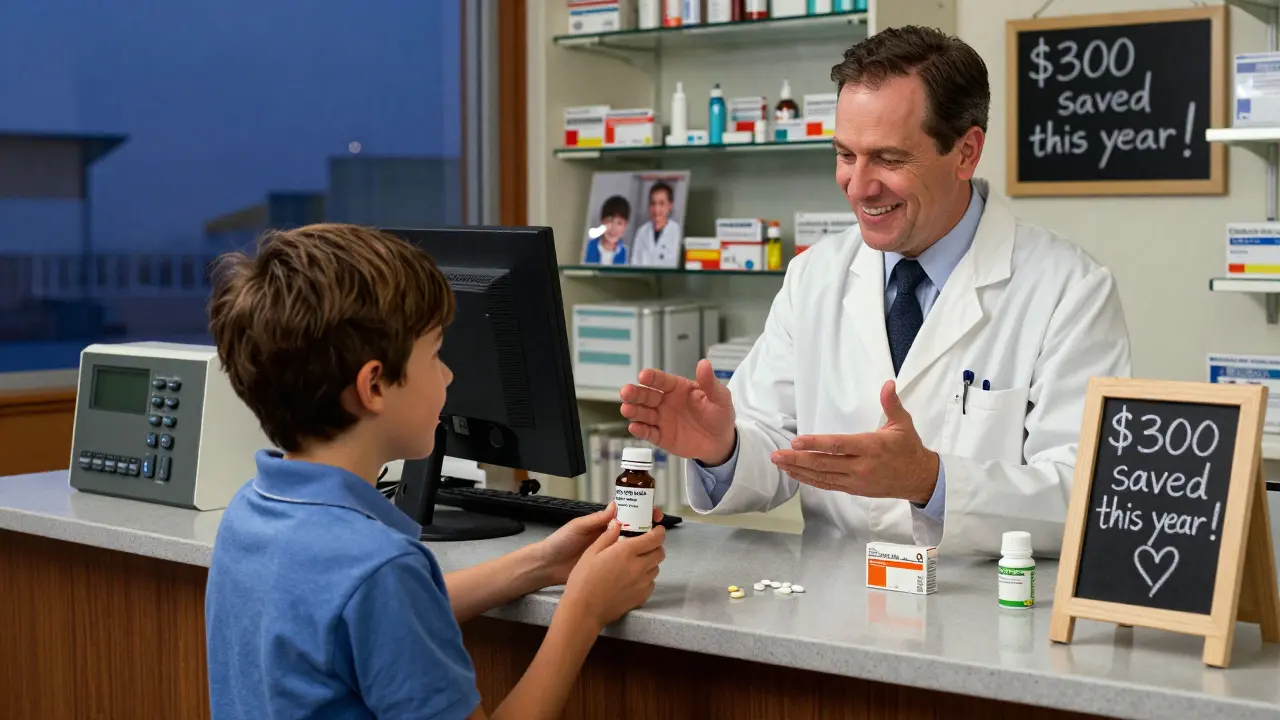
- Price comparison charts: Show how much families save over a year
- Role-play: “You’re the pharmacist. Explain why we’re giving the generic version.”
These lessons don’t need fancy tools. Just printouts, real pill bottles (empty, of course), and a calm, honest conversation.
Real-Life Impact
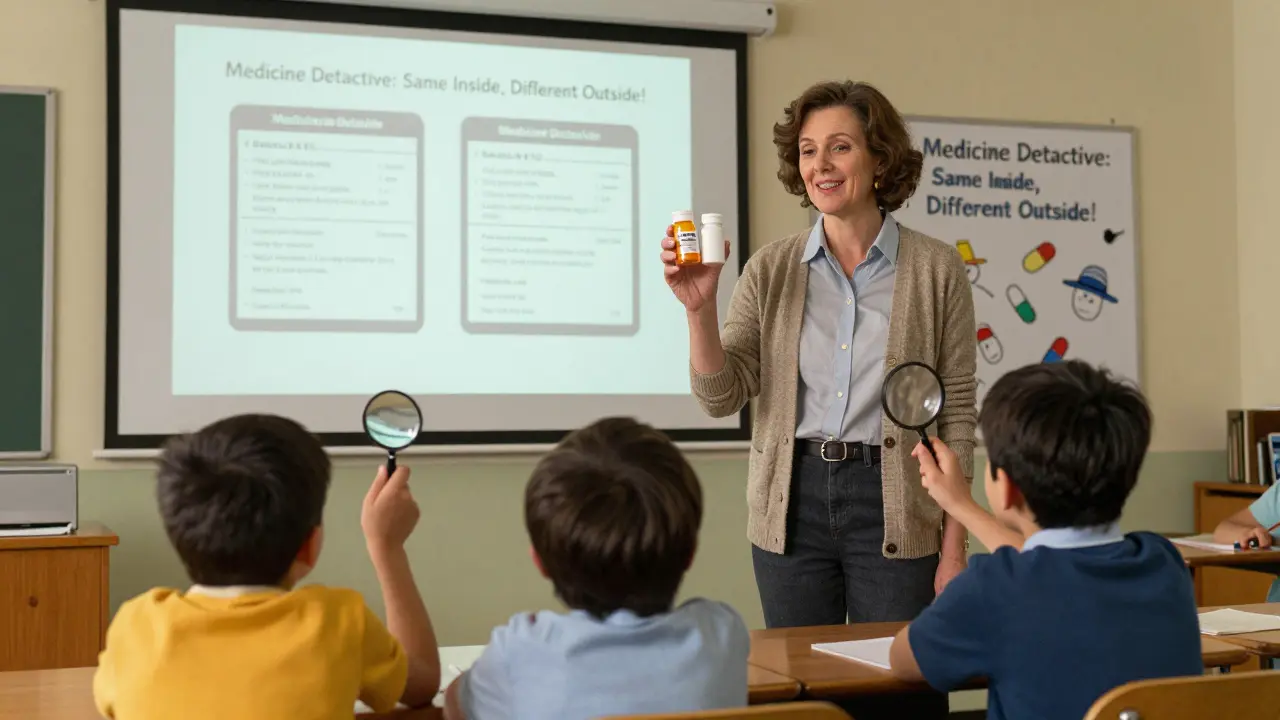
In Bristol, a primary school teacher started a “Medicine Detective” week after noticing kids were afraid to take their asthma inhalers because the label changed. She showed them side-by-side photos of the brand and generic versions. She let them hold the empty bottles. By the end of the week, not one child refused their medicine. One boy said, “I thought the new one was broken. Now I know it’s just dressed differently.”
That’s the power of clear, simple teaching.
What Parents Can Do Tomorrow
You don’t need a lesson plan. Just start with one moment:
- When you pick up a prescription, say out loud: “This is the generic version. It’s the same medicine, just cheaper.”
- When your child asks why the pill looks different, stop and explain-not dismiss.
- Keep a small chart on the fridge: “Brand Name” vs. “Generic Name” with pictures.
- Let your child help you compare prices at the pharmacy. Make it a family budgeting activity.
These small actions build lifelong habits. Kids who understand medicine are less likely to misuse it. They’re more likely to ask questions when something feels off. And they grow up to be adults who make smart, informed choices about their health.
Final Thought: It’s Not About Drugs. It’s About Trust.
Teaching children about generic drugs isn’t about pharmacology. It’s about teaching them to trust science, not labels. To question assumptions. To value honesty over marketing. To understand that good health doesn’t come with a fancy logo.
When kids learn that the blue pill and the white pill do the same thing, they’re learning something bigger: that the world isn’t always what it seems on the outside. And that’s a lesson worth more than any brand name.
Are generic drugs safe for children?
Yes, generic drugs are just as safe as brand-name drugs for children. The same strict rules apply: they must contain the same active ingredient, work the same way, and meet the same safety standards set by health regulators like the MHRA in the UK and the FDA in the US. Doctors and pharmacists choose generics because they’re proven to work, not because they’re cheaper.
Why do generic pills look different?
Generic pills look different because the law doesn’t allow them to copy the exact appearance of brand-name drugs. That means the color, shape, size, or markings may change-but the medicine inside is identical. These differences are only for branding, not for function. Think of it like two different car models with the same engine.
Can generic drugs work differently in kids?
No, they don’t. The active ingredient is the same, so how the body responds is the same. Sometimes kids might notice a different taste or pill size, which can cause temporary confusion, but the medicine’s effect on their body won’t change. If a child feels different after switching, talk to the pharmacist-sometimes it’s the inactive ingredients (like flavor or filler) causing a reaction, not the medicine itself.
Should I let my child see the difference between brand and generic?
Yes, and you should. Hiding the difference makes it seem like there’s something secret or shameful about generics. Letting your child see and compare them builds curiosity and critical thinking. It turns a potential source of anxiety into a learning opportunity. Show them the labels, compare prices, and explain why the choice is smart.
What if my child refuses to take the generic version?
Don’t force it. First, find out why. Is it the taste? The size? A fear that it’s weaker? Address the real concern. Try mixing the pill with applesauce if it’s hard to swallow. Use a pill cutter if the size is intimidating. Reassure them with facts: “This is the same medicine your doctor prescribed. It just looks different.” If resistance continues, talk to your pharmacist-they might have a different generic version that looks more familiar.
Do schools teach this anywhere?
Most schools focus on drug abuse prevention, not medicine basics. But programs like Generation Rx and NIDA’s resources include modules on safe medication use-and some now include lessons on generics. If your child’s school doesn’t, ask if they can add a simple lesson. Many teachers welcome it. It’s practical, non-controversial, and helps kids feel more in control of their health.


Alexandra Enns
26 January 2026This is the dumbest thing I've ever read. Who the hell teaches kids about generic drugs? They don't care. They care about candy. This is overthinking parenting like a Canadian bureaucrat with too much time on their hands. Next you'll be making them memorize the FDA approval process before bedtime.
Marie-Pier D.
27 January 2026Oh my gosh, this is SO important!! 💖 I'm a pediatric nurse and I've seen so many kids panic when their meds change color - they think they're being poisoned or something. This guide is pure gold. I'm printing it for every parent in my clinic. Thank you for normalizing this conversation!! 🌈✨
Kevin Waters
29 January 2026Great breakdown. I've been using this exact approach with my 9-year-old for a year now. We keep a little chart on the fridge - brand vs generic, same active ingredient, price difference. He even corrects me now when I say 'cheap medicine.' He says, 'It's affordable, Dad. Not cheap.' Kids get it when you treat them like people.
Kat Peterson
30 January 2026I mean... I'm just shocked this even needs to be written. 😩 Like, are we really at the point where we have to explain to children that a pill is a pill? Did we forget how to be adults? I'm not even mad, I'm just... disappointed. This is like writing a guide on how to explain that water is wet. 🥲
Himanshu Singh
31 January 2026This reminds me of my grandfather in Delhi - he'd say, 'The soul of the medicine is inside, not on the wrapper.' He didn't know about patents or FDA, but he understood truth. We lost that wisdom when we started worshiping logos. Teaching kids this isn't about drugs - it's about teaching them to see through noise. That’s the real medicine.
Don Foster
1 February 2026Generic drugs are fine I guess if you dont care about your kids health but honestly if you cant afford the brand name maybe you shouldnt be giving your kid meds at all. Also why are we teaching kids about this like its some revolutionary concept. Its just pills. Stop overcomplicating everything. The world is already too soft.
siva lingam
3 February 2026Wow. A whole article about explaining pills to kids. Next up: How to teach toddlers that gravity isn't a conspiracy. 🤡
Neil Ellis
4 February 2026I love how this turns a clinical topic into a quiet revolution. Kids aren’t just learning about medicine - they’re learning to question marketing, value substance over spectacle, and trust science over slogans. That’s not parenting. That’s nation-building. 🌍💙
Sue Stone
5 February 2026My kid asked why his ADHD med looked different last week. I just said, 'Same stuff, new outfit.' He shrugged and took it. Kids are way less dramatic than we are.