


Starting a new medication can feel like a step forward - but it can also open the door to hidden dangers. Many people don’t realize that the pill they just picked up might clash with something they’ve been taking for years. These clashes, called drug interactions, can turn a helpful treatment into a risky one. They might make your medicine less effective, or worse, cause serious side effects like internal bleeding, dangerously high blood pressure, or even breathing problems. The truth is, if you’re on more than three medications, you’re already in a higher risk group. And if you’re over 65? That risk jumps even higher.
What Exactly Is a Drug Interaction?
A drug interaction happens when one substance changes how another works in your body. It’s not just about pills. It can be supplements, herbal products, even foods or alcohol. There are two main types: pharmacokinetic and pharmacodynamic.Pharmacokinetic interactions affect how your body processes the drug - whether it gets absorbed, broken down, or cleared out. The most common culprit? The liver enzyme CYP3A4. It handles about half of all clinically important interactions. For example, if you’re taking simvastatin (a cholesterol drug) and amlodipine (a blood pressure pill), your doctor must cap the simvastatin at 20 mg a day. Go higher, and you risk severe muscle damage. With diltiazem or verapamil, that limit drops to just 10 mg. These aren’t guesses - they’re based on years of clinical data showing exactly how much the blood levels of simvastatin rise when mixed with these drugs.
Pharmacodynamic interactions are about what the drugs do together. Two drugs might amplify each other’s effects. Take blood thinners: mixing low molecular weight heparins with direct oral anticoagulants (DOACs) can spike your bleeding risk by 300-400%. Or consider opioids and promethazine - combining them can slow your breathing to dangerous levels, increasing sedation by 200-300%. Even something as simple as aged cheese can trigger a hypertensive crisis if you’re on an MAO inhibitor like phenelzine. Just one serving can push systolic blood pressure over 200 mmHg.
Who’s Most at Risk?
You might think interactions only affect older adults, but the reality is more nuanced. While 44.8% of people over 65 take five or more medications - a group known as polypharmacy - younger people aren’t immune. Anyone taking multiple prescriptions, especially for chronic conditions like diabetes, heart disease, or depression, is at risk. But certain factors make it worse:- Reduced kidney function (eGFR under 30 mL/min)
- Liver disease
- Using supplements like St. John’s Wort (which can slash cyclosporine levels by 40-60%)
- Not telling your doctor about over-the-counter drugs or herbal remedies
Studies show that 68% of patients never mention their supplements to their doctor. And St. John’s Wort isn’t the only one - grapefruit juice, turmeric, garlic pills, and even some vitamins can interfere. The HIV Drug-Drug Interaction Guide lists 147 high-risk interactions, and 72% involve CYP3A4. That means if you’re on antiretrovirals, you’re sitting on a ticking clock unless you’re being monitored closely.
What You Should Do Before Starting a New Drug
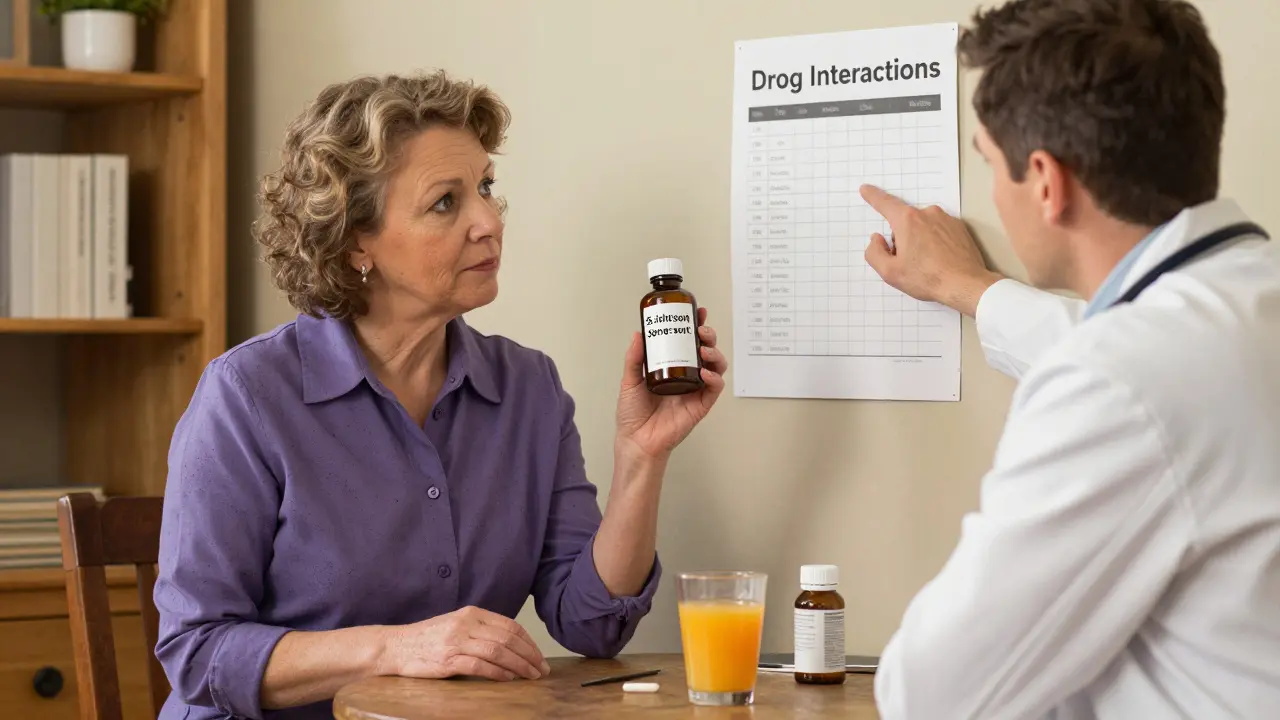
Don’t wait until you feel something’s wrong. Prevention starts before you even take the first pill.- Make a full list of everything you take. Not just prescriptions - include vitamins, supplements, herbal teas, OTC painkillers, and even recreational substances. Write down the dose and how often you take it.
- Bring it to every appointment. Don’t rely on memory. Show your doctor or pharmacist the actual bottles if you can. Many people forget they’re taking melatonin, fish oil, or a magnesium supplement - but those can interfere with blood pressure meds, antidepressants, or blood thinners.
- Ask the three key questions:
- “Could this interact with anything else I’m taking?”
- “Is there a safer alternative?”
- “What signs should I watch for if something’s wrong?”
- Get a Personal Medication Record (PMR). This isn’t just a list - it’s a living document. It should include: medication name, dose, reason for taking it, timing instructions, what to avoid, and possible side effects. Pharmacies can help you create one. Keep it updated after every change.
When the New Drug Starts - What to Watch For
The first week is critical. That’s when most interactions show up. You might not feel anything right away, but your body is reacting. Here’s what to monitor:- Unusual dizziness or confusion
- Unexplained bruising or bleeding (nosebleeds, gum bleeding, dark stools)
- Extreme fatigue or muscle pain
- Swelling in ankles or sudden weight gain
- Heart palpitations or chest tightness
- Severe nausea or vomiting
If you’re on warfarin and start amiodarone, your INR (a blood test that measures clotting time) must be checked within 3-5 days. Then weekly for four weeks. If you’re on a statin with a calcium channel blocker, watch for muscle weakness - it could be early signs of rhabdomyolysis, a life-threatening condition.
One real-world example: A 72-year-old man in Bristol started lisinopril for high blood pressure. He’d been taking ibuprofen for arthritis for years. He didn’t think it mattered. Two weeks later, he was admitted with acute kidney failure. The interaction wasn’t obvious - but it was deadly. He had no symptoms until it was too late.
Why Electronic Alerts Often Fail
You’d think your doctor’s computer would warn you. But here’s the problem: EHR systems flood providers with alerts. A 2023 JAMA study found that doctors ignore 90-95% of drug interaction warnings. Why? Too many false alarms. If your system flags every minor interaction - like a common antacid with a thyroid pill - you stop paying attention.But here’s the good news: High-severity alerts - those that say “contraindicated” or “50% dose reduction required” - still get followed 75% of the time. That’s why it’s crucial to ask your provider: “Is this interaction flagged as major or minor?” If it’s major, don’t brush it off. If it’s minor, ask if there’s a better option.

What You Can Do Right Now
You don’t need to wait for your next appointment. Here’s what you can do today:- Check your medicine cabinet. Pull out every pill, capsule, and bottle. Make a list.
- Call your pharmacy. Ask them to run a drug interaction check on your entire list. Most do this for free.
- Look up your new medication on the Specialist Pharmacy Service (SPS) or HIV Drug Interaction Guide (publicly available resources). Search for “simvastatin + amlodipine” or “warfarin + amiodarone” - you’ll find exact limits and warnings.
- Stop taking St. John’s Wort if you’re on any antidepressant, birth control, or heart medication. It’s not harmless.
- Never take new supplements without asking your pharmacist. Even “natural” doesn’t mean safe.
When to Call Your Doctor Immediately
Don’t wait for your next checkup. If you experience any of these after starting a new drug, call your provider right away:- Black or tarry stools
- Severe muscle pain or weakness
- Difficulty breathing
- Sudden swelling in face, lips, or throat
- Heart rate over 120 bpm at rest
- Confusion, slurred speech, or loss of coordination
These aren’t normal side effects. They’re red flags. And the sooner you act, the less damage is done.
Final Thought: You’re the Most Important Part of the System
Doctors and pharmacists are trained to spot these risks. But they can’t read your mind. If you don’t tell them about your turmeric capsules or your nightly glass of grapefruit juice, they can’t protect you. Medication safety isn’t just about prescriptions - it’s about communication. The more you know, the more power you have. Keep your list updated. Ask questions. Trust your gut. If something feels off, it probably is.Can over-the-counter painkillers interact with my prescription meds?
Yes, absolutely. Common OTC painkillers like ibuprofen, naproxen, and even aspirin can interfere with blood pressure medications, blood thinners, and kidney function. Taking ibuprofen with lisinopril or losartan can reduce their effectiveness and raise your risk of kidney damage. If you take these daily, talk to your doctor about switching to acetaminophen - it’s safer for most people on multiple meds.
Is it safe to take supplements with my new medication?
Not without checking. Supplements like St. John’s Wort, garlic, ginkgo, and even high-dose vitamin E can interfere with antidepressants, blood thinners, and immunosuppressants. St. John’s Wort can cut levels of cyclosporine by 60%, putting transplant patients at risk of rejection. Always tell your pharmacist what you’re taking - even if you think it’s "just a vitamin."
How long should I wait before taking my new medication with food?
"Take on an empty stomach" means 1 hour before eating or 2 hours after. Many people misunderstand this as "don’t eat for two hours before and after," which isn’t correct. Taking a drug like levothyroxine with food - even a light snack - can reduce absorption by up to 50%. Always read the label carefully and ask your pharmacist to explain the instructions.
Why does my doctor want to check my blood work after I start a new drug?
Some medications change how your body processes others - and that shows up in blood tests. For example, starting amiodarone with warfarin requires an INR check within 3-5 days to prevent dangerous bleeding. For statins, liver enzymes (ALT/AST) are checked to catch early signs of muscle or liver damage. These tests aren’t routine - they’re targeted safety checks.
Can alcohol interact with my new medication?
Yes, and it’s often underestimated. Alcohol can increase drowsiness with opioids, sedatives, or antihistamines. It can spike blood pressure when taken with certain antidepressants. For people on metronidazole, alcohol causes vomiting, flushing, and rapid heartbeat. Even moderate drinking can make some meds less effective or more toxic. If you’re unsure, avoid alcohol entirely until you’ve spoken to your pharmacist.




Elizabeth Cannon
25 January 2026omg i just realized i’ve been taking ibuprofen with my blood pressure med for years 😳 my doctor never said anything… time to call them ASAP
Luke Davidson
26 January 2026bro this post is a lifesaver. i’ve been popping turmeric pills like candy thinking they’re ‘natural’ and harmless. turns out they’re basically sneaky blood thinners? wow. just deleted my whole supplement drawer. also, grapefruit juice is now banned from my kitchen. no regrets.
Vatsal Patel
27 January 2026so let me get this straight… we’re being told to treat our bodies like a chemistry lab while ignoring the fact that Big Pharma profits off our ignorance? how quaint.
Husain Atther
28 January 2026This is an exceptionally well-researched and thoughtful piece. I appreciate the emphasis on proactive communication with healthcare providers. Many patients assume that physicians will automatically account for all variables, but the reality is far more complex.
Dolores Rider
29 January 2026they're watching us. the EHR system? it's not just flagging interactions - it's feeding data to insurance companies. they see you're on 7 meds? premium hike incoming. they see you took St. John’s Wort? they'll deny your next claim. i'm not paranoid. i've seen the paperwork.
Jenna Allison
30 January 2026just checked my med list with my pharmacy app - turns out my fish oil and levothyroxine shouldn’t be taken together. i’ve been doing it wrong for 2 years. thanks for the nudge. also, yes, ‘take on empty stomach’ means 1 hour before, not ‘as long as you don’t eat toast’.
Sushrita Chakraborty
30 January 2026As someone from India, I have observed that herbal remedies are often considered ‘safe’ due to cultural familiarity, yet their pharmacological impact is rarely assessed. St. John’s Wort, ashwagandha, and even neem can significantly alter drug metabolism - particularly in patients on antiretrovirals or anticoagulants. Education must bridge tradition and science.
Sawyer Vitela
31 January 2026you’re all missing the point. the real issue is that 90% of people can’t read a medication label. if you don’t know what ‘CYP3A4’ means, you shouldn’t be taking 5 pills
Tiffany Wagner
31 January 2026i printed out the PMR template from the post and filled it out. it’s kinda emotional seeing everything written down like that. i didn’t realize how much i was taking. also… i forgot about the melatonin. oops.
Don Foster
1 February 2026you people are overcomplicating this. if you’re on more than three meds you’re already a walking clinical trial. just stop taking everything and see what happens. if you feel better? you were overdosed. if you feel worse? congrats you’re addicted. science is simple
Viola Li
2 February 2026why are we treating patients like children who need a list? if you can’t manage your own meds, maybe you shouldn’t be allowed to live alone. this is just enabling dependency
venkatesh karumanchi
4 February 2026i’ve been on blood thinners for 8 years. never knew grapefruit juice could be a silent assassin. today i drank a glass… and i’m still alive. but i won’t do it again. this post gave me chills. thank you.
asa MNG
6 February 2026also… your doctor probably doesn’t even know what you’re taking. i told mine about my magnesium and he said ‘oh cool’ and kept typing. i think they’re all on autopilot. we’re just numbers in a system. 💔🫠
asa MNG
7 February 2026also i just looked up simvastatin + amlodipine and now i’m scared to move. my heart is racing. is this what rhabdomyolysis feels like?? 😵💫