

Diuretic Interaction & Risk Checker
Select the type of diuretic you are taking and any concurrent medications to see potential risks and warnings.
1. Select Diuretic Type
2. Concurrent Medications
Analysis Result
Whether you are managing high blood pressure or heart failure, understanding how Diuretics is a class of pharmacological agents that increase urine output by altering renal sodium handling works is the only way to avoid dangerous pitfalls. This guide breaks down exactly which electrolytes are at risk with different drugs and how common medications can either boost or break your treatment.
How Different Diuretics Mess With Your Minerals
Not all water pills are created equal. They target different parts of the nephron (the functional unit of the kidney), and because of this, they trigger very different electrolyte crashes. If you're on one of these, you need to know what to watch for in your blood work.
First, we have Loop Diuretics (like furosemide). These are the heavy hitters. They target the thick ascending limb of the kidney, where about 25% of sodium is usually reabsorbed. Because they are so powerful, they cause massive sodium and potassium loss. While they are great for clearing fluid quickly, they carry a high risk of hypokalemia (low potassium) and can sometimes lead to hypernatremia if you lose more water than salt.
Then there are Thiazide Diuretics (like hydrochlorothiazide). These act further down the line in the distal convoluted tubule. They are less aggressive than loop diuretics, but they have a notorious tendency to cause hyponatremia-where your sodium levels drop too low. This is especially common in elderly women and can lead to confusion or seizures if ignored.
Finally, we have Potassium-Sparing Diuretics (like spironolactone). These do exactly what the name says: they stop the body from peeing out potassium. While this sounds like a good way to balance out the other two types, it can be dangerous. If your kidneys aren't functioning well, these drugs can cause hyperkalemia (too much potassium), which can literally stop your heart.
| Diuretic Type | Primary Target | Main Risk | Effect on Potassium |
|---|---|---|---|
| Loop (e.g., Furosemide) | Thick Ascending Limb | Hypokalemia / Hypernatremia | Decreases |
| Thiazide (e.g., HCTZ) | Distal Tubule | Hyponatremia | Decreases |
| Potassium-Sparing (e.g., Spironolactone) | Collecting Duct | Hyperkalemia | Increases |
The Danger Zone: Common Drug Interactions
The real trouble starts when you mix diuretics with other medications. Some combinations are strategic, while others are a recipe for disaster. You might be taking an over-the-counter pill or a common antibiotic without realizing it's fighting against your heart medication.
One of the biggest culprits is NSAIDs (like ibuprofen or indomethacin). These pain relievers block prostaglandins in the kidneys. Since your body needs those prostaglandins to keep blood flowing to the kidneys while you're on a diuretic, NSAIDs can slash the effectiveness of your loop diuretics by 30% to 50%. Essentially, the water pill stops working, and the fluid starts building up in your lungs or ankles again.
Then there is the "potassium trap." If you are taking ACE Inhibitors (like lisinopril) and add a potassium-sparing diuretic to the mix, you're doubling down on potassium retention. A meta-analysis of over 12,000 heart failure patients showed that this combination can spike serum potassium levels significantly more than using one drug alone. Even some antibiotics, like trimethoprim-sulfamethoxazole (Bactrim), can trigger life-threatening hyperkalemia in patients already taking spironolactone.
On the flip side, some interactions are actually helpful. SGLT2 inhibitors (like dapagliflozin), originally for diabetes, are now being used as "diuretic enhancers." They reduce sodium reabsorption early in the kidney process, which means more sodium reaches the area where loop diuretics work, making the water pill much more effective. It's a synergistic effect that can reduce the total amount of medication you need.
Why Your Body Resists Diuretics
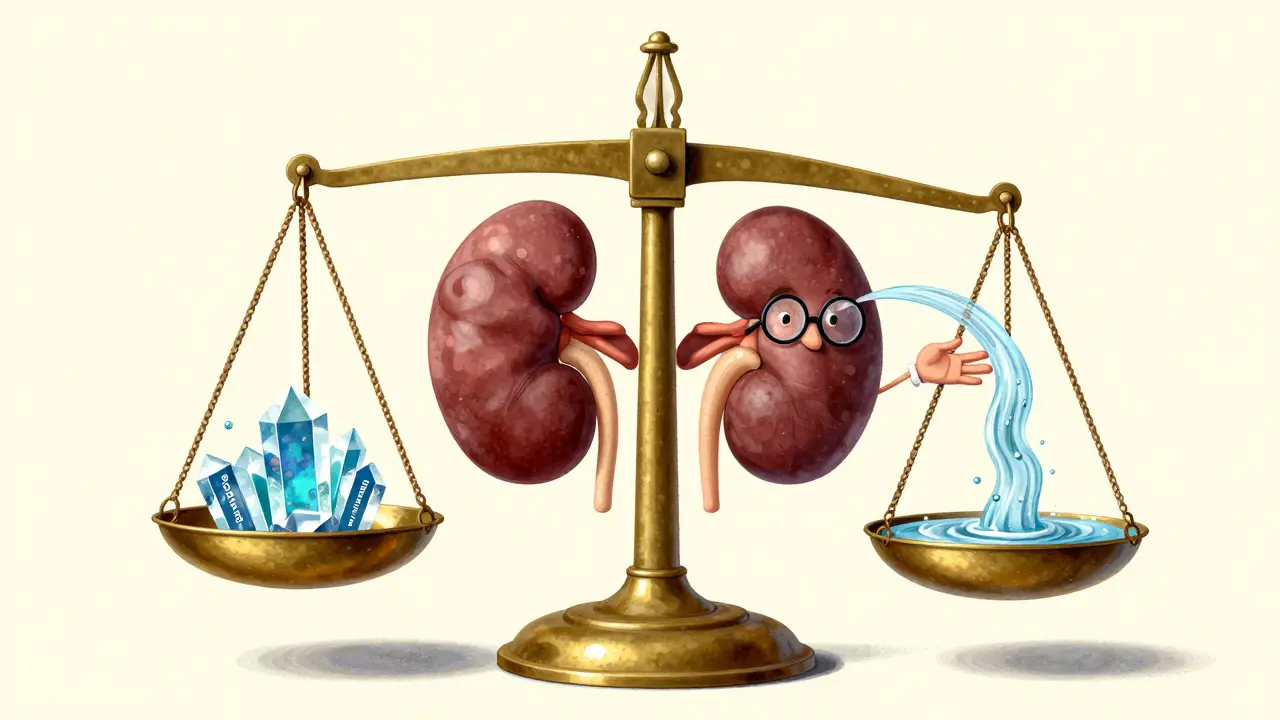
Have you ever noticed that a water pill works great for a week, and then suddenly it feels like it's doing nothing? This is called the "braking phenomenon." Your body is smart-too smart. When you block sodium reabsorption in one part of the kidney, the other parts of the kidney compensate by working overtime to suck that sodium back in. This is known as diuretic resistance.
To beat this, doctors often use "sequential nephron blockade." This means using two different types of diuretics-like a loop diuretic and a thiazide (metolazone)-to block sodium at two different stations. While this is incredibly effective for severe swelling (edema), it's a tightrope walk. The risk of acute kidney injury and severe sodium crashes jumps significantly when you use high doses of combined agents.

Practical Tips for Safe Management
Managing these medications isn't about guesswork; it's about timing and data. If you're on a diuretic regimen, your blood work is your map. You shouldn't be guessing if your potassium is okay; you should be seeing the numbers.
Generally, you need a blood test within 3 to 7 days of starting a new diuretic or changing a dose. Once you're stable, checking every few months is usually enough. However, if you're escalating your dose, you might need tests every 24 to 48 hours. Keep a close eye on your weight daily-a sudden jump can signal that your diuretic is failing before you even feel shortness of breath.
For those on loop diuretics, remember that the oral version takes 1 to 2 hours to kick in, whereas the IV version works in 30 minutes. Because they only last about 6 to 8 hours, taking them twice a day is often necessary to keep fluid from returning. Thiazides last much longer (up to 24 hours), which is why they're better for daily blood pressure control but less useful for emergency fluid removal.
What are the first signs that my electrolytes are off?
Low potassium (hypokalemia) often feels like muscle weakness, cramping, or heart palpitations. Low sodium (hyponatremia) usually starts with confusion, fatigue, or a dull headache. High potassium (hyperkalemia) is the most dangerous and can cause irregular heartbeats or sudden muscle paralysis. If you feel unusually confused or your heart skips a beat, call your doctor immediately.
Can I take ibuprofen while on a water pill?
It is generally not recommended. NSAIDs like ibuprofen can reduce the effectiveness of your diuretic and put extra strain on your kidneys. This can lead to fluid retention and an increase in blood pressure, effectively canceling out the benefit of your medication.
Why do I have to take my diuretic in the morning?
Timing is everything. Because diuretics increase urine production, taking them late in the day will likely lead to "nocturia"-waking up multiple times a night to use the bathroom. This disrupts your sleep and increases the risk of falls, especially in elderly patients.
Do I need to eat more bananas or salt?
It depends entirely on which drug you are taking. If you're on a loop or thiazide diuretic, your doctor might suggest potassium-rich foods like bananas or a supplement. However, if you're on a potassium-sparing diuretic, eating too many bananas could actually push your potassium into a dangerous range. Never start a supplement without a blood test first.
What is diuretic resistance?
Diuretic resistance happens when your kidneys adapt to the medication. The body tries to maintain its fluid balance by increasing sodium reabsorption in the parts of the kidney that the drug isn't blocking. This often happens after a few days of continuous therapy, requiring your doctor to either increase the dose or add a second type of diuretic.
Next Steps for Your Health
If you are starting a diuretic, your first priority is to establish a baseline. Get your electrolytes checked before the first dose so you and your doctor know what "normal" looks like for you. Create a tracking log for your daily weight and blood pressure; this data is far more valuable to a clinician than saying you "feel okay." If you're adding a new medication-even an over-the-counter antibiotic or pain reliever-always ask if it interacts with your water pill. A simple check now can prevent a hospital trip later.