
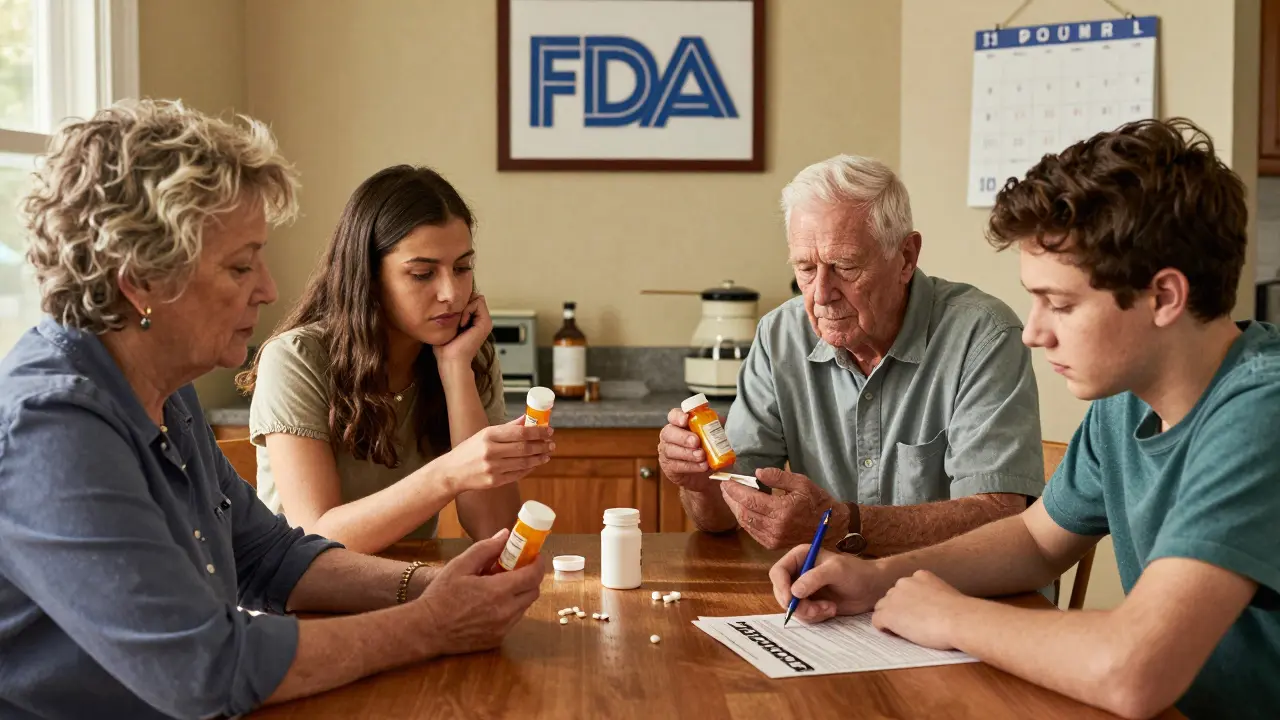

Every year, millions of people take prescription drugs, over-the-counter medicines, and even dietary supplements without a second thought. But what happens when something goes wrong? A strange rash. A sudden drop in blood pressure. A child having a seizure after a vaccine. These aren’t just rare accidents-they’re signals. And MedWatch is the system designed to catch them before more people get hurt.
MedWatch isn’t a website you visit when you’re sick. It’s not a hotline for quick answers. It’s the U.S. Food and Drug Administration’s official channel for reporting dangerous side effects, product failures, and用药错误. Think of it like a public health alarm system. The more reports it gets, the better it can spot patterns, warn doctors, and even pull dangerous drugs off the shelf.
What Exactly Is MedWatch?
MedWatch, officially called the FDA Safety Information and Adverse Event Reporting Program, started in 1993. It was created because drugs and devices that pass clinical trials don’t always behave the same way in real life. A drug tested on 5,000 people might seem safe. But when millions start using it, rare side effects-like heart damage or liver failure-can suddenly show up. MedWatch was built to catch those.
It covers everything the FDA regulates: prescription and OTC drugs, biologics (like vaccines and gene therapies), medical devices, cosmetics, infant formula, and even dietary supplements. That’s important. People often think supplements are “natural” and therefore safe. But they can cause serious reactions too. MedWatch collects reports on all of them.
The system runs on two types of reports: mandatory and voluntary. Manufacturers must report serious problems within 15 days. That’s the law. But anyone else-doctors, nurses, pharmacists, patients, caregivers-can report voluntarily. And that’s where the real power lies. Patients notice things doctors miss. A grandmother might report that her grandchild started hallucinating after a new allergy pill. That kind of detail can spark an investigation.
Who Should Report and When?
You don’t need to be a doctor to report. If you or someone you care for had a serious reaction, you should report it. The FDA defines a serious adverse event as anything that:
- Caused death
- Required hospitalization
- Resulted in permanent disability
- Caused a birth defect
- Needed medical or surgical intervention to prevent permanent harm
It doesn’t matter if you’re not sure it was the drug. If you suspect it, report it. The FDA doesn’t blame you for being wrong. They need the data. In fact, one of the biggest problems with MedWatch is that most people don’t report at all. Studies show only 1% to 10% of serious side effects ever make it into the system. That means thousands of warning signs are vanishing into silence.
Healthcare providers report more often than patients. Oncologists report 78% of the time. Primary care doctors? Only 42%. Why? Time. Paperwork. Uncertainty. But patients don’t have those barriers. If you had a bad reaction, you’re the expert on your own body. You know what changed. You know when it started. That’s valuable.
How to Report: The Simple Steps
Reporting takes less than 20 minutes. You have three options:
- Online - Go to fda.gov/MedWatch and fill out the form. This is the fastest way. The site guides you step by step. You can even save your progress and come back later.
- Phone - Call 1-800-FDA-1088. A live person answers. They’ll ask you questions and type your report for you. No need to write anything.
- Mail or Fax - Download Form FDA 3500B (for patients) or FDA 3500 (for professionals) from the website. Fill it out and send it. The FDA even provides a pre-addressed envelope.
For patients, the form is simple. You’ll need:
- The name of the medicine, supplement, or device
- What happened (describe the reaction in plain language)
- When it started and how long it lasted
- Your name and contact info (optional, but helps if they need to follow up)
You don’t need medical records. You don’t need a diagnosis. Just tell them what you saw. “My husband’s hands turned blue after taking his new blood pressure pill” is enough. The FDA’s safety team will take it from there.
Pro tip: If you’re reporting for someone else-like a child, elderly parent, or non-English speaker-you can still report. The FDA offers the consumer form in Spanish. And if you’re confused, call the helpline. The average wait time is under 3 minutes.
What Happens After You Report?
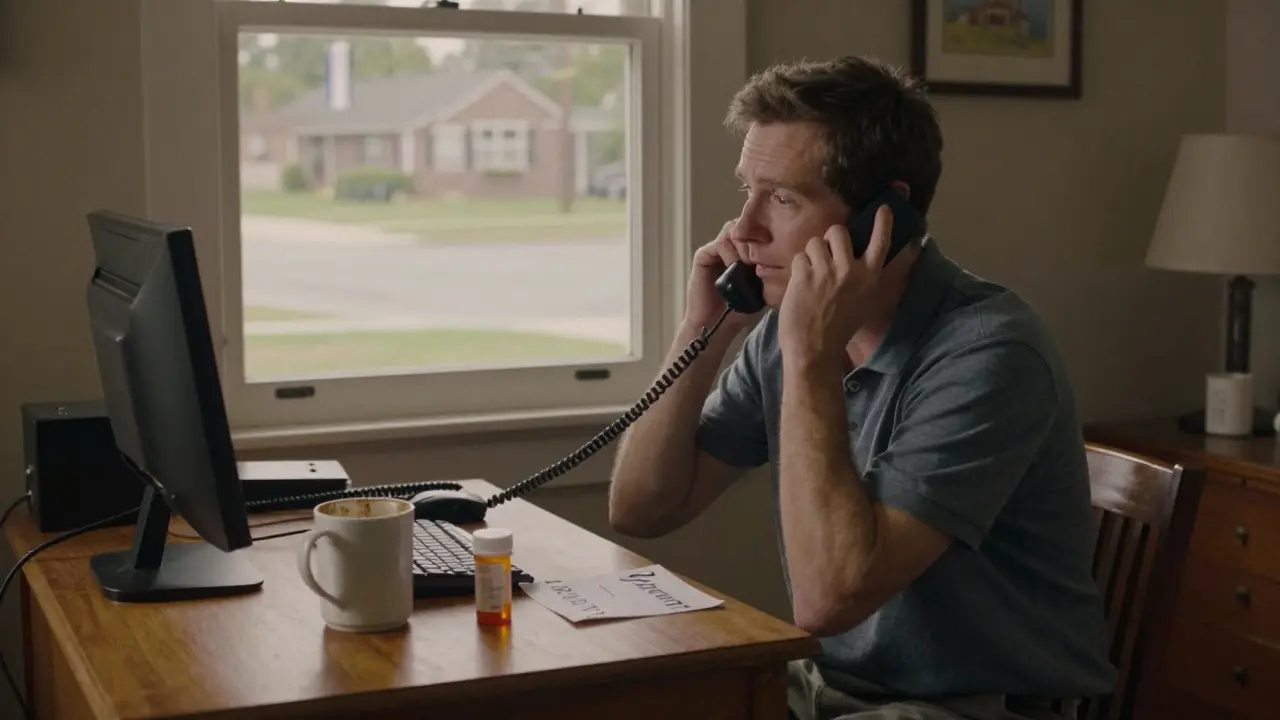
This is where most people get frustrated. You report. You wait. And then… nothing. No email. No call. No confirmation number. That’s normal. The FDA doesn’t reply to every report. They get over 1.4 million a year.
But here’s what actually happens:
- Your report gets added to a national database of over 10 million reports since 1993.
- FDA scientists look for patterns. If 10 other people report the same reaction to the same drug, that’s a red flag.
- If enough reports point to a real risk, the FDA may issue a safety alert, update the drug label, or even remove the product.
Real examples? In 2007, MedWatch reports helped uncover that the diabetes drug rosiglitazone (Avandia) increased heart attack risk. That led to a major warning and restrictions. In 2018, reports of severe skin reactions to a common acne medication led to a black box warning-the strongest safety alert the FDA gives. These didn’t come from lab studies. They came from patients and doctors speaking up.
Don’t expect a thank-you note. But know this: your report might be the one that saves a life next year.
Why Most People Don’t Report (And Why You Should Anyway)
A 2022 survey found that 78% of Americans had never heard of MedWatch. That’s shocking. And it’s why so many dangerous drugs stay on the market too long.
People don’t report because:
- They think it’s not their place
- They believe the FDA already knows
- They’re afraid of getting blamed
- They don’t know how
Here’s the truth: The FDA doesn’t have magic powers. They don’t monitor every pill in every medicine cabinet. They rely on you. If no one reports, they can’t act. And if they can’t act, more people get hurt.
Also, reporting doesn’t mean you’re suing someone. It doesn’t mean you’re accusing a company. It’s not a complaint. It’s public health data. You’re helping science. You’re helping future patients.
And if you’re worried about privacy? The FDA doesn’t share your personal info with drug companies. Your report is anonymized before it’s analyzed. Your name stays private.
The Bigger Picture: MedWatch and the Future of Drug Safety
MedWatch isn’t perfect. It’s passive. It waits for reports. But the FDA is trying to fix that. In 2023, they launched a new online portal with mobile-friendly design and real-time error checks. They’ve cut submission mistakes by 27%. They’re testing AI to sort reports faster. And by 2025, they plan to let health apps and EHR systems send reports directly-no form needed.
They’re also pushing to use standardized medical terms (like SNOMED CT) so every report says the same thing. Right now, one person says “dizziness,” another says “lightheaded,” and a third says “felt like I was going to pass out.” The system struggles to connect those dots. Standardizing language will make the data 10 times more useful.
Still, the biggest weakness remains: underreporting. Especially by patients. That’s why your report matters more than you think. You’re not just filling out a form. You’re part of the safety net.
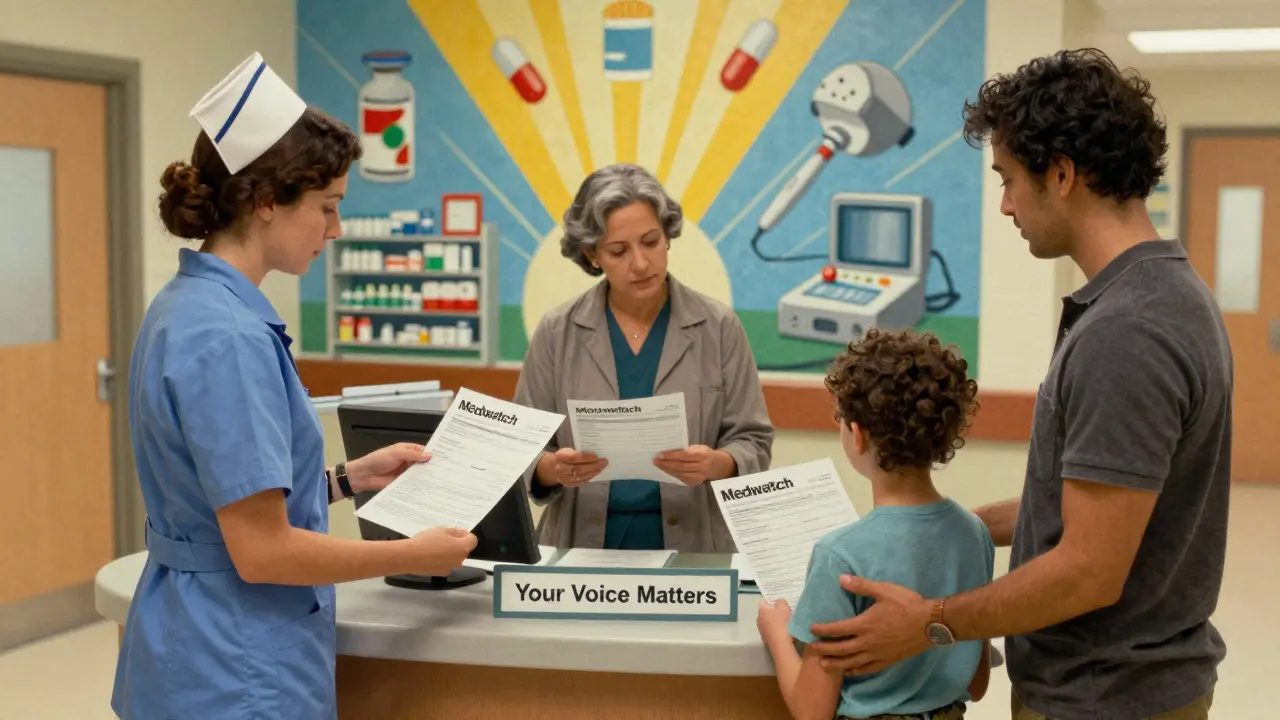
Final Thought: Your Voice Matters
MedWatch isn’t glamorous. It doesn’t make headlines. But every time someone reports a strange side effect, they’re helping prevent the next tragedy. You don’t need to be a scientist. You don’t need to be a doctor. You just need to be observant. And brave enough to speak up.
So if something felt off after taking a new medication-no matter how small it seemed-report it. The system works because of people like you.
Do I need to be a healthcare professional to report to MedWatch?
No. Anyone can report. Patients, family members, caregivers, and even bystanders can submit reports using Form FDA 3500B. The FDA encourages patient reports because they often capture details professionals miss, like how a side effect affected daily life or whether symptoms appeared after a change in dosage.
Can I report a side effect from a supplement or cosmetic?
Yes. MedWatch accepts reports for all FDA-regulated products, including dietary supplements, cosmetics, infant formula, and medical devices. Many people assume supplements are exempt from safety monitoring, but they can cause serious reactions-especially when mixed with medications or taken in high doses.
Is there a deadline for reporting a side effect?
No. You can report anytime-even years after the event. While reports are most useful when submitted soon after the reaction, the FDA still analyzes older reports to identify long-term patterns or delayed side effects. It’s better to report late than never.
Will the drug manufacturer find out I reported them?
No. Your personal information is kept confidential. The FDA removes identifying details before sharing reports with manufacturers. You can choose to leave your name and contact info, but it’s optional. Even if you do, the manufacturer won’t know who you are unless you explicitly tell them.
What if I’m not sure if the medicine caused the reaction?
Report it anyway. The FDA doesn’t require proof-only suspicion. Many safety discoveries begin with a single unclear report. If multiple people report similar events around the same time, the FDA investigates. Your uncertainty helps them spot trends.
Can I report a problem with a medical device like a pacemaker or insulin pump?
Yes. Medical devices are a major category in MedWatch. Malfunctions, design flaws, battery failures, or software errors in devices like pacemakers, ventilators, or glucose monitors can be life-threatening. Reporting these helps the FDA issue recalls or require design changes.
Do I need to file a report if I already told my doctor?
Yes. Your doctor may not report it. Studies show that even healthcare professionals fail to report up to 60% of serious events due to time constraints or uncertainty. MedWatch needs direct reports from patients to get the full picture. Don’t assume someone else will do it.
Is there a cost to report to MedWatch?
No. Reporting is completely free. There are no fees, subscriptions, or hidden charges. The FDA covers all costs. You can report online, by phone, mail, or fax at no cost to you.
How long does it take for the FDA to act on a report?
There’s no set timeline. Some reports trigger immediate action if they match a known pattern. Others sit in the database for months or years until enough similar reports pile up. The FDA prioritizes reports based on severity and frequency, not speed. Your report may not lead to quick results-but it could be the final piece in a larger puzzle.
Can I report a side effect from a drug that was taken years ago?
Yes. Delayed side effects-like cancer developing 10 years after taking a medication-are rare but real. The FDA keeps all reports indefinitely. Even old reports can help identify long-term risks, especially when combined with newer data from electronic health records.
Davis teo
19 February 2026I reported my niece's seizure after her flu shot last year. No one ever called back. No email. Not even a 'thanks.' But I did it anyway. Because what if it's the 10th report that finally makes them look at that vaccine? I'm not a doctor. I'm just a worried aunt. And I'm not letting silence win.
Also, side note: why does the FDA still use PDF forms in 2025? My phone can't even fill them out properly. Fix your tech, guys.
Michaela Jorstad
20 February 2026I'm so glad someone wrote this. My mom had a life-threatening reaction to a supplement she bought online. She didn't know she could report it. I had to Google it. We filed the form together. It took 17 minutes. She cried afterward. Not because she was scared-but because she finally felt heard.
Don't underestimate your voice. Even if it feels like shouting into a void, someone's listening. And that someone might be the one who catches the next dangerous drug before it kills someone's child.
Liam Crean
20 February 2026I've been a pharmacist for 18 years. I report maybe 2 out of 10 serious reactions I see. Why? Because the system is broken. The form is a maze. The follow-up is nonexistent. And the FDA doesn't prioritize reports unless 20+ people report the same thing. That's too late.
But I still do it. Because if I don't, who will? The patient? They're too scared. The doctor? Too busy. So I click 'submit.' And I hope.
Ellen Spiers
21 February 2026The efficacy of MedWatch is statistically negligible. The signal-to-noise ratio is abysmal, given the absence of standardized ontological encoding in adverse event descriptors. The current system relies on unstructured natural language input-primarily from laypersons-which introduces profound heterogeneity in phenotypic reporting. Until SNOMED CT is enforced at the point of entry, the utility of this database remains epistemologically compromised.
Marie Crick
22 February 2026You people are naive. The FDA doesn’t care. They’re paid off by Big Pharma. I know this because my cousin works at Merck. He told me they bury 90% of reports. Don’t waste your time. Just stop taking pills.
Jonathan Rutter
22 February 2026I’ve been reporting since 2012. I’ve sent in 37 reports. 37. I’ve had three kidney stones from a common antibiotic, a panic attack from a Z-pack, and my dog got sick from a flea med I didn’t even know was approved for humans. I’m not a scientist. I’m just a guy who reads the label. And I know this: if you don’t report, you’re part of the problem. You’re letting them kill people quietly. You think your silence is safe? It’s not. It’s complicity. I’ve lost friends to this. I won’t let it happen again. So I report. Every. Single. Time.
Freddy King
24 February 2026MedWatch is a placebo for public safety. It’s performative. The FDA doesn’t have the bandwidth to analyze 1.4 million reports a year. They use keyword triggers, and if your description doesn’t match their taxonomy, it gets archived into the void. I’ve seen it. I work in health data. The AI they’re deploying? It’s trained on biased datasets. It misses non-white patients’ symptoms because the training data is 87% white, middle-aged women. So your report? It’s not just ignored. It’s algorithmically filtered out. And you’re the one who gets blamed for not ‘doing enough.'
Laura B
25 February 2026I’m from rural Georgia. My grandma took a new blood pressure med and started hallucinating. She thought her cat was talking to her. We didn’t know what to do. I found MedWatch by accident. Filled out the form on my phone while she napped. I didn’t think it mattered. But two months later, the FDA issued a warning. My grandma’s doctor said, 'I’ve never seen this reaction before.' Turns out, 12 others had reported it. We were the 13th. That’s all it took. So yeah. Report. Even if you think no one’s listening. Someone is.
Robin bremer
27 February 2026I reported my weird rash after taking melatonin. Got a robot voice saying 'thank you for your submission.' No email. No follow-up. But I did it. 🙌 I’m not gonna let Big Sleep™ get away with it. Also, I’m gonna report my cat’s weird twitch after she licked my pill. She’s my emotional support animal. She deserves safety too. 🐱❤️
Jayanta Boruah
1 March 2026In India, we have no such system. Your MedWatch is a luxury. Here, people die from counterfeit drugs daily. No reporting. No oversight. Just silence. You Americans think this is progress? This is barely a Band-Aid. You need mandatory reporting from pharmacies. You need real-time alerts. You need public dashboards. What you have is a digital graveyard. And you call it safety?
Ashley Paashuis
3 March 2026I want to thank the author for writing this with such clarity. As a nurse, I’ve seen patients hesitate to report because they fear being labeled 'complainers.' But the truth is, they’re heroes. One report from a patient led to the removal of a contaminated batch of insulin in my hospital. That’s not luck. That’s accountability. Please, if you’ve ever felt something was off-report it. Not for the FDA. For the next person who takes that pill.
Oana Iordachescu
3 March 2026I don’t trust this. I’ve read too many whistleblower accounts. The FDA’s 'anonymized' database? It’s not anonymized. It’s cross-referenced with insurance claims. Your name is still in there. They’re building profiles. This isn’t safety-it’s surveillance. And next thing you know, your 'side effect report' will be used to deny you life insurance. I’ve seen it happen. Don’t be fooled.
Chris Beeley
4 March 2026Let me enlighten you. The FDA doesn’t regulate supplements because they’re 'natural.' They regulate them because they’re profitable. And they allow dangerous ones to stay on the market because the supplement industry spends $2 billion a year lobbying. Your report? It’s a drop in a sea of corporate bribes. You think your 20-minute form changes anything? You’re delusional. The system is designed to absorb dissent, not fix it. Real change requires dismantling the entire pharmaceutical-industrial complex. Until then, your report is a performative gesture in a broken theater.
Arshdeep Singh
5 March 2026I reported my daughter’s anaphylaxis after a vaccine. No one responded. I called the helpline. The guy said 'We get hundreds like this daily.' So I did it again. And again. 12 times. I’m not giving up. Because if I stop, who will? Someone’s kid. Someone’s grandma. Someone’s future. I’m not a hero. I’m just a dad who refuses to be silent.