

Medication Heart Risk Checker
Medication Risk Assessment
This tool helps you understand your risk of medication-induced palpitations based on your current medications and health factors.
Recommended Actions
Note: Never stop taking prescribed medications without consulting your doctor first. This tool is for informational purposes only and should not replace medical advice from a qualified healthcare professional.
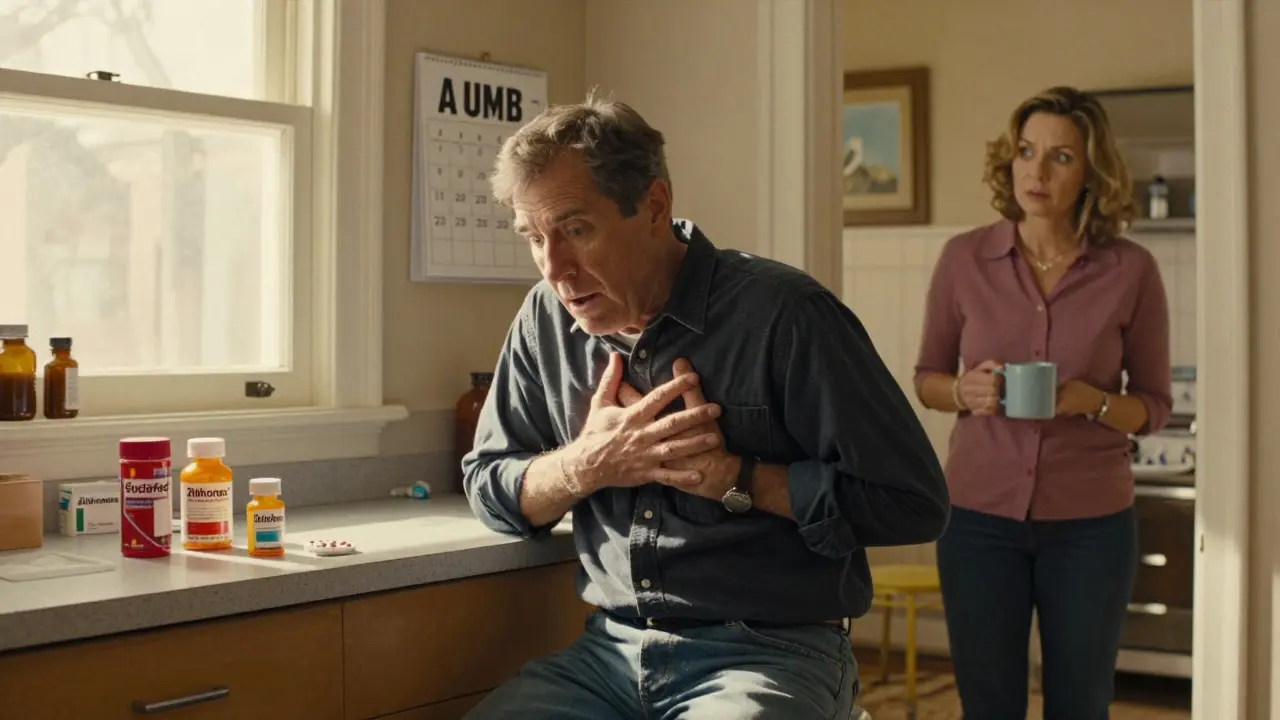
Feeling your heart race for no reason? You might not be stressed, anxious, or out of shape-you could be reacting to a medication you’re taking. Palpitations and rapid heartbeat from medications are more common than most people realize, and they can range from a mild nuisance to a life-threatening emergency. If you’ve noticed your heart pounding after starting a new pill, patch, or inhaler, you’re not alone. Thousands of people experience this every year, often without knowing why.
What Exactly Are Medication-Induced Palpitations?
Palpitations feel like your heart is fluttering, skipping, or thumping too hard. When caused by medication, it’s usually because the drug interferes with your heart’s electrical signals. This isn’t just a side effect-it’s a known medical phenomenon. Over 150 prescription and over-the-counter drugs can trigger these changes, from common antibiotics to asthma inhalers and even weight-loss medications.
The most dangerous form is QT prolongation, where the heart takes longer to recharge between beats. When this happens, it can lead to a dangerous rhythm called torsades de pointes, which can cause sudden collapse or death. About 10-20% of all arrhythmias seen in clinics are linked to medications, and in some high-risk groups, that number jumps to 30%.
Top Medications That Cause Rapid Heartbeat
Not all drugs affect the heart the same way. Some speed up your heart rate directly. Others disrupt the timing of your heartbeat. Here are the most common culprits, backed by clinical data:
- Beta-2 agonists (like albuterol and salmeterol): Used for asthma and COPD, these inhalers stimulate the heart as well as the lungs. Within minutes, heart rate can jump 15-25 beats per minute. About half of users notice this effect.
- Azithromycin (Zithromax): This popular antibiotic increases the QT interval by 30-50 milliseconds on average. A 2021 study of 1.2 million people found it nearly doubles the risk of rapid heartbeat compared to other antibiotics.
- Fluoroquinolones (like levofloxacin and ciprofloxacin): These antibiotics also stretch the QT interval. Even though ciprofloxacin is slightly safer, it still raises risk enough that doctors now avoid them in patients with heart conditions.
- Pseudoephedrine (Sudafed): Found in cold and allergy meds, this decongestant can push your heart rate up by 10-20 beats per minute at standard doses. Many people don’t realize their heart is racing because of a pill they picked up at the pharmacy.
- Levothyroxine (Synthroid): Too much thyroid hormone makes your heart race. Palpitations occur in 8-12% of users, especially when TSH levels drop below 0.1 mIU/L. This often happens when doses are increased too quickly.
- Tricyclic antidepressants (like amitriptyline): These older antidepressants can prolong the QT interval by 40-60 milliseconds. Even at normal doses, they carry a higher risk than newer options like SSRIs.
- Semaglutide (Ozempic, Wegovy): Even newer weight-loss drugs aren’t immune. Clinical trials show a consistent 3-5 bpm increase in heart rate, which may seem small but can be significant in people with existing heart issues.
What’s surprising is how many of these are taken without a prescription. People don’t think of Sudafed or cough syrup as heart risks-but they can be.
How Doctors Evaluate Medication-Induced Palpitations
If you report palpitations, your doctor won’t just guess. There’s a clear, step-by-step process to figure out if a medication is to blame.
- Medication review: Every drug you take-prescription, OTC, vitamins, supplements-is listed. The timing matters: 70% of cases start within 72 hours of a new drug or dose change.
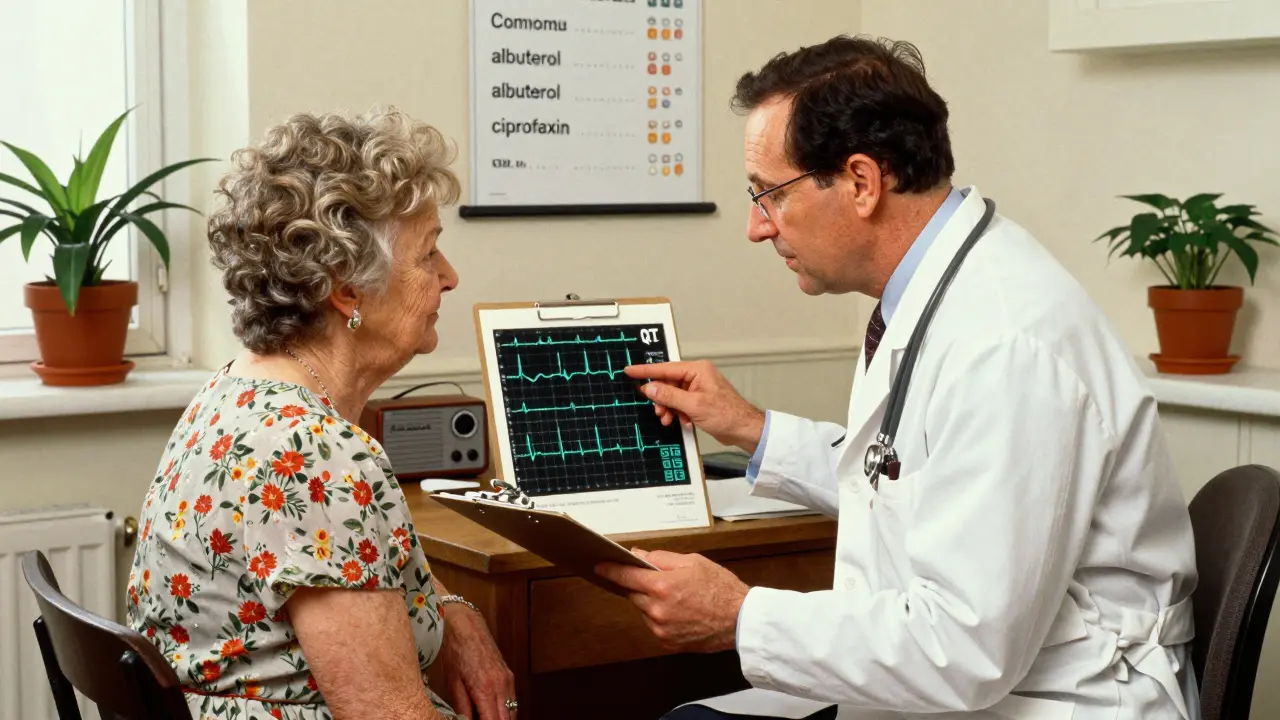
- ECG (electrocardiogram): This is the first test. It checks your QT interval. Normal is under 450ms for men, under 460ms for women. If it’s over 500ms, or up more than 60ms from your baseline, that’s a red flag.
- Holter monitor: If your ECG looks normal but you still feel symptoms, you might wear a portable monitor for 24-48 hours. It catches irregular rhythms that only happen occasionally.
- Blood tests: Low potassium, low magnesium, or abnormal thyroid levels can make any heart-rhythm problem worse. These are checked every time medication-induced palpitations are suspected.
- Risk scoring: Tools like the Brigham and Women’s Hospital score assign points for age, sex, existing heart disease, and how many QT-prolonging drugs you’re taking. A score above 5 means high risk.
It’s not just about the drug-it’s about your body’s response. Two people taking the same medication can have totally different outcomes.
What to Do If You’re Experiencing Palpitations
Your next steps depend on how serious it is.
- Mild cases (no chest pain, no dizziness, QTc under 500ms): Your doctor may suggest keeping the medication but monitoring closely. Weekly ECGs, checking electrolytes, and avoiding other heart-affecting drugs are key.
- Moderate cases (symptoms like lightheadedness, QTc 480-500ms): Dose reduction often works. Studies show 60-70% of patients feel better within 72 hours of lowering the dose.
- High-risk cases (QTc over 500ms, fainting, irregular rhythm): Stop the drug immediately. Hospitals follow strict guidelines to discontinue the offending medication. Delaying can be deadly.
Switching medications is often possible. For example:
- If you need an antibiotic and have heart risks, amoxicillin is a safer choice than azithromycin.
- If levothyroxine is causing palpitations, slowing the dose increase and keeping TSH between 0.5 and 2.0 mIU/L cuts symptoms in half.
- If you’re on citalopram and have heart issues, switching to sertraline often resolves palpitations without losing antidepressant benefits.
In some cases, like cancer treatments, you can’t stop the drug. That’s when doctors add protective meds-like metoprolol-to reduce heart rhythm risks by up to 45%.
How to Prevent Medication-Induced Heart Problems
The best treatment is avoiding the problem before it starts.
- Ask for a baseline ECG before starting any new medication known to affect the heart. This includes antibiotics, antidepressants, thyroid meds, and even some weight-loss drugs.
- Check your electrolytes. Low potassium and magnesium are silent risk boosters. Eat bananas, spinach, nuts, or ask your doctor about supplements if you’re on diuretics.
- Never combine two QT-prolonging drugs. That can increase your risk by more than five times. Always tell your doctor and pharmacist every drug you’re taking.
- Track your symptoms. Keep a simple log: note when you take your meds and when you feel your heart race. This helps connect the dots faster.
- Be extra careful over 65. Older adults have 3.2 times the risk of dangerous rhythms from the same dose. Many drugs are simply too risky for seniors.
Electronic health systems now help too. Hospitals with automated alerts (like Epic’s QTc module) block dangerous prescriptions before they’re given. If your doctor’s office uses one of these systems, it’s working for you.

Real Stories, Real Risks
People online share their experiences in ways medical journals can’t capture. On Reddit, 78% of people reporting medication-induced palpitations linked them to azithromycin. One user wrote: "I started the antibiotic for a sinus infection. Two days later, I felt like my heart was trying to escape my chest. I thought I was having a panic attack-turns out, it was the drug."
On Drugs.com, 63% of users taking pseudoephedrine mentioned palpitations. One review said: "I took Sudafed for a cold and couldn’t sleep because my heart was pounding. I didn’t connect it until I stopped taking it-and it vanished."
A woman on a thyroid forum shared: "I woke up every morning with my heart racing. My doctor said it was stress. I finally asked for a TSH test. It was 0.05. I cut my Synthroid dose in half. Within two weeks, my heart was calm."
These aren’t rare. They’re predictable-and preventable.
What’s Next in Care and Research
The field is moving fast. By 2025, the European Heart Rhythm Association will release data from a 50,000-patient registry to refine risk predictions. Meanwhile, genetic testing is being tested to identify who’s most vulnerable. People with certain gene variants (like CYP2D6 poor metabolizers) are 3.4 times more likely to have bad reactions to some heart-affecting drugs.
Regulators are tightening labels too. Azithromycin now carries a boxed warning for cardiovascular death risk in people with existing heart disease. Pharmacies are required to screen for high-risk combinations before dispensing.
The message is clear: medication safety isn’t just about side effects like nausea or drowsiness. It’s about your heart.
Can over-the-counter drugs cause palpitations?
Yes. Common OTC drugs like pseudoephedrine (Sudafed), phenylephrine, and even some herbal supplements (like ephedra or bitter orange) can increase heart rate. Even high doses of caffeine in energy pills or weight-loss teas can trigger palpitations. Always check the active ingredients, and if you have a heart condition, avoid them unless your doctor says it’s safe.
How long do medication-induced palpitations last?
It depends on the drug and your body. For short-acting drugs like albuterol or pseudoephedrine, symptoms usually fade within hours after stopping. For drugs that affect the heart’s electrical system-like azithromycin or citalopram-it can take days to weeks for the effect to fully clear. If palpitations continue beyond a week after stopping the drug, see your doctor to rule out other causes.
Should I stop my medication if I feel palpitations?
Don’t stop any prescribed medication on your own. Call your doctor immediately. Some drugs, like blood pressure or heart medications, can be dangerous to stop suddenly. But if you have chest pain, dizziness, fainting, or trouble breathing, go to the emergency room right away. For mild palpitations with no other symptoms, schedule a prompt appointment to review your meds.
Are some people more at risk than others?
Yes. Older adults, women, people with existing heart disease, kidney or liver problems, and those taking multiple QT-prolonging drugs are at higher risk. Low potassium or magnesium levels also increase danger. If you’re over 65 or have a history of heart rhythm issues, always ask your doctor if a new medication is safe for your heart.
Can I still take my medication if I have palpitations?
Sometimes, yes-but only under close supervision. If the benefit outweighs the risk (like with certain cancer drugs), your doctor may keep you on the medication but add a beta-blocker like metoprolol to protect your heart. Regular ECGs and blood tests will be needed. Never assume it’s "just anxiety"-get it checked.




Neela Sharma
4 January 2026My heart skipped like a broken record after that Zithromax course-thought I was dying, turned out it was just a pill. I didn’t know meds could do that. Now I check every label like it’s a minefield. Your post saved me from the next one.
Shruti Badhwar
6 January 2026The clinical data presented here is methodologically sound and aligns with current guidelines from the American Heart Association regarding QT prolongation risk stratification. However, the omission of pharmacogenomic considerations-particularly CYP2D6 and CYP3A4 polymorphisms-represents a significant gap in risk assessment protocols currently in use across primary care settings.
Brittany Wallace
7 January 2026Thank you for this. 🙏 I’ve been having palpitations since starting Ozempic and thought I was just anxious. Turns out it’s not ‘all in my head’-it’s in my heart. I’m scheduling an ECG tomorrow. You’re not alone out there.
Haley Parizo
8 January 2026People treat OTC drugs like candy. Sudafed isn’t harmless-it’s a stimulant disguised as a cold remedy. And don’t get me started on those ‘natural’ weight-loss teas loaded with bitter orange. You think you’re being healthy, but you’re just playing Russian roulette with your ventricles. Wake up.
Ian Detrick
8 January 2026If you’re on anything that affects your heart, get a baseline ECG before you even take the first pill. It’s not extra-it’s essential. I wish I’d known this before I almost passed out in the grocery store. Don’t wait for a scare. Be proactive. Your heart won’t remind you it’s there until it’s screaming.
Angela Fisher
8 January 2026EVERYTHING is a government plot. The FDA allows these drugs because Big Pharma owns them. They want you scared so you’ll take more pills to fix the side effects they created. Azithromycin? Made to cause palpitations so you’ll need beta-blockers. The ECG? A scam to bill you more. I’ve been tracking my heart for 3 years now-every time I stop ALL meds, I feel fine. They’re poisoning us slowly. And they’re watching you read this right now.
Check your smart fridge. It knows your heart rate. They’re using it to adjust your meds remotely. I’m not crazy. I’m awake.
Vincent Sunio
9 January 2026The assertion that 78% of Reddit users attribute palpitations to azithromycin is statistically indefensible. Anecdotal self-reporting on social media platforms constitutes non-random, selection-biased data and cannot be extrapolated to clinical populations. Furthermore, the conflation of heart rate elevation with arrhythmogenic QT prolongation represents a fundamental misinterpretation of cardiac electrophysiology. The author’s conflation of correlation with causation undermines the credibility of an otherwise well-structured exposition.
Shanahan Crowell
11 January 2026So many of us are walking around with our hearts racing, thinking it’s stress-or aging-or bad coffee-but it’s just a pill we picked up without thinking. I didn’t realize my thyroid med was doing this until I wrote down every time my heart jumped. It was always 45 minutes after I took Synthroid. Changed my dose. Now I sleep. Don’t ignore it. Write it down. Talk to your doctor. Your heart is trying to tell you something.