


Kidney Medication Safety Calculator
Your Kidney Function
Medication Selection
Safety Results
When your kidneys aren’t working right, your body can’t flush out medicines the way it should. That doesn’t mean you stop taking them - it means you need to take them differently. For millions of people with chronic kidney disease (CKD), the wrong dose of a common pill can lead to hospitalization, organ damage, or even death. This isn’t rare. It’s happening every day in clinics and homes across the country.
Why Kidneys Matter for Medicines
Your kidneys don’t just make urine. They’re the main cleanup crew for about 30% of all medications. When kidney function drops - even slightly - drugs start piling up. That buildup isn’t just a side effect. It’s toxicity in action.
People with stage 3 CKD (eGFR 30-59 mL/min/1.73m²) already have reduced kidney filtering power. By stage 4 (eGFR 15-29), that filtering is barely working. At stage 5, or end-stage kidney disease, the kidneys are nearly useless. Without dose changes, medicines like antibiotics, painkillers, and diabetes drugs can reach dangerous levels in the blood.
The problem? Many doctors don’t check kidney function before prescribing. A JAMA Internal Medicine study found that in 35% of primary care visits, providers skipped calculating eGFR - even when the patient had diabetes or high blood pressure, both major causes of CKD. That means someone could be taking a normal dose of a drug that’s supposed to be cut in half - or stopped entirely - based on their kidney numbers.
Top Medications That Turn Toxic in Kidney Disease
Not all drugs are equally risky. Some are fine. Others are landmines.
NSAIDs: The Silent Killer
Ibuprofen. Naproxen. Diclofenac. These are the go-to pain relievers for back pain, headaches, arthritis. But for someone with CKD, they’re dangerous.
NSAIDs block prostaglandins - chemicals that help keep blood flowing to the kidneys. When that flow drops, kidney function can crash within days. In people with eGFR under 60, NSAIDs raise the risk of acute kidney injury by three times. In stage 4 or 5 CKD, they should be avoided completely. One Reddit user, 'KidneyWarrior2022,' shared how a standard dose of ibuprofen for back pain spiked their creatinine from 1.8 to 3.2 mg/dL - a sign of sudden kidney failure. They were hospitalized for five days.
Sulfonylureas: The Hypoglycemia Trap
For type 2 diabetes, drugs like chlorpropamide and glyburide are common. But in CKD, they turn into time bombs.
Chlorpropamide’s half-life - how long it stays in your body - jumps from 34 hours in healthy kidneys to over 200 hours in stage 5 CKD. That means a single pill can cause severe low blood sugar for days. In one study, 35% of patients on this drug developed dangerous hypoglycemia within 72 hours. Glyburide’s metabolites stick around even longer, with a 500% increase in elimination time. The fix? Switch to glipizide. It’s cleared by the liver, not the kidneys, and stays safe at any stage of CKD.
Trimethoprim and ACE Inhibitors: The Potassium Bomb
Trimethoprim (often in co-trimoxazole) is used for urinary and lung infections. But when paired with ACE inhibitors or ARBs - common blood pressure drugs for CKD patients - it can send potassium levels soaring.
Studies show this combo raises serum potassium by 1.2 to 1.8 mmol/L in just 48 hours. That’s enough to cause irregular heartbeats, muscle weakness, or cardiac arrest. One patient on the American Kidney Fund forum said their doctor prescribed trimethoprim for a UTI without checking their potassium. They ended up in the ER with a heart rhythm that needed emergency treatment.
Aciclovir: Crystal Nephropathy Risk
Used for herpes and shingles, aciclovir can form crystals in the kidney tubules when doses aren’t adjusted. In patients with eGFR under 50, crystal buildup happens in 5-15% of cases. Symptoms? Confusion, seizures, and sudden kidney failure. The fix? Lower the dose and hydrate heavily.
Direct Oral Anticoagulants (DOACs): Bleeding Risk
Apixaban and rivaroxaban are popular blood thinners. But unlike warfarin, they’re cleared mostly by the kidneys. In stage 4 CKD (eGFR 15-29), these drugs build up fast. The result? A 40% higher risk of major bleeding compared to patients with normal kidney function. Guidelines now recommend avoiding rivaroxaban if eGFR is under 30. Apixaban is safer, but still needs dose reduction.
Metformin: The Diabetes Drug That Can Save - or Kill
Metformin is the first-line drug for type 2 diabetes. But it carries a risk of lactic acidosis if kidneys can’t clear it. The old rule was to stop it at eGFR under 60. New data from a Cochrane review of 20,000 patients shows that if you follow current guidelines - reduce the dose at eGFR below 45 and stop at eGFR under 30 - the risk of lactic acidosis is near zero. The key? Don’t guess. Know your eGFR.
How Dose Adjustments Actually Work
Adjusting meds isn’t just ‘take less.’ It’s science.
The Cockcroft-Gault formula and CKD-EPI equation are the two standard ways to calculate kidney function. Most labs report eGFR now, but not all providers know how to use it. A 2023 study found that 42% of pharmacists and prescribers failed to adjust doses for drugs cleared more than 50% by the kidneys - even when eGFR was below 60.
Here’s how it works in practice:
- Vancomycin: Standard dose is 15 mg/kg every 12 hours. When eGFR drops below 30, give it every 48-72 hours. Monitor blood levels - target trough is 15-20 mcg/mL, not the usual 10-15.
- Atorvastatin: Safe at full dose in CKD. No adjustment needed.
- Insulin: Often needs lower doses in CKD because the body breaks it down slower. Risk of low blood sugar increases.
- Proton pump inhibitors (PPIs): Omeprazole, pantoprazole - mostly safe, but long-term use in CKD may raise risk of low magnesium. Monitor levels.
The University of Florida’s Renal Dosage Handbook lists adjustment rules for over 500 drugs. If your doctor doesn’t know them, ask for a pharmacist’s help.
What Patients Can Do
You don’t have to wait for your doctor to catch the mistake. Be your own advocate.
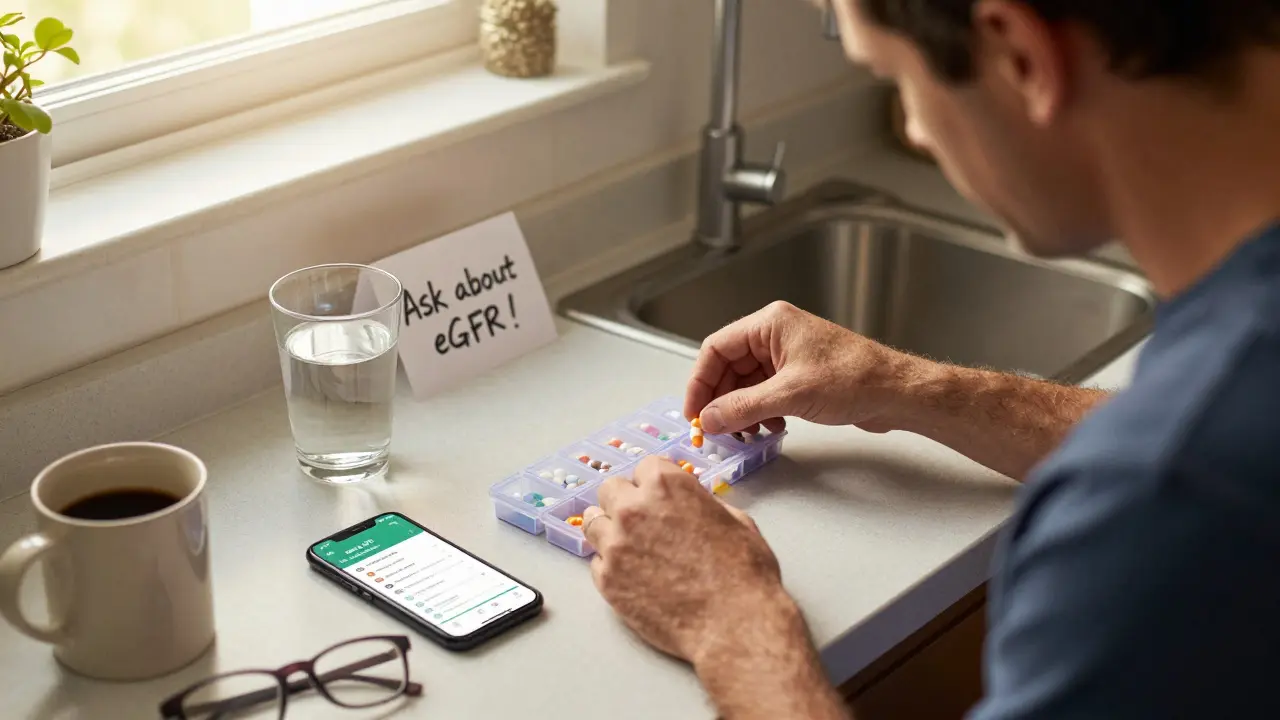
- Know your eGFR. Ask for it at every visit. If they say ‘your creatinine is fine,’ ask, ‘What’s my eGFR?’
- Keep a drug list. Include all prescriptions, OTC meds, supplements. Bring it to every appointment.
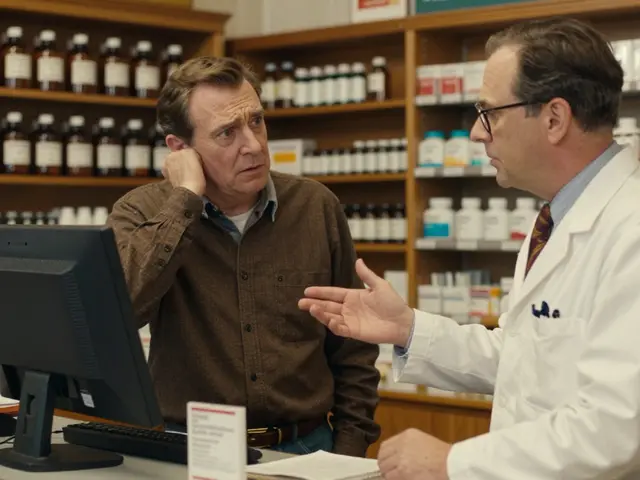
- Ask about kidney clearance. For every new medication: ‘Is this cleared by the kidneys? Do I need a lower dose?’
- Use apps. Healthmap Solutions’ ‘Meds & CKD’ app flags risky drugs and suggests safer alternatives. Users report 82% better communication with providers after using it.
- Watch for red flags. Dizziness, confusion, muscle cramps, irregular heartbeat, swelling, or sudden fatigue could be signs of drug toxicity.
A 2022 survey by the American Association of Kidney Patients found that 78% of CKD patients received at least one medication without proper dose adjustment. Nearly half had adverse events - including hospitalizations. This isn’t about bad doctors. It’s about a system that doesn’t prioritize kidney function in prescribing.

New Tools Are Coming - But Don’t Wait
The FDA approved KidneyIntelX in 2023, a machine learning tool that predicts your personal risk of drug toxicity based on your kidney function, age, and meds. It’s 89% accurate. Hospitals are starting to use it.
Electronic health records will soon auto-flag unsafe prescriptions for CKD patients. Stanford’s Dr. Richard Lafayette predicts a 75% drop in errors by 2030.
But right now? You can’t wait for technology to fix this. You have to act.
The Cost of Getting It Wrong
Drug-induced acute kidney injury adds $10,000 to $15,000 per hospital stay. Medicare spent $18.7 billion in 2022 on preventable hospitalizations linked to improper medication use in CKD patients.
And the human cost? Higher death rates. Slower recovery. Lost independence. For many, it’s avoidable.
The KDIGO guidelines say: review every medication when eGFR falls below 60. That’s not a suggestion. It’s the standard of care.
Don’t assume your meds are safe. Don’t assume your doctor knows. Ask. Double-check. Keep track. Your kidneys can’t warn you. You have to do it for them.
Can I still take ibuprofen if I have kidney disease?
No - especially if your eGFR is below 60. Ibuprofen and other NSAIDs can cause sudden kidney damage by reducing blood flow to the kidneys. Even short-term use can lead to hospitalization. Use acetaminophen (Tylenol) instead for pain relief, and always check with your doctor before taking any OTC medication.
What’s the difference between eGFR and creatinine?
Creatinine is a waste product in your blood. eGFR (estimated glomerular filtration rate) is a calculation that uses your creatinine level, age, sex, and race to estimate how well your kidneys are filtering. Two people can have the same creatinine level but very different kidney function. eGFR tells the real story - always ask for it.
Are all blood pressure meds unsafe with kidney disease?
No. ACE inhibitors and ARBs are actually protective for kidneys in early CKD. But they can raise potassium levels, especially when combined with trimethoprim or potassium supplements. Monitor potassium and avoid NSAIDs while on these drugs. Talk to your doctor about the right combo for your stage of disease.
How do I know if a medication is cleared by the kidneys?
Check the drug’s prescribing information - it’s required by the FDA to list renal clearance. You can also use apps like Meds & CKD or ask your pharmacist. If more than 50% of the drug is cleared by the kidneys, it likely needs a dose change if your eGFR is below 60.
Can I stop my meds if I’m worried about kidney damage?
Never stop a prescribed medication without talking to your doctor. Stopping blood pressure meds, insulin, or heart drugs suddenly can be deadly. Instead, ask for a medication review. Your doctor can switch you to safer alternatives or adjust doses. You don’t have to choose between your health and your kidneys - there’s a better way.



Jocelyn Lachapelle
16 December 2025I used to take ibuprofen for my back pain until my nephrologist shut that down. Now I use Tylenol and it’s been a game changer. No more scary creatinine spikes. Just simple, safe relief.
Small change. Big difference.
Michelle M
18 December 2025It’s wild how we treat kidneys like they’re just plumbing. They’re not. They’re the body’s silent chemist. When they’re down, everything else gets out of balance. We don’t just need dose adjustments-we need a cultural shift in how we think about kidney health. It’s not a backup system. It’s the foundation.
Christina Bischof
18 December 2025My mom had stage 4 CKD and was on glyburide for years. No one ever told us it was dangerous. She ended up in the ER with low blood sugar so bad she couldn’t walk. We switched to glipizide and she’s been fine since. Just… ask questions. Even if it feels awkward.
Mike Nordby
20 December 2025The JAMA study cited-35% of primary care visits without eGFR calculation-is alarming. This is not a failure of individual providers; it is a systemic failure of clinical workflow integration. eGFR must be auto-populated in EHRs for patients with hypertension or diabetes. The burden should not rest on the patient to request it.
John Samuel
20 December 2025The pharmacological landscape for CKD patients is a minefield disguised as a pharmacy shelf. We’ve got NSAIDs lurking like silent assassins, sulfonylureas turning into hypoglycemic time bombs, and DOACs that whisper ‘bleed’ with every pill. But here’s the silver lining: knowledge is the ultimate antivenom. Arm yourself with apps, ask for the renal dosage handbook, and never let a prescription slide without asking: ‘Is this cleared by the kidneys?’
Sai Nguyen
21 December 2025Americans think they can medicate their way out of everything. In India, we don’t take ibuprofen unless we’re dying. We use turmeric, heat, rest. Why do you need a pill for every ache? Your system is weak because you eat junk and then pop pills to fix it. Stop blaming doctors. Fix your lifestyle.
Cassie Henriques
23 December 2025eGFR is non-negotiable. If your provider doesn’t auto-calculate it via CKD-EPI when you’re >40 or have DM/HTN, they’re operating in the 1990s. Also, check your meds against the Renal Dosage Handbook-University of Florida’s version is gold. Pro tip: pharmacists are your secret weapon. They know the half-lives better than most MDs. Don’t be shy-ask them to review your med list. It’s free.
Jake Sinatra
24 December 2025This post is exactly the kind of clarity the CKD community needs. Too many patients are walking around on dangerous regimens because no one bothered to connect the dots between kidney function and drug metabolism. The fact that 78% received inappropriate dosing is a scandal. But the solution isn’t just tech-it’s patient empowerment. You must know your numbers. You must speak up. You are the last line of defense.
RONALD Randolph
25 December 2025I’ve seen this happen too many times. My cousin died because his doctor gave him a full dose of trimethoprim while he was on lisinopril-no potassium check. No warning. Just a ‘take this.’ Then he coded. This isn’t negligence-it’s malpractice. And the FDA? They’re slow. We need lawsuits. We need accountability. No more ‘oops.’ This kills people. Period.