
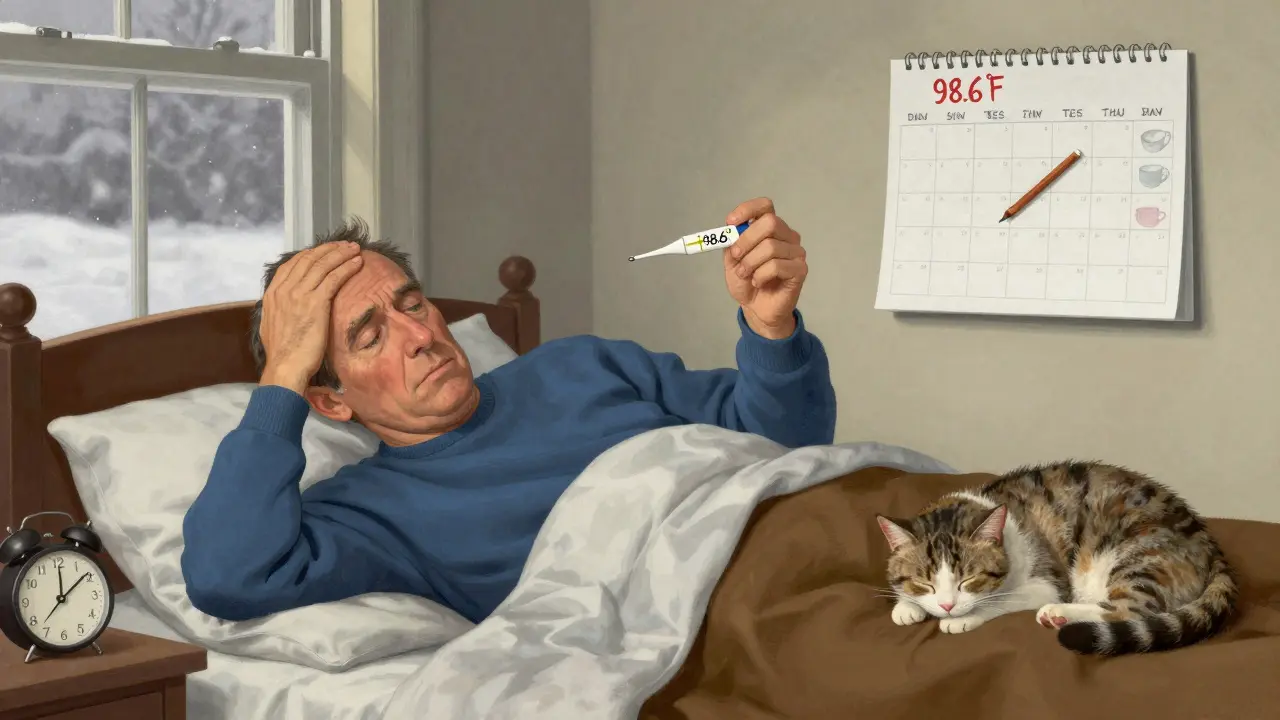

Every winter, people start wondering: is this just a cold, or is it the flu? It’s a simple question with huge consequences. Mistaking one for the other can lead to unnecessary antibiotics, missed antiviral windows, or even hospitalization. The truth is, the common cold and influenza are not the same illness - even though they feel similar at first. Knowing the difference isn’t just about comfort; it’s about safety.
How Symptoms Start: Gradual vs Sudden
If you wake up with a runny nose and a scratchy throat, and it gets worse slowly over two or three days, you’re likely dealing with a common cold. Rhinoviruses are the usual suspects, making up 30-50% of cases. You might feel a little tired, but you can still get out of bed. Fever? Rare in adults - only 15-20% of cold sufferers hit 100°F. The big players are nasal congestion (90% of cases), sore throat (80%), and cough that lingers.
Now, if you go to bed feeling fine and wake up like you’ve been hit by a truck - fever, body aches, and exhaustion so deep you can’t stand - that’s influenza. Symptoms hit fast. Within 1 to 4 days of exposure, often in under 48 hours. Fever hits hard: 85% of flu patients have temperatures above 100°F, with many spiking to 102-104°F. Muscle pain? Nearly 80% report it. Headache? 75%. And fatigue? It doesn’t fade after a day. It drags on for two to three weeks. That’s not normal tiredness. That’s your body fighting a systemic infection.
What Makes the Flu Dangerous
The common cold rarely leads to anything serious. Maybe a sinus infection (5% of cases) or an ear infection in kids (10%). But influenza? It can turn deadly. Each year in the U.S., flu sends 140,000 to 710,000 people to the hospital. Around 12,000 to 52,000 die. That’s not a guess - it’s CDC data from 2010 to 2020.
Why? Because flu doesn’t just attack your nose and throat. It goes deep into your lungs. About 15-30% of hospitalized flu patients develop pneumonia. That’s when the virus damages lung tissue so badly that bacteria move in. The result? Severe breathing trouble, oxygen levels drop, and you need IV fluids, antibiotics, and sometimes a ventilator.
High-risk groups aren’t just older people. Yes, adults over 65 make up 70-85% of flu deaths. But pregnant women are three times more likely to be hospitalized. People with asthma, diabetes, or weakened immune systems? Their bodies can’t fight back the way a healthy person can. And kids under five? They’re vulnerable too.
Antivirals: Only for Flu, Not Colds
This is where most people get confused. There are drugs that work against the flu - but they do absolutely nothing for the common cold. Antivirals like oseltamivir (Tamiflu), zanamivir (Relenza), peramivir (Rapivab), and baloxavir (Xofluza) target the flu virus’s ability to replicate. They don’t cure you. But they can cut your illness short by 1 to 2 days.
Here’s the catch: they only work if taken within 48 hours of symptoms starting. After that, the virus has already spread too far. Studies show people who take Tamiflu within 12 hours get back to normal nearly 30 hours faster than those who wait. That’s the difference between missing three workdays or seven.
Cost matters too. Generic oseltamivir runs $15-$30 for a 5-day course. Brand Tamiflu? $105-$160. Xofluza is a single dose, but it costs $150-$200. For mild cases, that’s a tough call. But for someone over 65, pregnant, or with heart disease? The cost is worth it. One study showed antivirals cut hospitalization risk by 34% in high-risk patients.
Side effects? Nausea in about 10% of Tamiflu users. Xofluza may cause headaches or diarrhea. But compared to the risk of pneumonia? Those are minor.
Why You Can’t Treat a Cold with Antivirals
There are over 160 different strains of rhinovirus - the main cause of colds. Each one is slightly different. That’s why there’s no vaccine for the common cold. And there’s no antiviral that works against all of them. You can’t design a drug to target every possible variation.
So what helps? Symptom relief. Zinc lozenges - if you start them within 24 hours of symptoms - can shorten a cold by about 1.6 days. But they taste awful. Some people quit after day one. Decongestants like pseudoephedrine cut nasal stuffiness by 30-40%. Acetaminophen brings down fever and aches. Rest and fluids? Still the best medicine.
And don’t fall for the myth that antibiotics help. They don’t. Viruses don’t respond to antibiotics. Using them anyway contributes to drug-resistant bacteria. The CDC says 30% of antibiotic prescriptions for colds are unnecessary.
How to Tell Them Apart - Fast
Here’s a quick guide based on real clinical data:
| Feature | Common Cold | Influenza |
|---|---|---|
| Onset | Gradual (over 2-3 days) | Sudden (within 1-2 days) |
| Fever | Rare in adults (<100°F) | Common (102-104°F) |
| Body Aches | Mild or none | Severe (80% of cases) |
| Fatigue | Mild | Extreme (lasts 2-3 weeks) |
| Cough | Common, dry | Common, can be severe |
| Chest Discomfort | Mild | Common (70% of cases) |
| Complications | Sinus or ear infections | Pneumonia, hospitalization, death |
If you’re unsure, use the CDC’s ‘Flu Finder’ tool. It’s free, online, and reduces misdiagnosis by 40% in clinics. Or go to urgent care. Rapid molecular tests give results in 15 minutes with 95% accuracy. They cost $25-$50, but if you’re in a high-risk group, it’s worth it.
Real Stories - What People Actually Experience
One Reddit user wrote: ‘Started Tamiflu 12 hours after my fever hit. Back to work in 3 days. Normally I’d be out a week.’ Another said: ‘I waited 72 hours. By day 5, I had pneumonia. I was in the hospital for 4 days.’
On the cold side: ‘Zinc lozenges tasted like metal. I couldn’t keep them down.’ And: ‘Doctors said it was allergies. I had the flu. I almost died.’
These aren’t outliers. A Kaiser Permanente survey of 5,200 flu patients found 78% wished they’d sought treatment sooner.
What’s Changing in 2026
The flu shot for 2025-2026 covers four strains: two influenza A (H1N1 and H3N2) and two influenza B. It’s more accurate than ever. But vaccine effectiveness still varies - 40-60% on average. That’s why antivirals still matter.
Next up? mRNA flu vaccines, like Moderna’s mRNA-1010. Early data shows they could be more effective than traditional shots. And researchers are working on a universal flu vaccine - one that targets a part of the virus that doesn’t change. Early animal trials show 70% protection across strains. Human trials start soon.
Meanwhile, resistance is growing. About 1.5% of H1N1 strains are now resistant to oseltamivir. That’s why doctors are switching to baloxavir more often - it works differently and still holds strong.
When to Call a Doctor
You don’t need to run to the ER for every sniffle. But if you have any of these, get help right away:
- Difficulty breathing or shortness of breath
- Chest pain or pressure
- Confusion or dizziness
- Severe vomiting
- Fever that goes away, then comes back with worse cough
- Symptoms that improve, then suddenly get worse
These are red flags for pneumonia, sepsis, or other complications. Don’t wait. Call your doctor. Go to urgent care. If you’re over 65, pregnant, or have a chronic condition - don’t hesitate.
Can you get the flu from the flu shot?
No. Flu shots use inactivated (killed) virus or just a single protein from the virus. You can’t catch the flu from them. Some people feel soreness, mild fever, or achiness for a day or two - that’s your immune system responding, not the flu.
Do antivirals work if you’ve had symptoms for more than 48 hours?
They’re less effective after 48 hours, but not useless. For high-risk patients - like those with asthma, diabetes, or over 65 - doctors may still prescribe antivirals even after 48 hours. It can still reduce complications and hospital stays.
Is zinc really effective for colds?
Some studies show zinc lozenges can shorten a cold by about 1.6 days if taken within 24 hours of symptoms. But results vary. Some people get a metallic taste or nausea. Long-term use may cause copper deficiency. It’s not a guaranteed fix, but it’s worth trying early.
Can you have the flu without a fever?
Yes. Especially in older adults or people on immune-suppressing drugs. Flu can present with just extreme fatigue, cough, and body aches - no fever at all. Don’t rule out flu just because you don’t have a temperature.
Should I get tested for flu if I’m healthy?
If you’re young and healthy with mild symptoms, testing isn’t usually needed. But if you live with someone at high risk - like an elderly parent or a newborn - getting tested helps you take steps to protect them. And if you’re unsure whether it’s flu or COVID-19, testing gives clarity.
Final Takeaway
The common cold is annoying. The flu is dangerous. The difference isn’t just in how you feel - it’s in what could happen next. If you’re in a high-risk group, or if your symptoms come on fast and hard, don’t wait. See a provider within 48 hours. Antivirals can change your outcome. And if it’s just a cold? Rest. Hydrate. Skip the antibiotics. Let your body heal. Either way, knowing the difference saves time, money, and possibly your life.




Gwen Vincent
23 February 2026I used to think colds and flu were just "bad versions" of the same thing until I had the flu last winter. Woke up feeling fine, passed out by noon. Didn’t get out of bed for four days. My body felt like it had been run over by a freight train - and that’s not an exaggeration. I didn’t even realize how much energy I normally had until it was gone.
Now I keep a thermometer by my bed. If I hit 100.5°F before noon? I call my doctor. No waiting. No "it’ll pass."
Nandini Wagh
25 February 2026So let me get this straight - you’re telling me the reason I’ve been taking antibiotics every time I sneeze is because I’m too lazy to read a damn article? 😑
Also, why does every medical post sound like a textbook written by someone who’s never had a cold? I’ve had 17 colds this decade. I know what I’m feeling. Stop talking about percentages and tell me what to do with my nose.
Also, Tamiflu costs WHAT? I’m not paying $150 to feel slightly less miserable. I’m just gonna nap and eat soup like a normal human.
Holley T
26 February 2026It’s fascinating how the medical community still clings to the idea that flu is somehow more "serious" than colds when statistically, both are viral upper respiratory infections with overlapping symptomatology - except flu has a higher incidence of systemic inflammation, which is why fever and myalgia are more pronounced, but that doesn’t mean it’s inherently more dangerous unless you’re immunocompromised or elderly, which is a subset of the population that’s already statistically vulnerable to all sorts of infections, not just influenza.
And yet, we treat flu like it’s the plague while ignoring that rhinoviruses cause more lost workdays than any other pathogen, and that’s not because they’re more lethal - it’s because they’re more common and socially disruptive. The real public health failure is that we don’t have a universal vaccine for rhinovirus, not because we can’t - we just haven’t prioritized it because the economic incentive isn’t there. Pharma doesn’t profit from people taking zinc lozenges.
Also, the 30% unnecessary antibiotic prescription stat? That’s not just about patient demand - it’s about physician pressure. I’ve had doctors prescribe amoxicillin because I "looked sick," even though I had clear viral symptoms. It’s systemic. It’s not individual ignorance. It’s institutional inertia wrapped in a white coat.
Ashley Johnson
27 February 2026Wait wait WAIT - are you telling me the government is lying about the flu? 😳
I read online that the CDC invented the flu scare so they could sell vaccines and make people afraid of going outside. I have a cousin who works at a hospital and she says they just inject saline and charge $800. And Tamiflu? That’s just sugar pills with a fancy name. They don’t work. They’re just there to make you feel better so you don’t sue them.
Also, I got the flu shot last year and got sick anyway. So it’s fake. The whole thing is a scam. I’m not taking any more shots. I eat garlic and pray. My immune system is stronger than theirs.
And why do they say colds don’t cause pneumonia? I had pneumonia from a cold in 2018. My grandma died from a cold. They’re all the same. They just want you to pay for tests.
Also, is it true that 5G causes colds? I think so. I got one right after the tower went up.
Help me. I’m scared.
P.S. I’m not anti-vaxxer. I’m pro-truth.
tia novialiswati
28 February 2026YESSSS this post is so needed!! 💪
I had the flu last year and thought I was just getting over a cold - ended up in the ER because I couldn’t breathe. I didn’t know antivirals had a 48-hour window!! I wish someone had told me sooner.
If you’re feeling off, don’t push through. Rest. Hydrate. Call your doc. You’re not being dramatic - you’re being smart. 💖
Also, zinc lozenges are gross but worth it. I keep them in my purse now. No shame. 😊
Kenzie Goode
1 March 2026I’ve been sick twice this winter - once with what I thought was a cold, then a week later with what I now know was flu. The difference wasn’t just in symptoms - it was in how the world reacted.
The first time, my boss said "just take a day off if you need to." The second time, my entire team got sent home. My apartment was disinfected. I got a call from public health. That’s not paranoia - that’s the system recognizing a threat.
It’s weird how we treat minor illness like a personal inconvenience and flu like a public emergency. Maybe that’s because one is predictable, and the other… isn’t.
Either way, I’m getting my shot this year. No more guessing games.
Valerie Letourneau
1 March 2026While the clinical distinctions between rhinoviral infection and influenza are well-documented, I would respectfully suggest that the societal framing of influenza as a "dangerous" illness, and the common cold as a "minor" one, may inadvertently reinforce health inequities.
For individuals without paid sick leave, a "minor" cold may carry greater socioeconomic consequences than a "serious" flu experienced by someone with robust healthcare access. The burden of illness is not distributed equally - and while antivirals may reduce viral replication, they do not mitigate the structural barriers that prevent equitable recovery.
Perhaps the more urgent public health imperative is not merely better diagnostics, but universal access to rest, nutrition, and medical care - regardless of whether the pathogen is rhinovirus or influenza A.
With respect,
Valerie
Brooke Exley
3 March 2026Okay but real talk - I used to be the person who worked through both. "Just push through!" I’d say. Then I got the flu and cried while trying to walk to the bathroom. I haven’t worked a sick day since.
Now I have a "flu kit": electrolytes, chicken broth, tissues, a heating pad, and a playlist of 90s sitcoms. I treat it like a ritual. No guilt. No shame. Just rest.
And yes - I take Tamiflu. $150? Worth it. I don’t miss work. I don’t infect my dog. I don’t end up on YouTube crying about how "the flu is just a bad cold."
You’re not weak for resting. You’re wise.
Go nap. You deserve it. 🛌💖
Alfred Noble
4 March 2026Been a nurse for 12 years. Seen it all.
Most people think flu = fever + cough. Nah. It’s the exhaustion that kills you. Not the fever. The "I can’t lift my arm" exhaustion. The "I don’t care if I live or die" exhaustion.
And yeah, antivirals work. But only if you take them before you’re already on the floor.
Pro tip: If you’re feeling like you got hit by a truck AND your throat hurts? Don’t wait. Call your doc. Don’t Google. Don’t wait for "it to get worse."
Also - zinc works. But it tastes like licking a battery. 🤢
Stay safe out there. 💪