
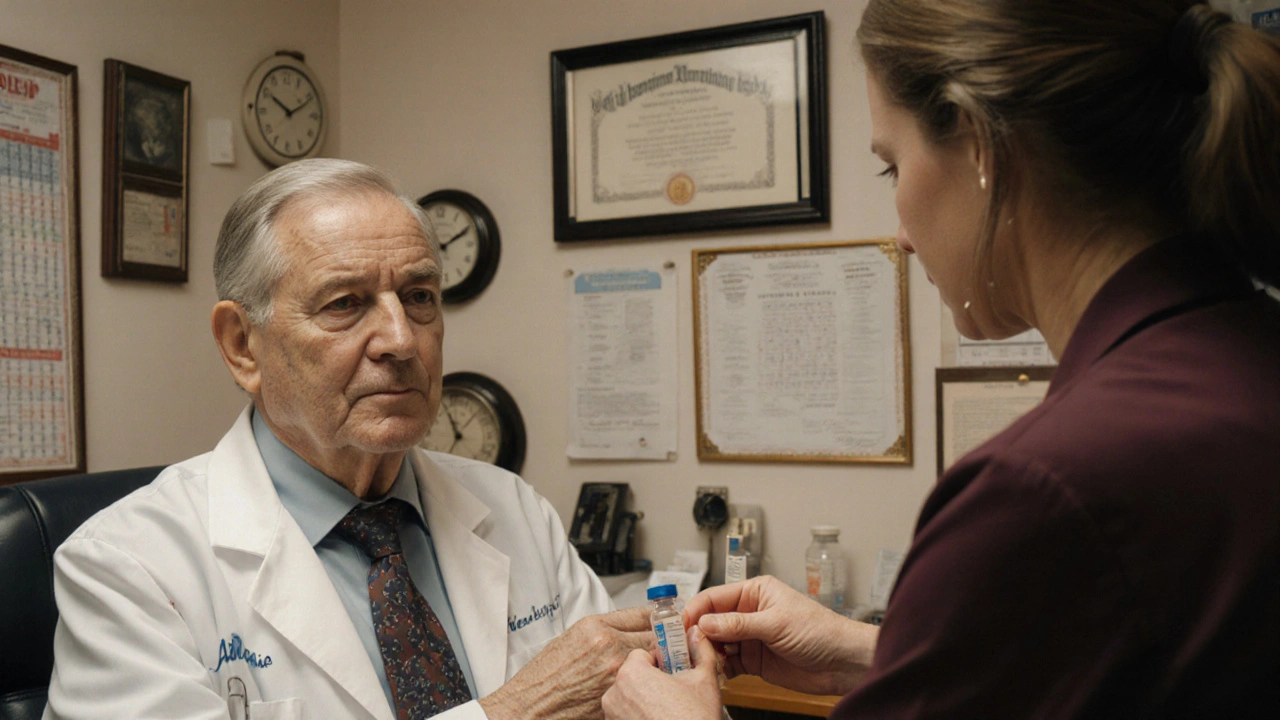

Why Antibiotic Allergy Testing Matters
Many people think they’re allergic to penicillin-or other antibiotics-because they had a rash, nausea, or dizziness years ago. But here’s the truth: over 90% of people who believe they have a penicillin allergy don’t actually have one. This misunderstanding leads to worse health outcomes, higher costs, and even contributes to antibiotic resistance. When doctors avoid penicillin because of an unconfirmed allergy, they turn to stronger, more expensive drugs. These alternatives cost up to $6,000 more per patient each year and increase the risk of dangerous infections like C. diff. The good news? You can find out for sure if you’re truly allergic-with a simple, safe test.
Stop These Medications Before Testing
One of the most important steps in preparing for an antibiotic allergy test is stopping certain medications. If you don’t, the test might show a false negative-meaning it says you’re not allergic when you actually are. This isn’t just a suggestion; it’s critical for accurate results.
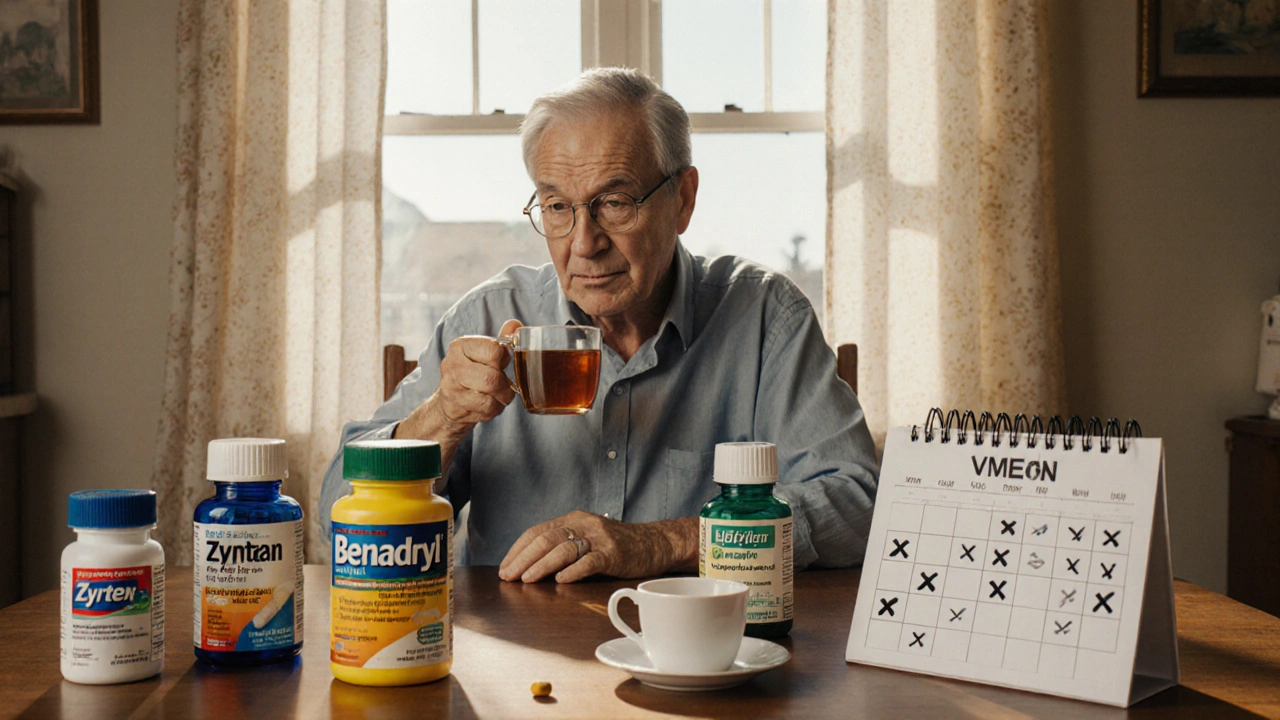
- First-generation antihistamines like Benadryl (diphenhydramine) and Vistaril (hydroxyzine) must be stopped at least 72 hours before testing.
- Second-generation antihistamines-including Zyrtec (cetirizine), Claritin (loratadine), Xyzal (levocetirizine), and Allegra (fexofenadine)-need to be paused for a full 7 days.
- If you take doxepin (a tricyclic antidepressant), you’ll need to stop it 14 days before the test because it also blocks histamine.
Don’t stop any heart, blood pressure, or diabetes meds unless your doctor tells you to. Beta-blockers, for example, can make it harder to spot early signs of an allergic reaction, so your doctor will watch you extra closely if you’re on them. Same goes for ACE inhibitors-they can make anaphylaxis harder to treat. Make sure your allergist knows every pill, patch, or supplement you take. Missing one detail could change your test results.
What Happens During the Test
Allergy testing for antibiotics isn’t one thing-it’s a step-by-step process designed to be safe and accurate. Most tests focus on penicillin because it’s the most common antibiotic people report being allergic to, and it’s the only one with a fully validated testing method.
- Skin prick test: A tiny drop of penicillin reagent is placed on your skin, then lightly pricked with a plastic device. It feels like a mosquito bite. No needles. No pain. If there’s no reaction after 15 minutes, you move to the next step.
- Intradermal test: If the skin prick is negative, a small amount of penicillin is injected just under the skin. You’ll see a small bump (called a wheal). If it’s bigger than 3mm and red or itchy, that’s a positive sign. If not, you’re cleared for the final step.
- Oral challenge: This is the part most people fear-but it’s usually the easiest. You swallow a small dose of penicillin (about 10% of a regular pill). You’re watched for 30 minutes. Then you take the full dose and are monitored for another hour. Most people feel nothing. A few get mild stomach upset or a rash. But less than 1 in 1,000 people have a serious reaction.
Every step happens in a clinic with emergency meds ready-epinephrine, albuterol, and antihistamines. Staff are trained to respond fast. The risk of anaphylaxis during testing is about 0.06%. That’s lower than the chance of being struck by lightning.
What the Results Mean
Positive skin test? That means you likely have a true IgE-mediated allergy to penicillin. You’ll need to avoid it and related drugs like amoxicillin. But here’s the twist: even if you had a bad reaction years ago, you might not be allergic anymore. About half of people who had anaphylaxis to penicillin lose their allergy within five years. Eighty percent lose it within ten. That’s why retesting is smart-even if you’ve been labeled allergic for decades.
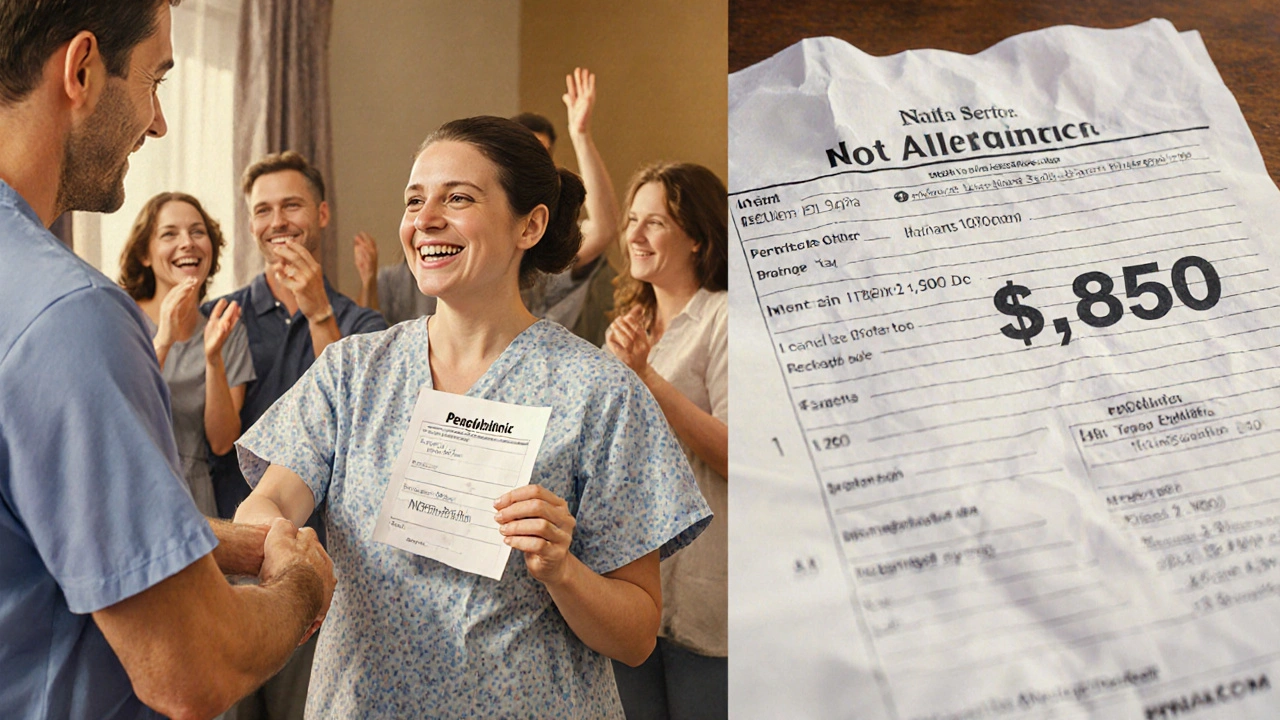
Negative test? You’re not allergic. Your doctor can now safely prescribe penicillin or amoxicillin. That means you’ll get a better, cheaper, more effective antibiotic. For example, one patient switched from daptomycin ($1,850 per dose) to penicillin ($12 per dose) after testing. Their annual drug bill dropped from $67,525 to just $4,380.
Some people get a delayed reaction-itching or swelling at the test site 4 to 8 hours later. That’s not a sign of true allergy. It’s a common, harmless response. Over-the-counter hydrocortisone cream fixes it. Don’t panic. Call your doctor if it’s severe, but most cases are nothing.
Why This Test Changes Everything
Getting tested isn’t just about avoiding a rash. It’s about better care. When patients are correctly de-labeled as non-allergic:
- They’re 87% more likely to get the right antibiotic the first time.
- Hospital stays get 1.7 days shorter on average.
- Infection complications drop by 32%.
- Each test saves $5.70 in healthcare costs for every $1 spent.
Doctors call this one of the most powerful moves in modern medicine. It reduces antibiotic resistance, cuts costs, and improves outcomes. One Harvard allergist put it simply: “De-labeling penicillin allergies prevents 670 extra days of broad-spectrum antibiotics over a patient’s lifetime.” That’s not just a statistic-it’s a healthier, longer life.
What to Expect After the Test
Most people feel fine right after. Some feel a little tired. A few get mild itching at the test site. That’s normal. You can take an antihistamine after the test if needed-but only after your doctor says it’s okay. Don’t start your regular allergy meds until you’re cleared.
Keep your test results in your medical file. Tell every doctor you see, even if you’ve been told you’re allergic for years. Bring a printed copy if you can. Many hospitals still rely on old notes in electronic records. You have to speak up.
And if you’ve been avoiding penicillin for decades? Consider retesting. Even if you had a reaction as a child, your body may have moved on. The science says you probably can take it safely now.
Where to Get Tested
Not every clinic offers this. You need an allergist trained in drug testing. Most hospitals and large medical centers have allergy departments. Community clinics often don’t. If your doctor says they can’t test you, ask for a referral. You can also search for board-certified allergists through the American Academy of Allergy, Asthma & Immunology’s website.
There’s good news on the horizon: new blood tests are in development, and telemedicine-guided home challenges are being tested. In some areas, you might soon be able to do the oral challenge at home under video supervision. But for now, the gold standard is still skin and oral testing done in a controlled setting with emergency tools on hand.
Real People, Real Results
People who’ve been through it say the same thing: “I was scared, but it was way easier than I thought.”
- One Reddit user wrote: “The skin prick felt like a mosquito bite. The pill? I swallowed it and went back to work.”
- Another said: “I’d been avoiding penicillin since I was 8. Now I’m 42. I finally got tested. I’m not allergic. I’m so glad I did.”
The biggest complaint? The medication restrictions. Stopping your daily antihistamine for a week is annoying. But it’s temporary. And the payoff? Lifelong freedom from unnecessary drug restrictions.
What’s Next
By 2027, 75% of U.S. hospitals plan to have formal antibiotic allergy de-labeling programs. Right now, only 42% do. That gap is closing fast. The goal? To stop labeling people as allergic based on old stories-and start labeling them correctly based on science.
If you’ve been told you’re allergic to penicillin-or any antibiotic-ask your doctor about testing. It’s safe. It’s accurate. And it could change your health for the rest of your life.




Tina Dinh
29 November 2025OMG I just got tested last month and it was SO easy 😍 I thought I was allergic since I was 5 but turns out I’m fine!! Now I can finally take amoxicillin for my sinus infection 🎉
linda wood
1 December 2025Wow. So you’re telling me I’ve been paying $2000 a year for antibiotics I didn’t need… because I got a rash at 7? That’s not just dumb. That’s criminal. 🙄
LINDA PUSPITASARI
3 December 2025I’m an RN and I’ve seen this over and over. People get labeled allergic and then get clindamycin or vancomycin for everything… and then get C. diff. Stop the antihistamines before testing. Seriously. I had a patient who took Zyrtec daily for 10 years and the test came back negative. She cried. In a good way. 🙏
gerardo beaudoin
4 December 2025I did this last year. Skin test was fine. The pill part scared me but I just swallowed it and went to the bathroom. Nothing happened. Now my doctor prescribes penicillin like it’s nothing. Best $0 I ever spent.
Joy Aniekwe
5 December 2025So you’re saying that after 40 years of avoiding penicillin because I broke out after a tonsillectomy, I’m not allergic? And you want me to just swallow a pill in a clinic? And you think this is science? This is how people die.
Latika Gupta
6 December 2025I read this and I just… I don’t know. I feel like I’ve been lied to my whole life. My mom always said penicillin would kill me. I’m 31. I’ve never taken it. I’m scared to test.
Sohini Majumder
7 December 2025I mean… I just don’t trust doctors anymore. Like, why would they even bother testing? It’s easier to just say ‘avoid penicillin’ and write a script for something expensive. Also, I’m pretty sure they’re all in cahoots with Big Pharma. 🤡
tushar makwana
8 December 2025In India, we don’t even have access to this kind of testing. My cousin had a reaction and now he can’t take any antibiotic. He got sepsis last year because they gave him something too strong. I wish this was available here. Maybe one day.
Peter Axelberg
10 December 2025I’ve been avoiding penicillin since I was 12 after a rash from amoxicillin. I’m 47 now. I’ve had pneumonia three times, two UTIs, and one kidney infection-all treated with expensive, broad-spectrum drugs. I’ve spent over $30,000 on antibiotics I didn’t need. I’m going to get tested next month. I just hope I’m not allergic anymore. I don’t want to die because of a mistake from 35 years ago.
Monica Lindsey
11 December 2025If you’re going to do this, at least do it right. Stop the antihistamines. Don’t be that person who takes Zyrtec the day before and then blames the test. You’re not special. You’re just lazy.
jamie sigler
12 December 2025I don’t know why anyone would risk it. What if it’s wrong? What if I die? I’d rather just pay the extra $6000. At least I’ll be alive. And rich. Sort of.
Mary Kate Powers
13 December 2025I did this test after my doctor told me I needed penicillin for my infected tooth. I was terrified. But the whole thing took 90 minutes. I got to watch Netflix. No pain. No drama. And now I’m free. I feel like I’ve been given a gift. Seriously. Do it.
Jennifer Wang
13 December 2025It is imperative that individuals seeking to undergo antibiotic allergy testing adhere strictly to the prescribed cessation of antihistaminic agents, as per the guidelines established by the American Academy of Allergy, Asthma & Immunology. Failure to comply may result in clinically significant diagnostic inaccuracies, thereby compromising patient safety and therapeutic efficacy.
stephen idiado
14 December 2025The test has a 0.06% anaphylaxis rate? That’s statistically negligible. But the placebo effect of fear is a real immunomodulator. You’re not testing for allergy-you’re testing for compliance.
Subhash Singh
14 December 2025I am curious to know whether the oral challenge protocol has been validated in pediatric populations under the age of 10, particularly in cases where the initial reaction occurred during early childhood. The literature appears to be inconclusive on this point.