
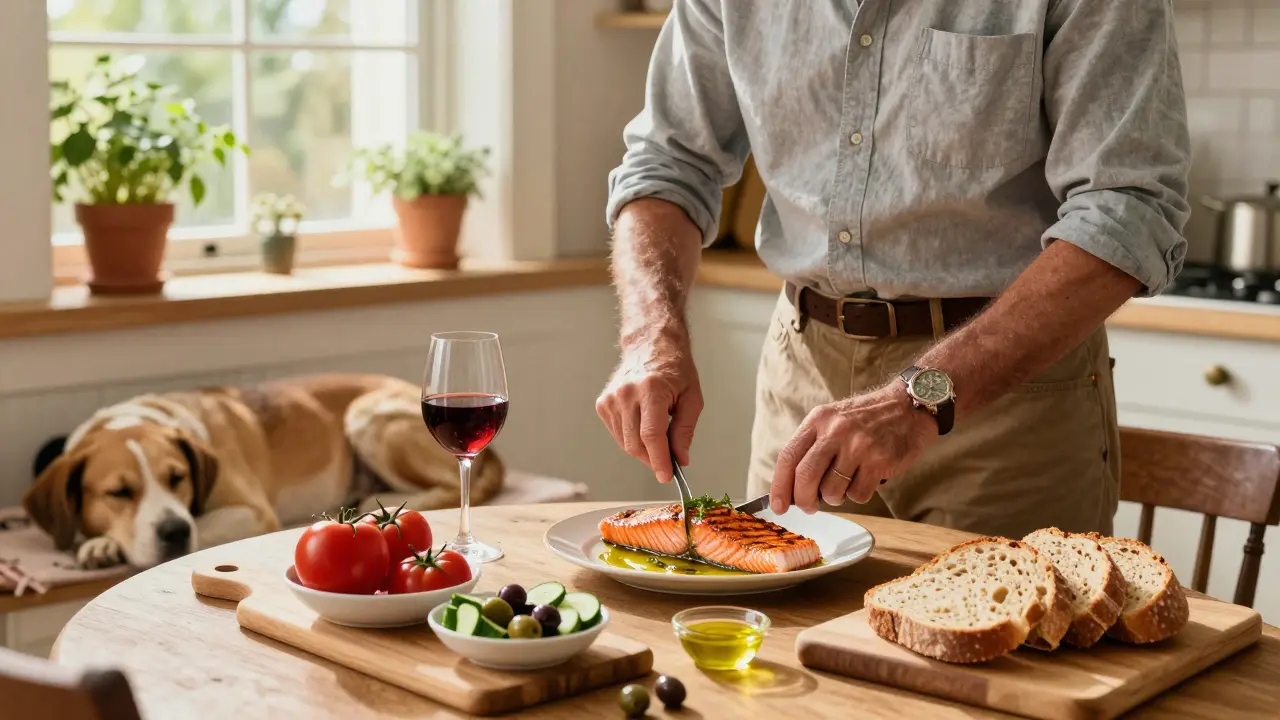

When it comes to protecting your heart, what you eat matters more than you think. Not every diet works the same way, and not every advice you hear online is backed by science. But three eating patterns have stood the test of time, research, and real-world results: the Mediterranean diet, the DASH diet, and plant-forward eating. These aren’t fads. They’re proven, doctor-recommended ways to lower blood pressure, reduce bad cholesterol, and cut your risk of heart disease - even without medication.
What Makes a Diet Truly Heart-Healthy?
A heart-healthy diet doesn’t mean eating bland salads or cutting out all fats. It’s about balance, quality, and consistency. The American Heart Association calls these three patterns Tier 1 eating styles - the highest level of evidence-backed nutrition for cardiovascular health. That means they’ve been tested in large studies over years, and they consistently show results: lower blood pressure, improved cholesterol, less inflammation, and fewer heart attacks.
The goal? Reduce your risk of heart disease by targeting its biggest triggers: high blood pressure, LDL (bad) cholesterol, and chronic inflammation. These diets don’t just treat symptoms. They fix the root causes.
The Mediterranean Diet: Flavor, Fat, and Longevity
Picture this: grilled fish with lemon and herbs, a big bowl of tomatoes and cucumbers drizzled in olive oil, whole grain bread, walnuts for snacks, and maybe a glass of red wine with dinner. That’s the Mediterranean diet in a nutshell.
It’s not just about eating like people in Greece or Italy - it’s about copying what they’ve eaten for centuries. The diet got its name from the famous Seven Countries Study in the 1950s, which found that people in Crete had far fewer heart problems than those in the U.S. or Finland. Since then, dozens of studies have confirmed it: this way of eating slashes heart disease risk by up to 30%.
Here’s what it looks like daily:
- Extra-virgin olive oil as your main fat (not butter or margarine)
- Fruits and vegetables at every meal - at least 5 servings
- Whole grains like barley, farro, and brown rice
- Legumes (beans, lentils, chickpeas) 3-4 times a week
- Nuts and seeds daily - a small handful of almonds or walnuts
- Fish twice a week, especially fatty ones like salmon or sardines
- Red meat? No more than once a month
- Dairy? Small amounts of cheese and yogurt
- Red wine? Optional - just 1 glass a day if you drink alcohol
The magic? It’s packed with monounsaturated fats (from olive oil), fiber (from plants), and omega-3s (from fish). These lower LDL cholesterol, reduce inflammation, and improve how your blood vessels work. A 2023 study tracking over 2,000 people for 10 years found that those who stuck closely to the Mediterranean diet had far fewer heart attacks and strokes - and even lived longer.
The DASH Diet: A Prescription for Blood Pressure
If your biggest concern is high blood pressure, the DASH diet was made for you. DASH stands for Dietary Approaches to Stop Hypertension. It wasn’t invented by a wellness guru - it was created by scientists at Harvard in the 1990s, funded by the National Institutes of Health, and tested in clinical trials.
The original 1997 DASH trial showed that people with high blood pressure lowered their systolic pressure by up to 11.4 mm Hg in just eight weeks - as much as some blood pressure meds. And it worked even better if they cut salt.
Here’s the DASH blueprint:
- 4-5 servings of vegetables daily (spinach, carrots, broccoli, etc.)
- 4-5 servings of fruit daily (bananas, oranges, berries)
- 6-8 servings of whole grains (oats, quinoa, whole wheat bread)
- 2-3 servings of low-fat dairy (milk, yogurt, cheese)
- 6 or fewer servings of lean meat, poultry, or fish per week
- 4-5 servings of nuts, seeds, or legumes per week
- 2-3 servings of healthy fats (olive oil, avocado)
- Sweets? No more than 5 servings a week
And here’s the catch: sodium. DASH limits salt to 2,300 mg a day - and ideally 1,500 mg. That’s tough. The average American eats over 3,400 mg daily. Cutting back means reading labels, avoiding processed foods, and cooking from scratch. But the payoff is huge. A 2023 analysis found DASH lowered blood pressure 3.9 mm Hg more than the Mediterranean diet in people with elevated numbers.
What’s surprising? You don’t need to go vegan. The DASH diet includes lean meat, dairy, and even some fats - but everything is carefully portioned. The OmniHeart study showed that swapping carbs for healthy fats or protein made the diet even more effective. The version with more olive oil and nuts lowered blood pressure the most.

Plant-Forward Eating: Flexibility Meets Power
Plant-forward eating isn’t a strict diet. It’s a mindset: make plants the star, not the side dish. You can still eat meat, eggs, or cheese - but they’re the garnish, not the main event.
This approach isn’t new. Traditional diets from Asia, Latin America, and the Mediterranean have always centered on beans, grains, vegetables, and fruits. Modern science is catching up. A 2024 study in the PURE trial found that people who ate the most plant-based foods - even if they also ate some meat - had 23% fewer deaths from heart disease.
What does it look like in practice?
- Brown rice bowls with lentils, roasted veggies, and a sprinkle of feta
- Stir-fried tofu with broccoli and brown rice instead of chicken
- Black bean tacos with avocado and salsa
- Smoothies with spinach, banana, chia seeds, and almond butter
- Snacking on hummus and carrots instead of chips
It’s flexible. You don’t have to go 100% vegan. Just aim to make 75% of your plate plants. Research shows even small shifts help. A 2023 study found that people who replaced just one serving of red meat with beans or nuts per day cut their heart disease risk by 14%.
Why does it work? Plants are rich in fiber, antioxidants, and potassium - all of which help lower blood pressure and clean out arteries. They’re naturally low in saturated fat and sodium. And they feed the good bacteria in your gut, which science now links to heart health.
How Do They Compare?
So which one’s best? The answer depends on your goals.
| Feature | Mediterranean | DASH | Plant-Forward |
|---|---|---|---|
| Primary Focus | Heart disease prevention, longevity | Blood pressure reduction | Plant-based nutrition, flexibility |
| Key Fat Source | Extra-virgin olive oil | Vegetable oils, nuts | Avocado, nuts, seeds |
| Sodium Limit | No strict limit | 1,500-2,300 mg/day | Varies - usually lower than average |
| Dairy | Moderate (yogurt, cheese) | Low-fat dairy encouraged | Optional |
| Meat | Limited (1-2x/month) | Lean cuts allowed | Occasional |
| Alcohol | Moderate red wine | Not emphasized | Not required |
| Best For | Long-term sustainability, cholesterol | Rapid BP drop, hypertension | Flexibility, ethical/environmental reasons |
According to U.S. News & World Report’s 2023 rankings, the Mediterranean diet scored highest overall for ease and taste. DASH scored highest for blood pressure results. Plant-forward eating was the most popular among younger adults - not because it’s stricter, but because it’s adaptable.
Real People, Real Results
People aren’t just following these diets because doctors say so. They’re sticking with them because they feel better.
On Reddit, users report that the Mediterranean diet feels like a lifestyle. One person said, “I’ve been on it for 18 months. It doesn’t feel like a diet - it’s just how I eat now.”
Another, managing high blood pressure, said DASH dropped their numbers from 150/95 to 130/85 in six weeks. But they admitted, “The salt limit is brutal. I had to throw out half my pantry.”
A 2023 Cleveland Clinic survey found that 68% of people who stuck with any of these diets noticed more energy. Nearly 30% of hypertensive patients were able to cut back on their meds. That’s not magic - it’s nutrition doing its job.

How to Start - Without Overwhelming Yourself
You don’t need to overhaul your whole life overnight. Here’s how to begin:
- Swap one thing. Replace white bread with whole grain. Use olive oil instead of butter.
- Add veggies. Toss spinach into your eggs. Add a side of roasted broccoli to dinner.
- Choose plants for lunch. Try a bean salad or lentil soup twice a week.
- Read labels. Look for foods with less than 140 mg of sodium per serving.
- Keep it simple. Use the plate method: half your plate = veggies/fruit, quarter = whole grains, quarter = lean protein or legumes.
Resources are free and easy to find. The National Heart, Lung, and Blood Institute offers free DASH meal plans. The Oldways Preservation Trust has Mediterranean recipe collections. The American Heart Association’s “No-Fad Diet” toolkit lets you build a personalized plan.
What’s Next? The Future of Heart-Healthy Eating
Researchers are now combining the best of both worlds. A 2024 study tested a hybrid called “Medi-DASH” - blending the olive oil and fish of the Mediterranean diet with DASH’s low-sodium, high-plant approach. The result? Blood pressure dropped even more - by 12.4 mm Hg - and LDL cholesterol fell by nearly 19 mg/dL.
And it’s getting smarter. Duke University found that genetic testing can predict whether someone will respond better to Mediterranean or DASH eating - with 78% accuracy. Personalized nutrition is no longer science fiction.
But access remains a challenge. These diets cost about $1.50 more per day than the average American diet. For people on tight budgets, that’s a real barrier. Still, studies show the long-term savings - fewer hospital visits, less medication, fewer heart attacks - far outweigh the upfront cost.
Final Thoughts
You don’t need to be perfect. You don’t need to follow every rule. What matters is direction. If you eat more plants, choose good fats, cut down on salt and processed foods, and cook at home - you’re already ahead of most people.
The Mediterranean diet gives you flavor and longevity. DASH gives you quick results if your blood pressure is high. Plant-forward eating gives you freedom and sustainability. You can blend them. You can start with one. You can switch later.
Your heart doesn’t care about labels. It cares about what you put on your plate - day after day.





phyllis bourassa
7 March 2026Okay but have you actually tried eating like this for more than a week? I did. The Mediterranean diet? I was so bored I started putting hot sauce on oatmeal. Olive oil isn't magic, it's just fat with a fancy label. And don't get me started on the salt restriction - my food tasted like cardboard. I lost 10 pounds, sure, but I also lost my will to live.
Also, why is everyone acting like this is new? My grandma ate this way in the 50s and she smoked two packs a day and lived to 92. So maybe it's not the diet. Maybe it's just not dying young from stress.
Also also - I tried DASH. My blood pressure dropped. But my mood? Plummeted. I cried over a bowl of steamed broccoli. That's not health. That's punishment.
Joe Prism
8 March 2026Flavor isn't the point. Function is.
Heart disease isn't about taste. It's about endothelial function, inflammation markers, arterial plaque. The data doesn't lie.
People confuse pleasure with sustainability. You don't need to enjoy it. You need it to work.
And yes, it's old. So was penicillin. Doesn't make it less vital.
Bridget Verwey
10 March 2026Oh honey. You think you're being ‘real’ by hating on diets? Sweetie, you're just mad because you ate a bag of chips and now your heart is whispering ‘please stop.’
Look - I switched to plant-forward. No meat on Tuesdays. Lentils instead of ground beef. I didn't go vegan. I didn't quit wine. I just stopped pretending my pizza is a vegetable.
My BP dropped. My energy spiked. My doctor said I’m ‘a poster child.’
And guess what? I still eat cookies. Just not every damn day.
Andrew Poulin
11 March 2026DASH is the only one that matters if you're hypertensive
Mediterranean? Cute. Plant-forward? Trendy.
But if your BP is 150/95, you don't get to pick and choose. You need the protocol.
I did DASH. Cut salt. Cooked everything. Read labels.
130/80 in 42 days.
No meds. No hype. Just math.
Weston Potgieter
12 March 2026Everyone's acting like these diets are some kind of miracle cure
What about the people who eat clean and still have heart attacks?
What about genetics?
What about stress?
What about the fact that 70% of heart disease patients are sedentary?
You're blaming food like it's the only variable
Meanwhile your couch is still there
And your phone is still in your hand
And your cortisol is still screaming
Vikas Verma
12 March 2026Based on recent meta-analyses from the Lancet and JAMA Cardiology, plant-dominant dietary patterns demonstrate a 22-27% relative risk reduction in CVD events compared to Western dietary patterns
The mechanisms involve modulation of gut microbiota, reduction in TMAO production, and improved nitric oxide bioavailability
Furthermore, sodium restriction enhances RAAS inhibition
Therefore, the evidence base is robust and reproducible across diverse populations
Adherence is the only variable that correlates with outcomes
Not ideology. Not taste. Not marketing.
Sean Callahan
13 March 2026my wife tried mediterranean and now she only eats fish and olives and i feel like i married a greek grandmother
she cries when i put butter on my toast
i miss pancakes
also i think the wine thing is just an excuse to drink more
also i think this whole thing is a scam by olive oil companies
also i just ate a cheeseburger
im sorry
Ferdinand Aton
14 March 2026What if the real problem is that we’re told to eat less meat but corporations still sell us processed meat analogs that are full of sodium and soy isolate?
What if the real solution isn’t a diet - but a system change?
What if the reason these diets work is because they force you to cook - not because of the food itself?
Also - who decided olive oil is better than coconut oil? Was that peer-reviewed or just a Mediterranean tourist’s opinion?
Adebayo Muhammad
16 March 2026You know, this whole thing reminds me of the 1980s fat-phobia movement...
Back then, we were told to eat low-fat everything...
And what happened? Sugar skyrocketed...
And now we have diabetes epidemics...
So now we’re told to eat olive oil and legumes...
But what if this is just the next phase of the same manipulation?
Who profits from promoting plant-forward diets?
Who funds the studies?
And why is no one talking about insulin resistance as the root cause?
It’s always food...
Never stress...
Never sleep...
Never glyphosate...
Pranay Roy
17 March 2026These diets are designed for people who can afford organic kale and wild-caught salmon
What about people who live in food deserts?
What about single parents working two jobs?
What about people who don’t have a stove?
They’re not failing because they’re lazy
They’re failing because the system is rigged
And now you’re telling them to eat more lentils
When their only option is a gas station burrito
That’s not health
That’s classism in a salad bowl