


It’s easy to assume that if you feel bad after taking a pill, it’s an allergy. But that’s not always true. In fact, most people who think they’re allergic to a medication aren’t. They’re just experiencing a side effect-something common, predictable, and often manageable. The problem? When you mix up side effects with true allergies, you might end up avoiding medicines that could actually help you-and end up on stronger, riskier drugs instead.
What’s the Difference Between a Side Effect and an Allergy?
Side effects are expected reactions to a drug. They happen because the medicine affects more than just the target area in your body. For example, statins can cause muscle aches. Antibiotics like amoxicillin often lead to stomach upset. These aren’t dangerous for most people-they’re just annoying. About 5 to 20% of people on common medications get them. And here’s the good news: 60 to 70% of these side effects fade within two to four weeks as your body adjusts.
An allergic reaction is different. It’s your immune system overreacting. It doesn’t matter how much of the drug you take-even a tiny amount can trigger it. Symptoms include hives, swelling of the lips or tongue, trouble breathing, or a sudden drop in blood pressure. These are emergencies. If you’ve ever had a reaction like this, you need to avoid that drug forever.
Penicillin is the most common culprit. About 10% of Americans say they’re allergic to it. But studies show 90% of those people can safely take it again. Why? Because they were misdiagnosed. Maybe they got a rash as a child, or felt sick after taking it on an empty stomach. That’s not an allergy. That’s a side effect.
Why Getting This Wrong Matters
Labeling a side effect as an allergy has real consequences. If you’re told you’re allergic to penicillin, your doctor might prescribe a broader-spectrum antibiotic like vancomycin or ciprofloxacin. These drugs are stronger, more expensive, and increase your risk of antibiotic-resistant infections. In fact, people with a penicillin allergy label get 63% more of these broad-spectrum antibiotics, according to the Journal of the American Medical Association.
It also means you might miss out on the best treatment for your condition. For example, if you’re allergic to a certain blood pressure medicine because you got a headache, you might be switched to another drug that causes dizziness or fatigue. But what if the headache was just a temporary side effect? You could’ve stayed on the better drug.
And it’s not just about antibiotics. Mislabeling can affect painkillers, antidepressants, even vaccines. The Institute for Safe Medication Practices found that incorrect allergy labels add $1,200 to $2,500 per person each year in extra healthcare costs.
How to Talk to Your Care Team
Most people don’t know how to describe what they’re feeling. They say, “I had a reaction.” That’s not helpful. You need to be specific. Here’s how to do it:
- Write down what happened. Did you get a rash? Was it itchy? Did your face swell? Did you feel dizzy? Write it exactly as it happened.
- Note the timing. When did it start? Within 30 minutes of taking the pill? After two days? Side effects often show up after a few days. Allergies usually hit fast-within minutes to hours.
- Track the dose. Did you take one pill? Two? Did the symptom get worse with higher doses? Allergies don’t care about dose. Side effects usually do.
- Check if it got better. Did the symptom fade after you skipped a dose? Did it go away after a week? If yes, it’s likely a side effect. Allergies don’t go away unless you stop the drug completely-and even then, they can come back if you take it again.
Bring this list to your appointment. A 2021 study from UC San Diego found that patients who brought written logs reduced miscommunication by 37%. That’s huge.

What to Ask Your Doctor
Don’t wait for them to ask. Take control. Use these exact phrases:
- “Is this a known side effect of this medicine, or could it be an allergic reaction?”
- “What symptoms should I watch for that mean I need to stop this right away?”
- “Are there other medications in a different class that might work without causing this issue?”
- “Could this be something that gets better over time?”
- “If I had a rash, what did it look like? Was it flat or raised? Did it spread?”
Doctors aren’t mind readers. They need details. Saying “I felt sick” doesn’t help. Saying “I got a red, itchy rash on my chest 12 hours after taking the pill, and it lasted three days” gives them the clues they need.
Bring Your Medications
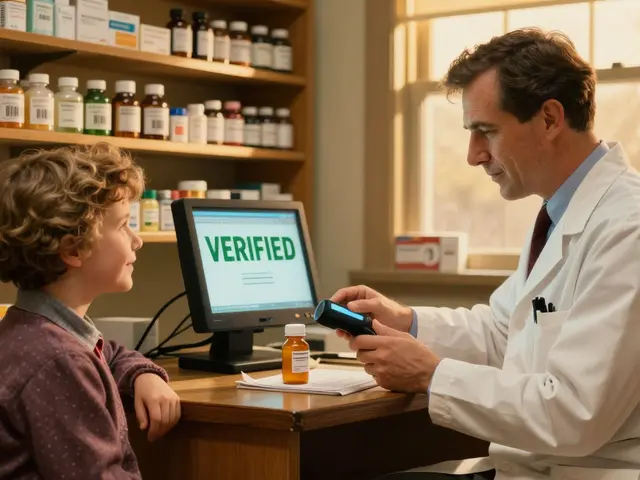
Don’t just tell your doctor what you’re taking-show them. Bring all your pill bottles, including over-the-counter drugs and supplements. A UCLA Health study found that when patients brought physical bottles to appointments, communication errors dropped by 28%. Why? Because names get mixed up. “I took the blue pill” could mean two different things. Seeing the label removes guesswork.
Also, ask your pharmacist. They’re trained to spot side effects versus allergies. If you’re unsure, call them before your appointment. Many pharmacies offer free med reviews.
Use the S.O.A.P. Method
Healthcare providers use a simple framework called S.O.A.P. to organize patient info. You can use it too:
- Subjective: What did you feel? (e.g., “I got a rash after taking the antibiotic.”)
- Objective: What did you see? (e.g., “Red, raised bumps on my arms, not painful.”)
- Assessment: What do you think it is? (e.g., “I think it’s a side effect-it started after I took my second pill.”)
- Plan: What do you want to do? (e.g., “Can we try a different antibiotic? Or wait to see if it clears up?”)
This method cuts through confusion. A Johns Hopkins study showed it improves provider understanding by 41%.

What If You’re Still Not Sure?
If you’ve been told you’re allergic to something but aren’t sure, ask for a referral to an allergist. Skin tests or blood tests can confirm whether you’re truly allergic. Many clinics now use the Allergy Reconciliation Protocol-a structured interview that asks about rash timing, shape, and symptoms. In clinics using this method, penicillin mislabeling dropped by 62%.
There’s also a free app called Medication Reaction Tracker by the American Pharmacists Association. It walks you through questions to help you distinguish side effects from allergies. It’s been downloaded over 87,000 times.
Don’t Assume It’s Permanent
Many people carry an allergy label for decades-even if they haven’t taken the drug since childhood. Allergies can fade. A rash at age 6 doesn’t mean you’re allergic at 36. If you’ve been told you’re allergic to something, ask: “Has this been confirmed by testing?” If not, it might be time to get it checked.
And if you’ve had a true allergic reaction-like swelling or trouble breathing-then yes, avoid that drug. But if it was just a headache, nausea, or mild rash? That’s not the same thing. Don’t let a mistake from years ago limit your treatment options now.
Final Thought: Your Voice Matters
You’re not just a patient. You’re the expert on your own body. No one knows how you feel better than you do. But you need to speak clearly. Side effects and allergies are not the same. Mixing them up puts you at risk-not just for worse health, but for unnecessary costs and dangerous drugs.
Next time you get a new prescription, don’t just take it. Ask. Write it down. Bring the bottles. Use the S.O.A.P. method. Be specific. You’re not being difficult-you’re being smart. And that’s how you get the care you actually need.
How do I know if my reaction is a side effect or an allergy?
Side effects are predictable, often dose-related, and usually improve over time. Common examples include nausea, drowsiness, or a mild rash. Allergic reactions involve your immune system and can happen at any dose. Symptoms include hives, swelling, trouble breathing, or anaphylaxis. If symptoms appear within minutes to hours after taking the drug, especially with swelling or breathing issues, it’s likely an allergy. If they start after a few days and get better with time or lower doses, it’s probably a side effect.
Can I outgrow a drug allergy?
Yes. Many people, especially those labeled allergic as children, outgrow drug allergies over time. Penicillin allergies are the most common example-up to 90% of people who think they’re allergic can safely take it again after proper testing. If you haven’t taken the drug in years, talk to your doctor about allergy testing. It’s safer than avoiding a potentially better medication for life.
What should I bring to my appointment to help my doctor understand my reaction?
Bring your medication bottles, a written log of symptoms (including timing, severity on a 1-10 scale, and duration), and any photos of rashes or swelling. Also note whether symptoms improved when you skipped a dose. This helps your doctor distinguish between side effects and true allergies. Studies show patients who bring this information reduce miscommunication by up to 37%.
Why do doctors sometimes misdiagnose side effects as allergies?
Because patients often use the word “allergy” to describe any bad reaction. Doctors may not have time to dig deeper, especially if the patient says, “I had a reaction.” Without clear details about timing, symptoms, and improvement, it’s easier to label it as an allergy. That’s why being specific matters. If you say, “I got a rash 48 hours after my first dose and it faded after I stopped,” your doctor is far more likely to recognize it as a side effect.
Can I be tested for a drug allergy?
Yes. Allergists can perform skin tests or blood tests for certain drugs, especially penicillin and other antibiotics. These tests are safe and accurate. If you’ve been told you’re allergic but never had a confirmed reaction, ask for a referral. Testing can free you from unnecessary restrictions and help you access better, safer medications.
What if I had a reaction but didn’t stop the medication? Should I still tell my doctor?
Absolutely. Even if you kept taking the drug and the reaction faded, it’s still important information. Some side effects worsen over time, and your doctor needs to know your tolerance level. Also, if you had a mild allergic reaction and kept going, you could be at risk for a more severe one next time. Always report any reaction, no matter how small it seemed at the time.




jeremy carroll
15 December 2025i literally thought i was allergic to ibuprofen for 10 years til my pharmacist asked if i took it on an empty stomach. yeah. that’s why my stomach felt like it was being chewed by squirrels. side effect. not allergy. thanks for the article, this needs to be everywhere.
Thomas Anderson
17 December 2025if you got a rash after amoxicillin as a kid and never took it again, you’re probably not allergic. 90% of people like that are fine. get tested. don’t let a 7-year-old mistake ruin your future antibiotics.
Edward Stevens
18 December 2025so let me get this straight… we’ve been paying extra for worse drugs because people can’t tell the difference between ‘my head hurts’ and ‘my tongue is swelling’? and we wonder why healthcare costs are insane? this is like calling a stubbed toe a broken leg and then demanding a wheelchair.
Rulich Pretorius
19 December 2025the real tragedy isn’t the mislabeling-it’s how rarely we’re taught to observe our own bodies. we’re conditioned to hand over control to professionals without learning how to interpret our own signals. the S.O.A.P. method isn’t just medical jargon-it’s a framework for reclaiming agency over your health. start small. write one thing down. notice one pattern. that’s how change begins.
Sinéad Griffin
20 December 2025AMERICA WE NEED TO DO BETTER 🇺🇸🔥 if you think you’re allergic to penicillin but never got tested, you’re basically saying ‘i trust my 8-year-old memory more than modern science’ 🤦♀️💀
Jonny Moran
22 December 2025this is the kind of info that should be taught in high school health class. not just ‘don’t take drugs you’re allergic to’-but how to tell the difference. so many people are living with unnecessary restrictions because no one ever explained it to them. you’re not being annoying by asking questions-you’re being the kind of patient every doctor wishes they had.
Sarthak Jain
23 December 2025bro i had this exact thing with cipro. thought i was allergic cause i got dizzy. turned out i was dehydrated and took it before breakfast. pharmacist laughed, gave me a water bottle, said ‘try again tomorrow with food’. no reaction. i’ve been takin’ it since. side effects ain’t always the drug’s fault.
Alexis Wright
24 December 2025this article is cute. but let’s be real-pharmaceutical companies benefit from this confusion. if you’re labeled allergic to penicillin, you get the expensive, patented alternative. the system is designed to keep you dependent on the next drug, not to help you understand your body. the ‘allergy label’ isn’t a medical term-it’s a profit mechanism. wake up.
Daniel Wevik
24 December 2025the S.O.A.P. method is gold. i started using it with my chronic migraines. wrote down timing, triggers, dosage, severity. brought it to my neurologist. she said ‘this is the first time someone’s actually given me data instead of just saying ‘it hurts.’’ now i’m on a better regimen. knowledge is power. document everything.
Tim Bartik
26 December 2025so now we’re supposed to carry pill bottles like a damn pharmacy? and take photos of rashes? and write logs like we’re NASA engineers? next they’ll ask us to fill out a 10-page form before we can sneeze. this is overkill. just give me the damn medicine.
Rich Robertson
27 December 2025i’m from the Midwest and we don’t talk about our feelings, let alone our side effects. but after my mom got misdiagnosed with a ‘penicillin allergy’ and ended up on vancomycin for a simple sinus infection, i learned the hard way. now i bring my meds to every appointment. even the gummy vitamins. no judgment. just facts.
Natalie Koeber
27 December 2025this is all just a distraction. the real issue? the FDA and Big Pharma are hiding the truth. side effects are intentionally downplayed so you keep taking the drug. they don’t want you to know your body is screaming. they want you to think it’s just ‘normal’. trust no one. get tested. then sue them.
Wade Mercer
28 December 2025i’m not saying you shouldn’t ask questions, but you’re being irresponsible if you self-diagnose your own reactions. doctors go to school for 12 years for a reason. if you feel weird, stop the drug and call your provider. don’t start writing essays on Reddit about your rash. that’s not ‘being smart’-that’s being a liability.
Dwayne hiers
28 December 2025the 63% increase in broad-spectrum antibiotic use among mislabeled penicillin patients is the most damning stat here. that’s not just cost-it’s antimicrobial resistance. every mislabeled allergy is a ticking time bomb for public health. this isn’t personal-it’s epidemiological. we need mass education. not just blog posts.
Daniel Thompson
29 December 2025I appreciate the thoroughness of this post, but I must point out that the empirical validity of the 90% penicillin misdiagnosis rate is contingent upon the cohort studied and the methodology of the skin testing protocol employed. Furthermore, the correlation between allergy mislabeling and increased healthcare expenditure is not necessarily causal, as confounding variables such as comorbidities and socioeconomic status were not controlled for in the referenced JAMA study. A more rigorous analysis is warranted before institutional policy changes are implemented.