


The FDA doesn't stop watching a drug once it hits the shelves. In fact, the real work of keeping people safe often begins after approval. Clinical trials involve thousands of people over months or a few years. But once millions start taking a drug daily - for years, sometimes for life - rare side effects, long-term risks, and unexpected interactions can show up. That’s where the FDA’s postmarket surveillance system steps in. It’s not just a backup plan; it’s a living, breathing network of data, technology, and human expertise designed to catch problems before they become public health crises.
How the FDA Finds Hidden Risks
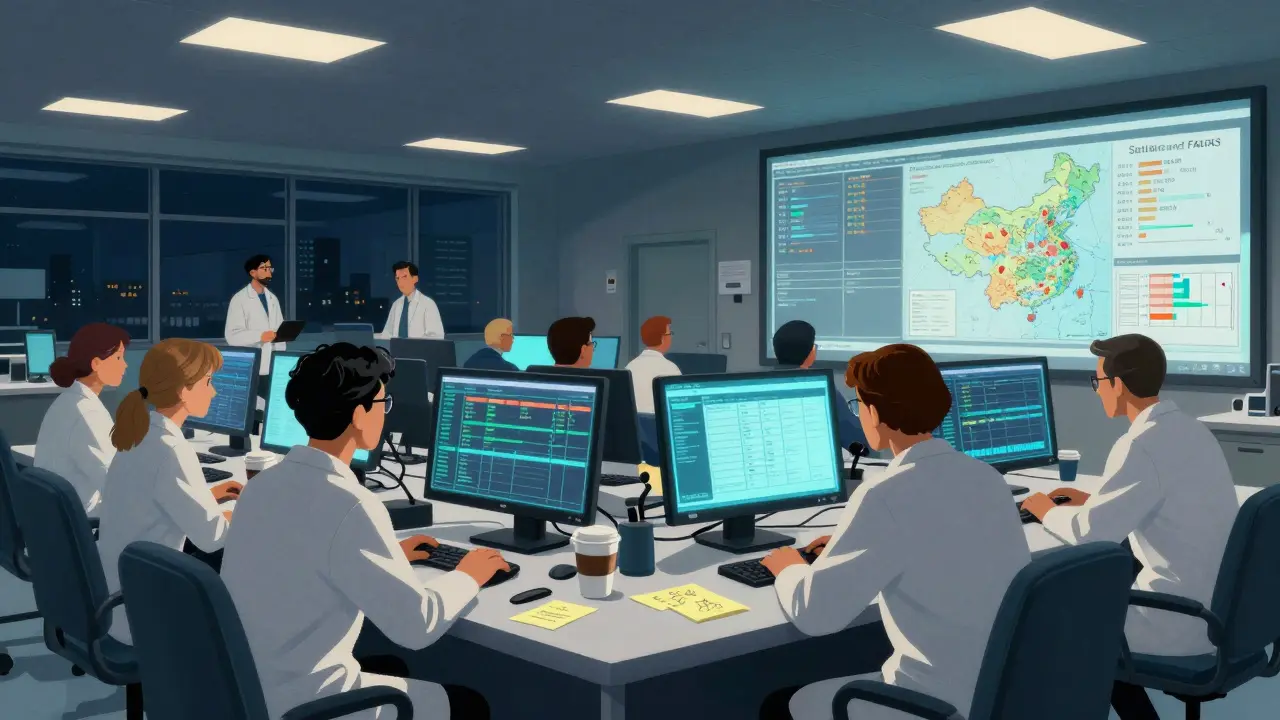
The foundation of drug safety monitoring after approval is the FDA Adverse Event Reporting System (FAERS) a national database that collects reports of side effects, medication errors, and product quality issues from doctors, patients, and drugmakers. Since 1969, FAERS has grown to hold over 30 million reports. Anyone can submit a report - through the MedWatch portal, a doctor’s office, or directly from a pharmaceutical company. But here’s the catch: most reports come from healthcare providers. Patients? They submit only about 6% of reports. Why? Many don’t know how, or feel their story won’t matter. The FDA has tried to fix this with public awareness campaigns, but the gap remains wide.FAERS isn’t just a storage bin. Analysts use statistical tools to find patterns. One method, called Empirical Bayes Screening (EBS), compares how often a side effect shows up with a specific drug versus all other drugs. If a rare condition like liver failure spikes in reports tied to a new diabetes drug, that’s a red flag. Another tool, the Information Visualization Platform (InfoViP) a software system using AI and natural language processing to scan FAERS reports for hidden connections, helps reviewers spot trends buried in thousands of free-text entries. Since 2019, InfoViP has cut the time to detect signals by nearly half.
The Sentinel Initiative: Real-Time Surveillance
FAERS relies on people reporting problems - which means delays and gaps. That’s why the FDA launched the Sentinel Initiative a nationwide network that uses electronic health records and insurance claims data from over 300 million patients to monitor drug safety in near real-time in 2008. Think of it like a national health alarm system. Instead of waiting for reports to trickle in, Sentinel proactively checks: “Are people on Drug X having more heart attacks than expected?”Sentinel pulls data from hospitals, clinics, and insurers - all anonymized. It doesn’t track names, just patterns. If a new blood pressure drug is linked to a spike in kidney failure across multiple databases, the FDA gets an alert within weeks, not years. As of 2023, Sentinel covers 190 million covered lives - more than double what the European system can access. In 2024, Sentinel 2.0 added genomic data from 10 million people, letting researchers see if genetic traits make certain patients more vulnerable to side effects.
When a Drug Is Risky: REMS Programs
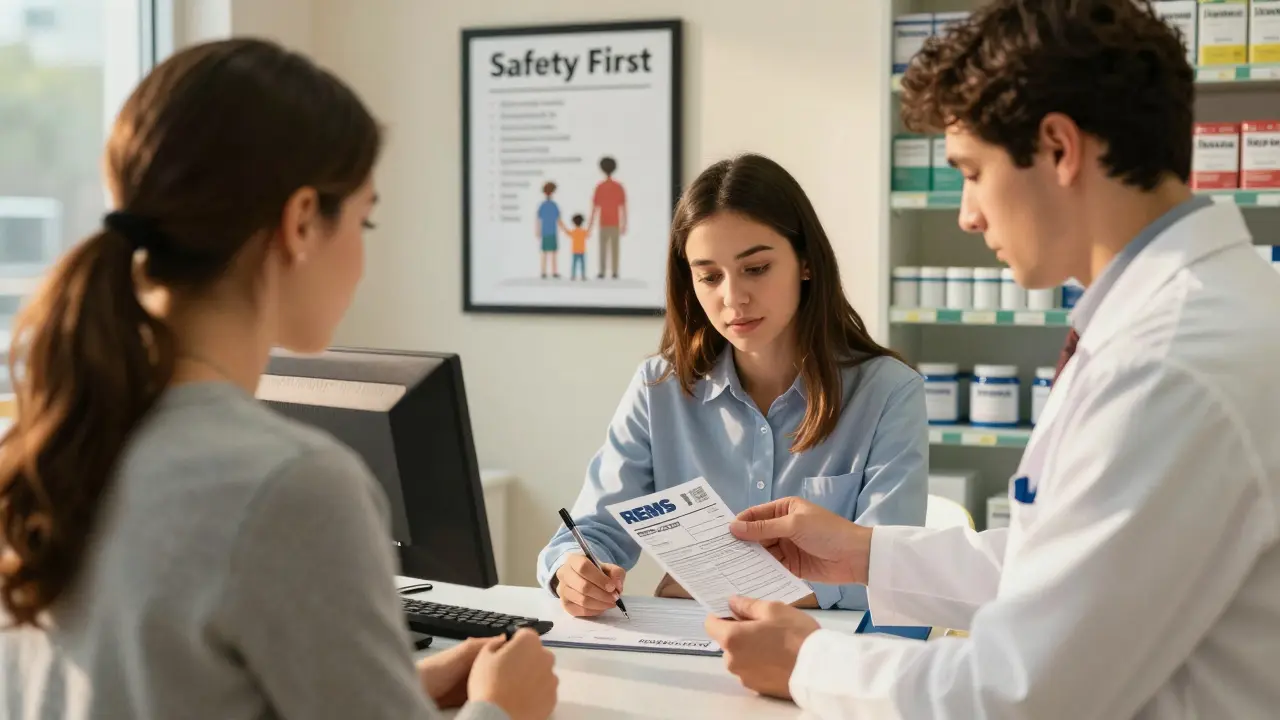
Not all drugs are created equal. Some carry higher risks - like those for cancer, autoimmune diseases, or severe mental illness. For these, the FDA may require a Risk Evaluation and Mitigation Strategy (REMS) a mandatory safety plan that can include special training for prescribers, restricted distribution, or patient monitoring. As of January 2024, 78 drugs had active REMS programs. For example, a drug that can cause severe birth defects might require doctors to complete online training, patients to sign consent forms, and pharmacies to verify pregnancy status before dispensing.REMS isn’t just paperwork. It’s enforced. The FDA audits compliance. Companies must submit quarterly reports on how many patients are enrolled, how many side effects occurred, and whether the safety plan is working. For a drug with a REMS, manufacturers spend 80-100 hours per month on safety monitoring - nearly five times more than for a standard drug.
The Hidden Gaps: Underreporting and Delays
Despite its sophistication, the system has blind spots. Studies show FAERS detects only 1% to 10% of actual adverse events. Why? Underreporting. A 2023 survey of oncologists found many only reported serious side effects if they were “obvious” or “confirmed.” One doctor said, “I’ve seen 20 bad reactions in five years. I reported three.” The process feels disconnected from busy clinics.Another problem? Delayed action. The Food and Drug Administration Amendments Act (FDAAA) of 2007 required drugmakers to complete postapproval safety studies. But a 2021 Government Accountability Office report found that 37% of required studies for drugs approved between 2013-2017 were still incomplete. The average delay? Over three years. In some cases, drugs stayed on the market with known risks because the follow-up data never came.
Who’s Doing the Work?
Behind the scenes, the FDA’s Office of Surveillance and Epidemiology (OSE) runs the show. Teams of pharmacologists, epidemiologists, statisticians, and data scientists review over 10,000 safety cases each year. They don’t work alone. When a potential signal emerges - say, a spike in strokes linked to a new migraine drug - the FDA assembles a team of 15-20 experts. They dig into clinical data, compare it to global reports, and assess whether the risk is real. If it is, they can demand label changes, issue safety alerts, or even pull the drug.Industry plays a role too. Drugmakers must report serious adverse events within 15 days. They also submit periodic safety reports every 6-12 months. Many now use AI tools to scan their own data - 92% of big pharma companies have adopted AI-driven signal detection. But smaller biotech firms? Only 37% have. That’s a gap the FDA is trying to close.
The Future: AI, Blockchain, and More Data
The FDA isn’t standing still. In late 2023, InfoViP 3.0 cut signal detection time from 14 months to under 6.5 months. By 2025, the agency plans to integrate data from the NIH’s All of Us program - which includes health records from 1 million diverse Americans - to better understand how race, age, and genetics affect drug safety. A blockchain-based reporting pilot is also in the works, aiming to make submissions tamper-proof and faster.But challenges remain. The FDA’s OSE is operating at 82% staffing. Funding hasn’t kept up with the explosion of new therapies - gene therapies, mRNA drugs, complex biologics. Each one brings new, unknown risks. Experts warn that without more resources, the system could get overwhelmed. The market for pharmacovigilance services is growing fast - projected to hit $12.3 billion by 2028 - but public funding for the FDA’s own surveillance tools hasn’t seen a comparable rise.
What You Can Do
You don’t have to wait for the FDA to act. If you experience a side effect that surprises you - especially if it’s new or severe - report it. The MedWatch portal takes about 17 minutes to complete. Your report might be the one that triggers a warning, a label change, or even a recall. You’re not just protecting yourself. You’re helping protect millions.How long does it take for the FDA to act on a safety signal?
There’s no fixed timeline. Once a signal is detected - whether through FAERS, Sentinel, or a manufacturer report - the FDA’s team reviews it, confirms it with other data sources, and assesses the risk. This can take weeks or months. If the risk is clear and serious, the FDA can issue a safety alert within days. For major changes like label updates or drug removal, the process can take 6-12 months due to legal and scientific reviews.
Can patients really make a difference by reporting side effects?
Yes. While patients submit only 6% of reports, some of the most important discoveries came from patient reports. For example, a rare blood disorder linked to a popular painkiller was first noticed through multiple patient submissions. The FDA doesn’t just count reports - it looks for patterns. One unusual report might be ignored. Ten similar reports from different places? That’s a red flag.
Why do some drugs stay on the market even after safety concerns arise?
The FDA weighs benefits against risks. A drug for a life-threatening cancer might have serious side effects - but if it extends life by months or years, the risk may still be acceptable. The agency doesn’t remove drugs lightly. Instead, it often adds warnings, restricts use, or requires special monitoring. Removal usually only happens when the risk clearly outweighs the benefit for the entire population.
How does the FDA’s system compare to other countries?
The FDA’s Sentinel Initiative is one of the most advanced active surveillance systems in the world. The European Union uses EudraVigilance, which is similar to FAERS but lacks the same scale of real-time data access. Canada and Australia rely more on advisory panels and slower reporting. The FDA’s ability to query electronic health records from hundreds of millions of people gives it a unique edge in catching problems early.
Are generic drugs monitored as closely as brand-name drugs?
Yes. Once approved, generic drugs are treated the same as brand-name versions. They go into the same databases - FAERS and Sentinel - and are subject to the same monitoring. The FDA doesn’t distinguish between them for safety purposes. If a generic version causes a spike in liver damage, it triggers the same response as the brand.
What happens if a drugmaker doesn’t report a side effect?
It’s a violation of federal law. Companies must report serious adverse events within 15 days. If they fail, the FDA can issue warning letters, impose fines, or even halt production. The FDA cross-checks reports from patients, doctors, and foreign regulators to catch missing submissions. In 2023, the agency fined two companies over $2 million for delayed reporting.



Martin Halpin
26 February 2026Look, I get the FDA’s whole ‘we’re watching you’ spiel, but let’s be real - this system is built on hope and spreadsheets. You think some overworked analyst in Silver Spring is gonna catch a pattern in 30 million reports when they’re juggling 17 other crises? I’ve seen ER docs ignore side effects because the EMR system crashes every time they try to file a report. And don’t even get me started on how drug companies cherry-pick which adverse events to submit - they’re not dumb, they’ve got legal teams that turn ‘possible liver toxicity’ into ‘transient ALT elevation, clinically insignificant.’
Meanwhile, patients are supposed to just ‘report it’ like it’s a Yelp review. I had a cousin who got rhabdomyolysis from a statin. Took her six months, three ER visits, and a damn blog post to get anyone to listen. The system isn’t broken - it’s designed to be invisible until it’s too late.
And don’t give me that ‘Sentinel Initiative’ nonsense. It’s just corporate health data repackaged with buzzwords. If you’re not a Medicare patient or covered by one of the big insurers? You’re invisible. What about the 40 million Americans with no insurance? Their side effects vanish into the void. This isn’t surveillance - it’s a magic trick where the rabbit gets sacrificed.
And yeah, I know the FDA’s ‘staffed at 82%.’ That’s not a staffing issue - that’s a political indictment. We spend billions on drones and nuclear subs, but when it comes to keeping people from dying on aspirin? We’re out here begging for a few more interns.
They’re not protecting us. They’re protecting the industry. And we’re the collateral damage.
Eimear Gilroy
27 February 2026Interesting read - I didn’t realize patients only report 6% of adverse events. That’s wild. I wonder if part of it is just how intimidating the MedWatch form is? Like, you’re already feeling awful, maybe confused about what happened, and then you have to fill out a 17-minute government form with checkboxes for ‘seriousness level’ and ‘drug interaction type.’
Maybe what we need isn’t more tech, but more empathy. Like, what if your pharmacist just asked, ‘Hey, anything weird happen since you started this?’ and had a one-click button to auto-file? No jargon. No forms. Just, ‘You’re not crazy - I’ll send that in.’
Also, the part about generic drugs being monitored the same way? That’s a relief. My mom’s on a generic blood pressure med and I’ve been paranoid she’s getting the ‘cheap version’ of surveillance. Glad to know she’s not.
Michael FItzpatrick
1 March 2026Man, this is the kind of public health infrastructure we should be screaming about on the nightly news. The FDA’s not perfect, but they’re running a real-time national health radar system that’s basically sci-fi. Sentinel pulling data from 190 million lives? That’s more than the entire population of Germany. And now they’re throwing genomic data in? That’s not just surveillance - that’s predictive medicine in real time.
I’ve got a buddy on a new autoimmune drug. His doctor caught a weird spike in kidney markers because Sentinel flagged a pattern across three states before his own lab results even came back. That’s not luck - that’s science working. We’re talking about a system that can detect a hidden risk before a single patient dies from it.
And yeah, underreporting sucks. But here’s the thing: if we all just reported one weird side effect - one time - we’d be doubling the signal. Your ‘weird headache after taking this pill’? It might be the 10th one that finally triggers an alert. You’re not just protecting yourself. You’re protecting someone’s grandma.
Stop waiting for the system to fix itself. Be the spark.
Brandice Valentino
2 March 2026so like… the fda is just… watching us? like… with drones? or like… spyware? i mean, i just took a tylenol and now theyre tracking my liver? what if i dont want them to know i take painkillers? i have my privacy!!
also, why do they need my genomics? like, am i gonna get a bill for my dna? are they gonna sell it to insurance companies? i saw a tiktok about this and someone said the fda is secretly building a database to control our health choices. like… is this a vaccine thing? or are they just… trying to make us all robots? i dont trust this. #fdaiswatching
Larry Zerpa
3 March 2026Let’s cut through the propaganda. The FDA’s entire ‘postmarket surveillance’ narrative is a smokescreen for regulatory capture. FAERS? A garbage fire of unverified anecdotes. Sentinel? A corporate data honeypot. And REMS? A costly compliance theater that only big pharma can afford - which is why generics are ‘monitored the same’ in theory, but in practice, no one audits them because the FDA is too understaffed to even open the files.
And let’s talk about the ‘37% of postapproval studies incomplete’ stat. That’s not a glitch - it’s policy. The FDA knows these studies are delayed. They don’t act because the drugmakers are their next employers. The revolving door isn’t a bug - it’s the architecture.
And don’t get me started on ‘AI signal detection.’ They’re feeding biased data into models trained on clinical trial populations that are 80% white, male, and middle-class. So when Sentinel flags a risk? It’s probably only real for people who look like the trial subjects. Everyone else? They’re just noise in the system.
This isn’t safety. It’s performance. The FDA isn’t protecting you - it’s protecting the illusion that someone is.
Gwen Vincent
5 March 2026This was actually really calming to read. I was scared about my new antidepressant, but knowing there’s this whole team of scientists actively looking for patterns - not just waiting for someone to die - made me feel less alone. I know I’m just one person, but I reported my weird sleepwalking episode. Felt silly at first. But now I think… maybe it matters. Not because I’m special, but because if enough of us do it, the system can actually work.
Also, the part about generics being monitored the same? That means my $4 prescription is just as protected as the $300 one. That’s huge. Thank you for explaining this so clearly.
Ashley Johnson
5 March 2026They’re lying. The FDA doesn’t care about safety. They’re working with Big Pharma to hide the truth. I read a whistleblower report once - they buried 12,000 adverse events from a popular diabetes drug because it was ‘too profitable.’ The ‘Sentinel Initiative’? It’s a front. The real data is stored in a black site in Nevada. They’re using AI to predict who will die next - and they’re already targeting low-income communities. Why do you think your neighborhood pharmacy always runs out of certain meds? It’s not supply chain - it’s selection. They want you to die quietly so they can replace you with a ‘safer’ version - that costs $1000 a month.
And don’t tell me to report side effects. They’ll just add you to the list. You think your report matters? It’s just another data point in the algorithm that decides who gets a ‘lifesaving’ drug - and who gets quietly erased.
tia novialiswati
7 March 2026YESSS!! 💖 I reported my weird rash after that new migraine med and got an email back saying ‘Thank you - your report helped trigger a safety review!’ I cried. Like, I literally cried. I thought no one cared. But they did. And now my doc says they’re adding a warning to the label. That’s wild. We can actually make a difference. 🙌 Don’t be shy - hit that MedWatch button. Even if it’s just ‘I felt dizzy for 2 hours.’ You’re not just helping yourself. You’re helping the next person. Love you all. 💕
Valerie Letourneau
9 March 2026While the technical infrastructure described is indeed impressive - particularly the integration of genomic data and real-time electronic health record analytics - one must not overlook the systemic challenges of equity and accessibility. In Canada, our pharmacovigilance system, while less technologically advanced, prioritizes universal access and patient education through provincial health authorities. The disparity in data coverage between the U.S. Sentinel system and systems like Health Canada’s Adverse Drug Reaction Monitoring Program underscores a critical divergence: one is driven by volume, the other by equity.
Furthermore, the emphasis on AI-driven detection, while efficient, risks exacerbating disparities for populations without consistent digital health records - including Indigenous communities, rural residents, and undocumented individuals. A system that cannot see everyone, cannot protect everyone.
Perhaps the true innovation lies not in more data, but in ensuring that every voice - regardless of socioeconomic status - is not only heard, but validated.
Khaya Street
9 March 2026Good summary. The FDA does a decent job, all things considered. But you know what? The real heroes are the pharmacists and nurses who catch these things on the ground - not the algorithms. I’ve seen it myself: a nurse in a rural clinic notices three patients on the same drug with the same rare reaction. She calls the doctor. He calls the FDA. Boom - signal detected. No AI needed.
So while all this tech sounds cool, let’s not forget the humans in scrubs who are actually doing the watching. And yeah, underreporting is a problem - but it’s not because people don’t care. It’s because the system makes reporting feel like a second job. Make it easier. That’s all.