


When you take a medication, you expect it to help - not hurt. But side effects happen. Some are predictable, like feeling dizzy after a blood pressure pill. Others come out of nowhere - a rash, a fever, or worse - even if you took the exact dose your doctor ordered. The difference between these two kinds of reactions isn’t just academic. It changes how doctors treat you, what tests they order, and even whether you can ever take that drug again.
What Are Dose-Related Side Effects?
Dose-related side effects, also called Type A reactions, are the most common. They happen because the drug is doing exactly what it’s supposed to do - just too much. Think of it like turning up the volume on a speaker: at first, you hear the music clearly. Turn it up too high, and it distorts. That’s what happens in your body.
These reactions follow the law of pharmacology: more drug = more effect. They’re predictable. If you know how the drug works, you can guess what might go wrong. For example:
- Insulin lowers blood sugar. Too much? You get hypoglycemia - shaking, sweating, confusion.
- Warfarin thins your blood. Too much? Your INR shoots up past 4.0, and you risk dangerous bleeding.
- Diuretics make you pee. Too many? You lose too much potassium, and your heart can flutter.
These reactions make up 70-80% of all adverse drug reactions. They’re why doctors monitor blood levels for drugs like lithium, digoxin, and vancomycin. Lithium’s safe range is 0.6-1.0 mmol/L. Go over 1.2? You’re in toxicity territory - tremors, confusion, even seizures. Digoxin? Therapeutic level is 0.5-0.9 ng/mL. Above 2.0? You’re at risk of fatal heart rhythms.
Why do these happen? Often, it’s not the drug’s fault. It’s the patient. Kidneys slow down with age. Liver enzymes change. Other drugs interfere. A common example: someone on statins for cholesterol takes clarithromycin for a sinus infection. Clarithromycin blocks the enzyme that breaks down statins. Statin levels spike 5-10 times. Result? Muscle damage, rhabdomyolysis. Classic Type A - dose-dependent, preventable, and avoidable with better drug interaction checks.
What Are Non-Dose-Related Side Effects?
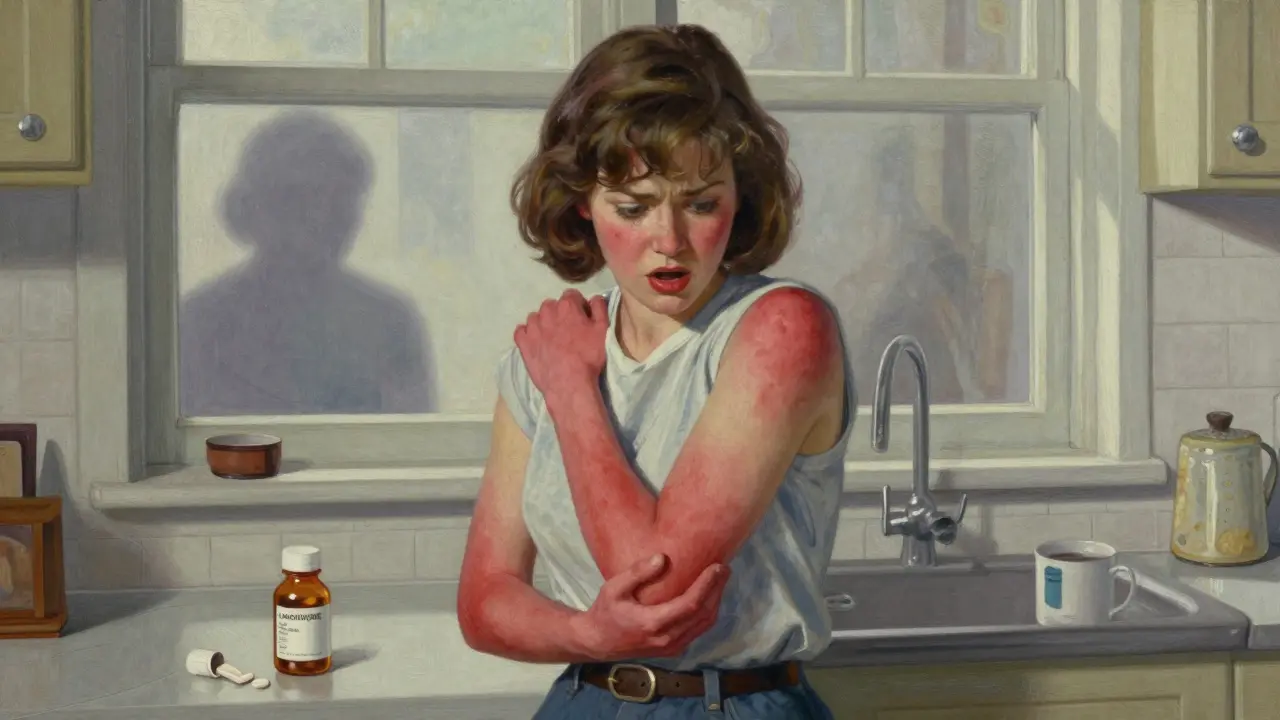
Non-dose-related side effects - Type B reactions - are the scary ones. They don’t follow the rules. You take one pill. You get a life-threatening rash. Or your liver shuts down. No warning. No clear dose threshold. And you didn’t even overdose.
These reactions are rare - only 15-20% of all adverse reactions - but they cause 70-80% of serious hospitalizations and drug-related deaths. Why? Because they’re not about the drug’s intended action. They’re about your body’s weird response to it.
Most Type B reactions are immune-driven. Your immune system mistakes the drug - or a piece of it - for a threat. Examples:
- Anaphylaxis from penicillin - swelling, trouble breathing, drop in blood pressure. Happens in 1-5 per 10,000 courses. Even one tiny dose can trigger it.
- Stevens-Johnson syndrome from lamotrigine or sulfonamides - a blistering skin reaction that can destroy your skin and mucous membranes. Incidence: 1-6 per million person-years.
- Drug-induced liver injury from amoxicillin-clavulanate - no overdose, no warning. Just one day you feel tired, the next your bilirubin is sky-high.
These reactions often need prior exposure. That’s why someone might take amoxicillin five times without issue - then on the sixth, their immune system flips. It’s not about the dose. It’s about your body’s memory.
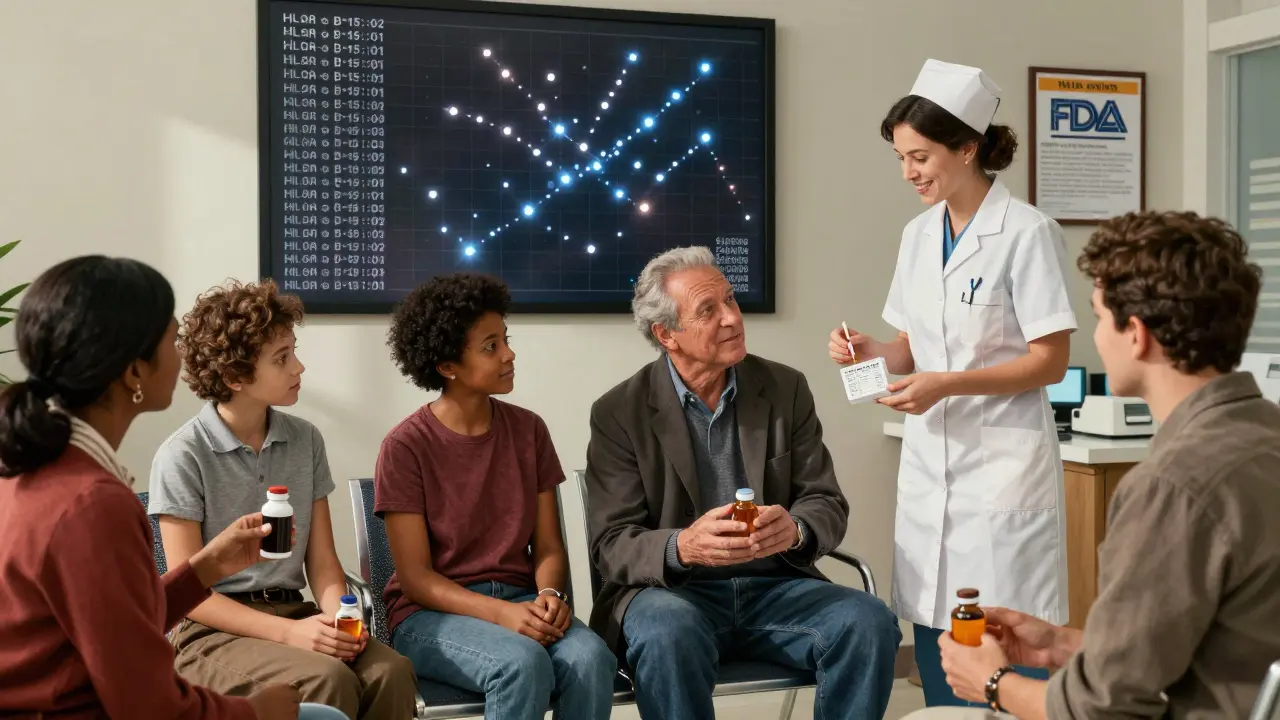
Genetics play a huge role. HLA-B*57:01 gene? If you have it, abacavir (an HIV drug) can trigger a deadly hypersensitivity reaction. Test for it first, and you cut the risk from 5% to near zero. HLA-B*15:02? Carriers of this gene in Asian populations are at high risk for Stevens-Johnson syndrome from carbamazepine. Screening before prescribing is now standard - and saves lives.
Why the Confusion? Are Non-Dose-Related Reactions Really Dose-Independent?
Here’s the twist: technically, there’s no such thing as a truly non-dose-related reaction. Every drug has a dose-response curve. So why do Type B reactions seem to appear randomly?
Researchers like Aronson and Ferner figured it out. Four reasons:
- It’s not real. Sometimes, the reaction isn’t caused by the drug at all - it’s a coincidence. A rash appears the same day you started a new pill, but it’s actually a virus.
- Hypersusceptibility. Some people’s bodies max out at ultra-low doses. One pill is enough to trigger a reaction. Their curve is steep - it hits the ceiling right away.
- Massive individual differences. One person’s safe dose is another’s poison. It’s not about the average. It’s about you.
- Measurement errors. Did the patient really take the dose? Was it stored properly? Did they take another drug that changed absorption?
So while Type B reactions appear random, they’re not magic. They’re just hard to predict because the threshold varies wildly between people.
How Doctors Handle Each Type
What you do next depends entirely on which type you’re dealing with.
For Type A (dose-related):
- Adjust the dose. Lower it. Slow the titration. Monitor levels.
- Check kidney and liver function. Many drugs are cleared by kidneys. If they’re weak, reduce the dose.
- Watch for drug interactions. Use tools like Lexicomp or Micromedex to flag conflicts.
- Use therapeutic drug monitoring. For drugs like warfarin, digoxin, or phenytoin, regular blood tests are non-negotiable.
For Type B (non-dose-related):
- Stop the drug immediately. No exceptions. Even one more dose could kill.
- Avoid all related drugs. If you had a reaction to amoxicillin, don’t take ampicillin or other penicillins.
- Test for genetics. If you’re of Asian descent and need carbamazepine - get the HLA-B*15:02 test first. Cost: around $215. Life-saving.
- Consider skin testing. For suspected penicillin allergy, a skin test has 50-70% predictive value. If negative, you can often safely take it again.
One real-world example: a 68-year-old woman on warfarin starts amiodarone for atrial fibrillation. Her INR jumps from 2.5 to 8.2 in three days. Classic Type A - amiodarone blocks warfarin metabolism. Dose adjusted. INR brought down. She’s fine.
Another patient, 32, takes lamotrigine for epilepsy. Dose increased exactly as prescribed. Two weeks later, she develops a full-body rash, blisters, fever. Stevens-Johnson syndrome. Type B. She’s hospitalized. She’ll never take lamotrigine again. No dose tweak could have prevented it.
What This Means for You
If you’re a patient:
- Know your meds. Ask your pharmacist: “What side effects should I watch for?”
- Report even small changes. A mild rash? Unusual fatigue? Don’t wait. It could be the start of something serious.
- Know your family history. If someone had a bad reaction to a drug, tell your doctor.
- Ask about genetic testing - especially if you’re prescribed carbamazepine, abacavir, or certain cancer drugs.
If you’re a healthcare provider:
- Don’t assume all side effects are dose-related. If a reaction doesn’t improve with dose reduction - suspect Type B.
- Use pharmacogenomic data. The FDA now lists 311 drugs with pharmacogenomic info in their labels. 28 require genetic testing.
- Know your REMS programs. Drugs like clozapine, thalidomide, and abacavir have strict risk management plans. Don’t skip them.
- Document everything. If a patient has a Type B reaction, label it clearly. Avoidance is the only treatment.
The Future: Personalized Dosing and AI
Pharmacology is moving fast. We’re no longer guessing doses based on weight or age. We’re using genetics, AI, and real-time data.
Companies are building algorithms that pull from electronic health records to predict who’s likely to have a Type A reaction. One 2023 study got 82% accuracy. For Type B? Only 63%. That’s because Type B reactions are still hard to predict - they’re tied to immune quirks we don’t fully understand.
But progress is real. The FDA now supports software that recommends personalized doses. The WHO reports that 84% of drugs with black box warnings have Type B reactions. That’s why genetic screening is becoming routine. And why drug manufacturers now test for hypersensitivity before launching new drugs.
The bottom line? We’re getting better at preventing both kinds of reactions. But the key is knowing the difference. A Type A reaction? Fix the dose. A Type B? Stop the drug - and never give it again.
Are all side effects dose-related?
No. While most side effects (70-80%) are dose-related (Type A), about 15-20% are non-dose-related (Type B). Type B reactions are immune-driven and unpredictable - they can happen at any dose, even the first one. They’re rare but often severe.
Can you prevent non-dose-related side effects?
Yes, sometimes. For certain drugs, genetic testing can prevent them. For example, testing for HLA-B*57:01 before giving abacavir reduces hypersensitivity risk from 5% to near zero. HLA-B*15:02 screening before carbamazepine prevents Stevens-Johnson syndrome in high-risk populations. Skin testing can also help rule out penicillin allergies.
Why do some people react badly to a drug while others don’t?
It’s a mix of genetics, immune history, age, organ function, and other medications. Type A reactions are often due to poor metabolism or kidney/liver issues. Type B reactions are usually tied to specific immune genes like HLA variants. One person’s safe dose might be another’s trigger - even if they’re the same age and weight.
Is a Type B reaction always permanent?
Yes. Once your immune system has reacted to a drug, it remembers it. Even small future doses can trigger a worse reaction. Avoiding the drug and all similar ones is the only safe approach. Re-exposure can be fatal.
Which drugs are most likely to cause Type B reactions?
Common culprits include antibiotics like penicillin and sulfonamides, anticonvulsants like carbamazepine and lamotrigine, HIV drugs like abacavir, and some NSAIDs. The FDA lists 28 drugs requiring genetic testing before use because of known Type B risks.
Can you outgrow a Type B reaction?
No. Once your immune system has been sensitized, the reaction typically lasts a lifetime. Some people may test negative for allergies years later, but that’s usually because the original reaction was misdiagnosed. True Type B reactions are permanent.




Kunal Majumder
11 January 2026This is actually super helpful. I’ve seen patients panic over a tiny rash and it’s usually just a virus, but you’re right - better safe than sorry. I always tell folks to text their pharmacist first before Google-ing symptoms.
chandra tan
12 January 2026In India, we see this all the time - people take antibiotics like candy. One guy came in with liver failure after taking amoxicillin for a cold. No prescription. No clue. Doctors here are fighting an uphill battle.
Paul Bear
13 January 2026Let’s be precise: Type B reactions aren't 'non-dose-related' - they're nonlinear, polyphasic, and often mediated by HLA-restricted T-cell activation. The term is a misnomer perpetuated by medical education. The dose-response curve exists - it's just obscured by interindividual variability in CYP450 metabolism, epigenetic modulation, and immune priming. If you're not checking HLA alleles before prescribing, you're practicing pharmacology in the dark ages.
neeraj maor
15 January 2026Funny how they never mention the pharma companies hide this stuff. You think they really want you to know that 28 drugs need genetic tests? Nah. They’d rather you keep taking them and pay for the ER visits. The system is rigged. They test for side effects in 500 people. Real world? Millions. Someone’s getting rich off your immune system.
Jake Kelly
16 January 2026I appreciate the breakdown. My mom had a reaction to sulfa and now she avoids everything. I always thought it was overkill - now I get why. Good reminder to ask questions.
Bradford Beardall
17 January 2026Wait - so if I have HLA-B*15:02 and I take carbamazepine, I could end up with my skin falling off? And they just found this out recently? That’s wild. I’m from Texas, my cousin’s a nurse - she said they started testing for this like 5 years ago. Why didn’t anyone tell me before?
McCarthy Halverson
17 January 2026Stop the drug. No exceptions. Document it. Avoid all analogs. Genetic screening saves lives. Simple.
Michael Marchio
18 January 2026You know what’s really sad? People still think side effects are just 'bad luck'. Like it’s some cosmic accident. It’s not. It’s poor prescriber education, lazy monitoring, and a healthcare system that rewards volume over vigilance. And then we wonder why drug-related hospitalizations are the 4th leading cause of death. We’re not failing because of science - we’re failing because of apathy.
Ashlee Montgomery
19 January 2026It makes me wonder if we’re treating symptoms instead of systems. If we’re so good at predicting Type A reactions with AI, why aren’t we using the same tools to map immune memory patterns? Maybe the answer isn’t more tests - maybe it’s better questions.