
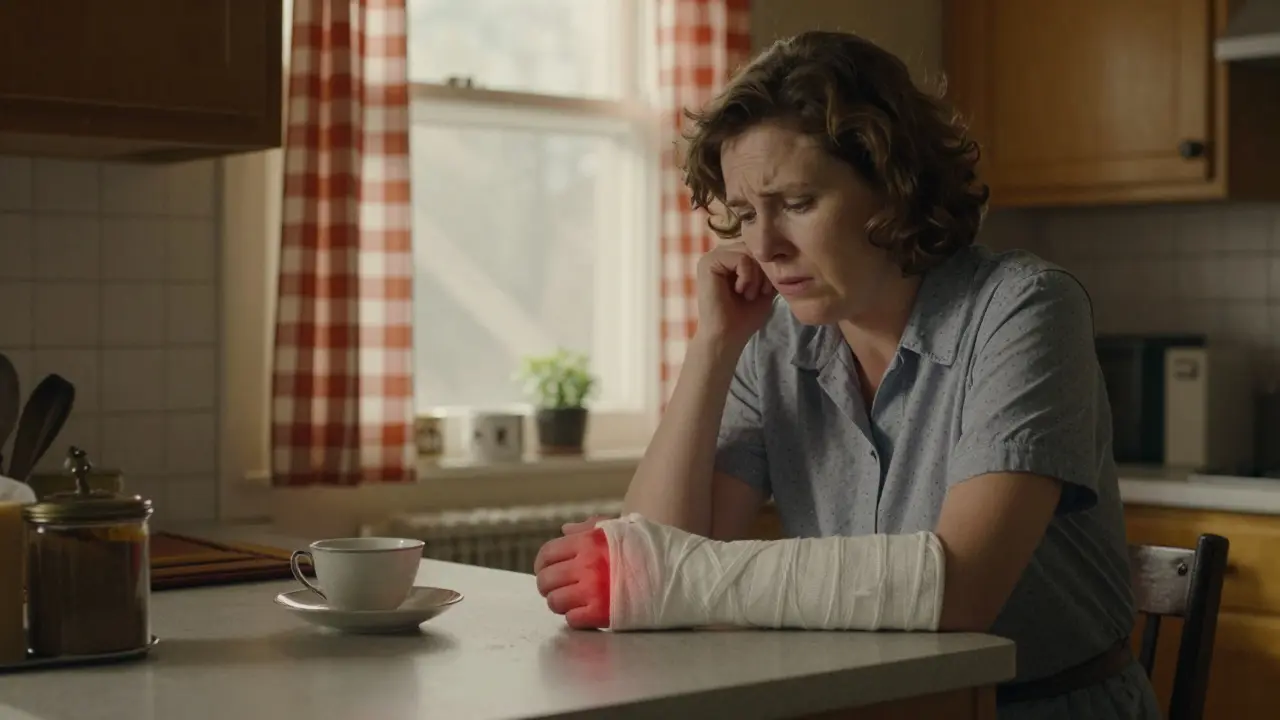

When you break a wrist, sprain an ankle, or have surgery, you expect pain to fade over time. But what if the pain doesn’t just stick around-it gets worse? What if your skin feels like it’s on fire from the lightest touch, or your hand turns red and swollen for no clear reason? This isn’t normal healing. This could be complex regional pain syndrome-a condition that turns a minor injury into a lifelong battle.
It’s Not Just Pain. It’s a Nervous System Gone Wild
Complex regional pain syndrome, or CRPS, isn’t like a sprained ankle that heals in six weeks. It’s a malfunction in your nervous system. After an injury-sometimes even a small one-the nerves that normally send pain signals start screaming nonstop. Your brain keeps hearing those signals, even when there’s no damage left to fix. The result? Pain that’s way out of proportion to what happened.People with CRPS often describe it as burning, stabbing, or like electric shocks. It’s not just discomfort. It’s debilitating. One woman in Sydney broke her wrist in a fall. Three months later, her hand was so sensitive that even the brush of her sleeve made her cry. Her skin turned blotchy, felt colder than the other hand, and her fingernails grew faster than normal. She was told it was "just healing." But it wasn’t. It was CRPS.
How Do You Know It’s CRPS and Not Just Slow Healing?
There’s no single blood test or X-ray that confirms CRPS. Doctors diagnose it by what you’re feeling and what they see. The key signs are:- Pain that’s way worse than the injury should cause
- Changes in skin color-red, purple, pale, or blotchy
- Changes in skin temperature-your hand or foot might feel much hotter or colder than the other side
- Swelling or sweating in the affected area
- Extreme sensitivity to touch, light, or temperature
- Stiff joints, weak muscles, or trouble moving the limb
These symptoms usually show up within weeks after an injury. Most cases appear between four and six weeks later. If you’ve had a fracture, surgery, or even a deep cut-and now your limb feels like it’s on fire-don’t wait. Early recognition is the biggest factor in stopping CRPS from getting worse.
What Triggers CRPS? It’s Not Always What You Think
You might assume CRPS only happens after big injuries. But it doesn’t work that way. About 40% of cases follow a fracture-especially wrist fractures. But it can also start after minor sprains, cuts, or even needle sticks. Surgery isn’t safe either. Knee arthroscopies, carpal tunnel releases, and even dental work have triggered it.And here’s the twist: in about 10% of cases, there’s no clear injury at all. Someone wakes up with pain they can’t explain. That’s why doctors now say CRPS isn’t just about trauma-it’s about how your nervous system responds to it. Some people’s bodies overreact. Why? No one knows for sure. Genetics might play a role. So might stress, inflammation, or even how your immune system reacts. Studies have found autoantibodies in 30% of CRPS patients, suggesting your own immune system might be attacking your nerves.
Who Gets CRPS? It’s Not Random
CRPS doesn’t pick its victims evenly. Women get it about three times more often than men. It’s most common between ages 40 and 60, but teens and young adults can get it too. If you’ve had CRPS in one limb before, your risk goes up if you’re injured again. And if your pain feels worse than it should, or if your cast feels too tight after an injury-those are red flags.What’s strange is that two people can break the same bone in the same way, and only one develops CRPS. That’s why researchers are looking at brain patterns, immune markers, and even emotional stress responses. It’s not just physical-it’s neurological, immunological, and psychological.
Stages of CRPS: What Happens Over Time
CRPS doesn’t always follow a clear path, but many people go through phases:- Stage 1 (0-3 months): Burning pain, swelling, skin changes, increased sweating, faster nail growth, stiffness. The limb might feel warmer or cooler than the other side.
- Stage 2 (3-6 months): Pain gets worse. Skin becomes shiny and thin. Muscles weaken. Joints stiffen. Hair growth slows. The limb feels colder.
- Stage 3 (6+ months): Pain may spread. Muscles shrink. Limb becomes stiff and hard to move. Skin turns pale and tight. This stage can be permanent if not treated early.
Not everyone goes through all three. Some people improve quickly. Others get stuck in stage one for years. The key is catching it before it locks in.
How Is CRPS Treated? It’s Not One-Size-Fits-All
There’s no magic pill for CRPS. But there are proven strategies that work best when started early.Physical therapy is the most important first step. Moving the limb-even when it hurts-helps reset the nervous system. A physiotherapist who knows CRPS will use gentle, graded movements. Don’t let anyone tell you to rest it. Immobilization makes it worse.
Medications are used to calm the nervous system. NSAIDs help if there’s inflammation early on. Gabapentin or pregabalin target nerve pain. Corticosteroids can reduce swelling in the first few weeks. Antidepressants like amitriptyline or duloxetine are sometimes used, not because it’s "all in your head," but because they help block pain signals.
Nerve blocks can give relief by temporarily shutting down overactive nerves. A sympathetic nerve block involves injecting anesthetic near the spine. If it helps, it confirms CRPS is driving the pain.
Spinal cord stimulation is for long-term cases. A small device is implanted near the spine. It sends mild electrical pulses that distract the brain from the pain signals. Many people get back their quality of life with this.
Ketamine infusions are being tested in clinics. In small doses, ketamine can reset the brain’s pain pathways. It’s not a cure, but for some, it breaks the cycle.

Why Does CRPS Last So Long? The Brain Gets Hooked
Your brain learns pain. If your nerves keep screaming for months, your brain starts believing that pain is normal. It rewires itself to expect it. That’s why CRPS becomes chronic. It’s not just the injury-it’s the brain’s memory of the pain.This is why psychological support matters. Anxiety and depression don’t cause CRPS, but they make the pain feel worse. Cognitive behavioral therapy (CBT) helps people manage the fear of movement, break the cycle of pain-focused thinking, and regain control.
What’s the Outlook? Hope Isn’t Just a Word
Some people recover fully, especially if treatment starts in the first three months. Others live with pain for years. But that doesn’t mean you’re stuck. New treatments are emerging. Research into autoantibodies, immune modulators, and brain stimulation is opening new doors.The goal isn’t always total pain elimination. It’s regaining function. Can you hold your coffee? Can you brush your teeth? Can you walk without fear? Those are the real wins.
CRPS is rare. It’s misunderstood. But it’s real. And if you’re living with it, you’re not alone. Thousands of people around the world-many of them women over 40-are fighting the same battle. The key is finding a specialist who knows CRPS isn’t just "chronic pain." It’s a neurological emergency that needs urgent, coordinated care.
What to Do If You Think You Have CRPS
If you’ve had an injury and now your pain doesn’t match the damage:- Don’t wait. Go to your doctor within weeks, not months.
- Describe your pain exactly: burning? electric? sensitive to touch?
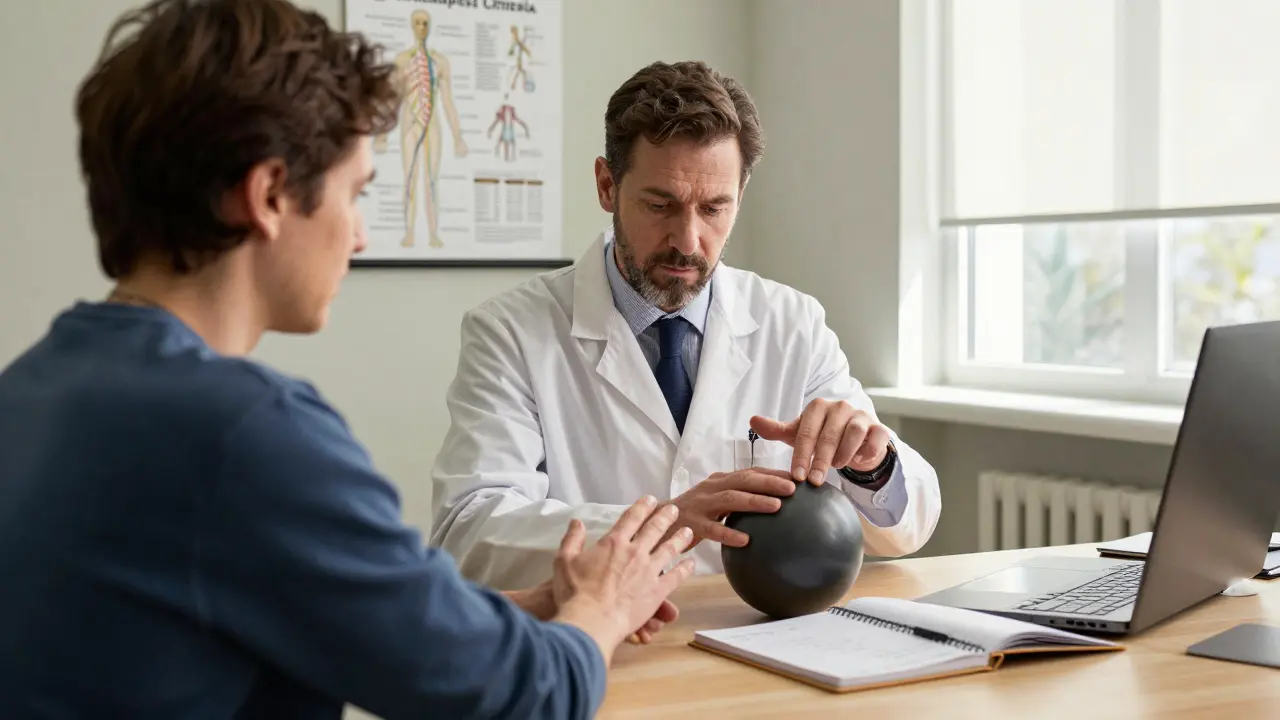
- Ask if it could be CRPS. Mention the Budapest Criteria-doctors need to hear the right terms.
- Request a referral to a pain specialist or neurologist.
- Start physical therapy as soon as possible-even if it hurts.
- Keep a pain diary: note triggers, timing, intensity, and what helps.
You’re not imagining it. You’re not weak. You’re not exaggerating. You’re dealing with a complex neurological condition-and you deserve a diagnosis, not dismissal.
Can CRPS go away on its own?
Yes, some cases do improve without treatment, especially if caught early. But waiting is risky. About half of people with untreated CRPS develop long-term pain, stiffness, or muscle loss. Early intervention gives you the best shot at full recovery.
Is CRPS the same as RSD?
Yes. Reflex Sympathetic Dystrophy (RSD) was the old name for what’s now called Complex Regional Pain Syndrome Type I. The term changed in the 1990s to better reflect the condition’s complexity. CRPS Type II involves confirmed nerve damage; Type I doesn’t.
Can stress make CRPS worse?
Stress doesn’t cause CRPS, but it can amplify pain signals. When you’re anxious or overwhelmed, your nervous system becomes more sensitive. That’s why managing stress through therapy, breathing techniques, or mindfulness is part of effective treatment.
Can CRPS spread to other parts of the body?
Yes. In some cases, especially if untreated, CRPS can spread from the original limb to the opposite side or to nearby areas. This is called mirror-image spread. It’s rare but possible, which is why early treatment is so critical.
Are there any new treatments for CRPS in 2026?
Yes. Clinical trials are testing drugs that target immune system proteins linked to CRPS. Ketamine infusions are becoming more widely available. Spinal cord stimulation devices are now smaller and more precise. Researchers are also exploring gene markers to predict who’s at risk-so prevention might one day be possible.
Can children get CRPS?
Yes. While it’s less common in children, it does happen-often after fractures or sports injuries. Kids with CRPS may refuse to use a limb, complain of burning pain, or develop skin changes. Early diagnosis and family-supported physical therapy are key to recovery.


Crystel Ann
15 January 2026My sister had CRPS after a simple wrist fracture. They told her it was just healing, but she couldn't even wear a watch. Three months in, she found a specialist who finally listened. Physical therapy saved her. Not cured, but she can hold her coffee again. That’s everything.
Jan Hess
16 January 2026Just read this and I’m so glad I pushed my doc for a referral last year. I was told I was overreacting until I brought up the Budapest Criteria. Now I’ve got a spinal stimulator and I’m biking again. Don’t wait. If it feels wrong it probably is.
Iona Jane
18 January 2026They don’t want you to know this but CRPS is a pharmaceutical scam. The real cause is 5G towers activating dormant nerve trauma. Look at the timing - it spiked right after the rollout. And why are so many women affected? Because their nervous systems are more sensitive to corporate surveillance tech. They’re testing this on us.
Diane Hendriks
19 January 2026It is not merely inaccurate to refer to CRPS as a chronic pain condition; it is categorically incorrect. CRPS is a neuroimmune dysregulation syndrome with documented autoantibody profiles, altered cortical somatosensory mapping, and sympathetic nervous system hyperexcitability. To reduce it to 'pain' is to perpetuate medical ignorance. This article, while well-intentioned, still fails to acknowledge the pathophysiological hierarchy. We must demand precision in terminology.
Nishant Garg
19 January 2026In India, we call this 'burning limb syndrome' - seen mostly after fractures or even after a simple fall. My cousin had it after a motorcycle accident. No one knew what it was. The doctor gave her painkillers and told her to rest. She got worse. Then her sister found a physiotherapist in Bangalore who’d treated three other cases. Movement saved her. The key isn’t just medicine - it’s someone who’s seen it before. Don’t let bureaucracy delay what your body is screaming.
Mike Berrange
19 January 2026I’ve had CRPS for 7 years. I’ve tried everything. Ketamine didn’t work. Spinal stimulator gave me a headache. PT made me cry. The only thing that helped? Quitting my job. Stress made it worse. The doctors won’t tell you that. They’ll keep pushing meds. But if you’re stuck in a toxic job, in a toxic city, with toxic people - your nervous system is drowning. Fix the environment before you fix the nerve.
Amy Vickberg
20 January 2026Thank you for writing this. I was dismissed for two years. My orthopedist said I was 'too sensitive.' I finally found a pain clinic that took me seriously. Now I do 10 minutes of movement every day. It’s not about being strong. It’s about being consistent. You don’t have to win the battle every day. Just show up. Even if it’s just for five minutes. You’re not broken. You’re learning.
Niki Van den Bossche
20 January 2026How ironic that a condition rooted in neurological malfunction is treated with the same reductionist pharmacological tools that caused the medical-industrial complex to collapse into its current state of performative empathy. We fetishize 'early intervention' while ignoring the epistemological violence of institutionalized dismissal. CRPS is not a disease - it is the body’s rebellion against a system that refuses to listen. The real treatment? Abolishing the hierarchy of pain.
Haley Graves
22 January 2026You’re not alone. I’ve been where you are. I used to hide my hand under a blanket in public because I was ashamed. Now I wear a sleeveless shirt and say, 'Yeah, this is CRPS. It’s weird. It’s real. And I’m still here.' You don’t need to be brave. You just need to be persistent. Find your person. Your therapist. Your specialist. Your tribe. And keep going. One step. One day. One breath.
Gloria Montero Puertas
22 January 2026...and yet, still, the majority of physicians remain woefully untrained in this condition... as if the body’s signals are mere inconveniences to be silenced with ibuprofen and platitudes... it’s not just negligence - it’s negligence dressed in white coats... and you wonder why people stop trusting medicine...
Tom Doan
23 January 2026Interesting. So if CRPS can spread mirror-image, and is linked to autoantibodies, and responds to ketamine - is it possible this is a form of autoimmune encephalitis with peripheral manifestations? Or is that too speculative? The literature suggests neuroinflammation is central, but the diagnostic criteria remain purely clinical. Perhaps we need biomarkers before we can call it anything more than a syndrome.