
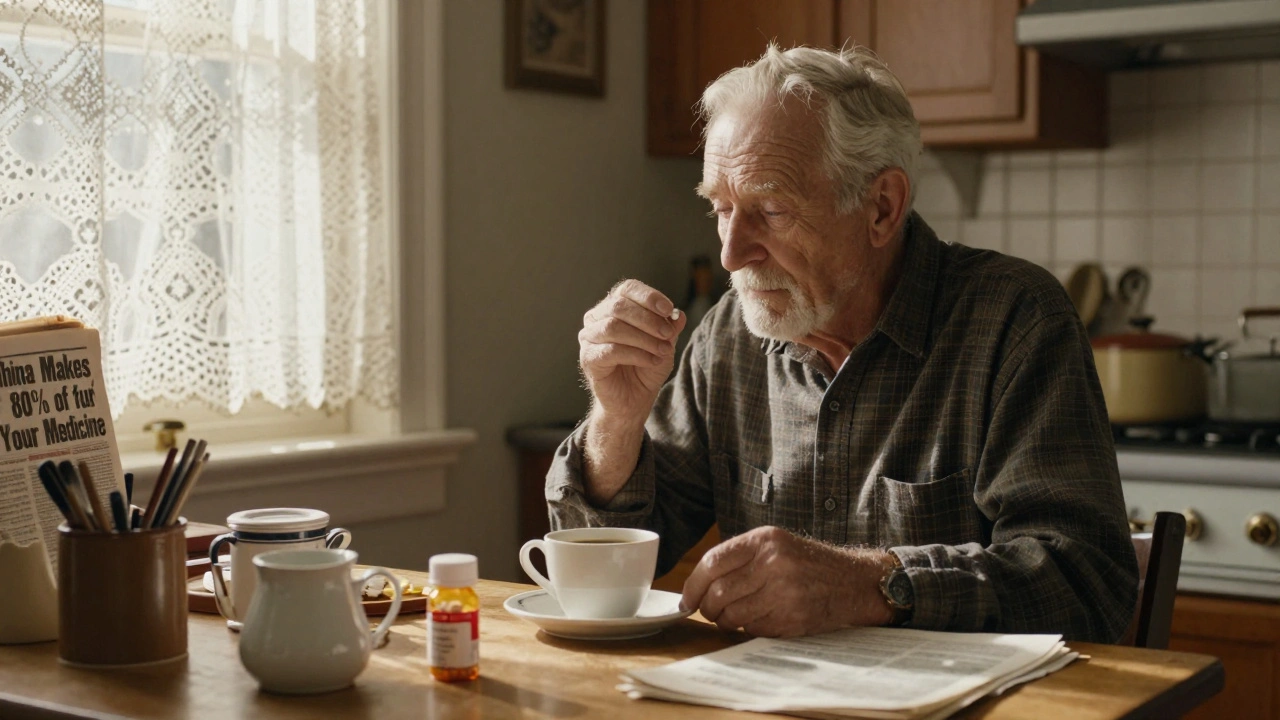

When you take a generic pill for high blood pressure, diabetes, or antibiotics, there’s a better than 70% chance that the active ingredient inside was made in China. That’s not speculation-it’s fact. As of 2023, Chinese manufacturers supplied 80% of the world’s active pharmaceutical ingredients (APIs), the raw chemical building blocks of nearly every generic drug sold globally. But behind that dominance lies a growing tension: low cost versus questionable quality.
Why China Dominates the API Market
China didn’t become the world’s API powerhouse by accident. After joining the World Trade Organization in 2001, the government poured billions into building chemical manufacturing infrastructure. By 2015, national healthcare reforms pushed domestic companies to scale up generic drug production. Today, companies like Sinopharm and Shijiazhuang Pharma Group run massive plants that churn out 500 to 2,000 metric tons of APIs per year-far more than any Western competitor. The secret? Vertical integration. Chinese manufacturers control 60-70% of their own supply chain, from key starting materials to final API output. This cuts costs dramatically. A kilogram of generic API made in China costs $50-$150. The same ingredient from Europe or the U.S. runs $200-$400. That price gap is why U.S. drugmakers, even big ones like Pfizer and Teva, still rely on Chinese suppliers. But here’s the catch: China excels at high-volume, low-complexity chemicals. Think metformin, amoxicillin, or atorvastatin. These are simple molecules made through batch processing-old-school methods that are cheap but harder to control. Meanwhile, China holds less than 5% of the global market for complex drugs like biologics or injectables. Their strength isn’t innovation-it’s scale and cost.The Quality Gap: What the FDA Keeps Finding
Cost savings don’t always mean safe drugs. The U.S. Food and Drug Administration (FDA) inspects Chinese API facilities less than 10% as often as U.S. ones. Why? Access restrictions, diplomatic hurdles, and logistical delays. But when inspectors do show up, they find the same problems over and over. In inspections from 2022 to 2023, 78% of Chinese facilities failed on laboratory controls. That means labs didn’t properly test samples, didn’t calibrate equipment, or didn’t document results. Another 65% had unvalidated manufacturing processes-meaning no one could prove the drug was made the same way every time. And 52% had data integrity issues: records altered, deleted, or outright faked. A 2023 FDA study found that 12.7% of API samples from China failed purity tests. Compare that to 2.3% from Europe and 1.8% from the U.S. That’s not a small difference-it’s a red flag. Real-world consequences follow. In 2023, Zydus Pharmaceuticals recalled 1.2 million bottles of blood pressure medication because the API from China’s Huahai Pharmaceutical was under-potent. Patients weren’t getting enough of the drug to control their condition. That’s not theoretical. That’s dangerous.Why Indian Companies Still Win in Finished Drugs
Here’s a twist: China makes most of the API, but India makes most of the final pills. India imports 65% of its APIs from China. Then it turns them into tablets, capsules, and injections-and exports them worldwide. Why? Because India’s finished drug manufacturing is better regulated. Indian companies have spent decades building quality systems to meet FDA and EMA standards. They know how to document, validate, and audit. China, by contrast, still relies on batch processing for 65% of its API production. Meanwhile, the U.S. and Europe use continuous manufacturing-more precise, more consistent, and harder to manipulate. The result? China controls 78% of the API market but only 5-7% of the finished generic drug export market. India? They control 20%. That’s not a coincidence. It’s a structural divide.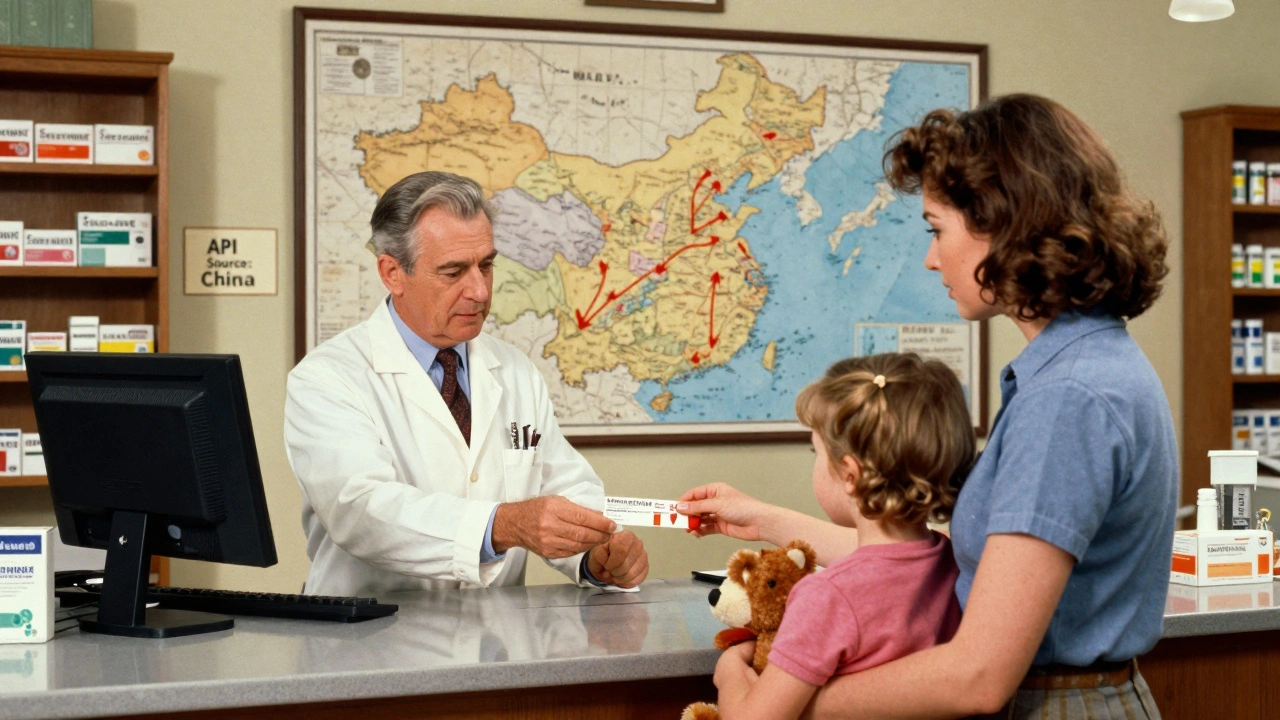
The Cost of Cutting Corners
A 2023 survey by PhRMA found that 68% of U.S. generic drugmakers had experienced quality issues with Chinese-sourced APIs. 42% reported inconsistent purity levels. 37% said documentation was falsified. One quality assurance specialist on Reddit shared that their lab had to retest 37% of Chinese-sourced metformin because it kept failing specs. For Indian-sourced metformin? Only 8% needed retesting. But here’s the trade-off: one procurement manager said switching to Chinese API for amoxicillin saved their company $4.2 million a year-even though they rejected 15% more batches. For some companies, that’s worth it. For patients? Not so much.China’s Response: Reform or Collapse?
China knows the problem. Since 2016, the National Medical Products Administration (NMPA) launched the Generic Consistency Evaluation (GCE) program. It forces Chinese generics to prove they work the same as brand-name drugs. So far, only 35% of approved generics have completed the evaluation. The government has shut down 4,500 non-compliant factories since 2018. The number of generic manufacturers dropped from 7,000 to 2,500. That’s real progress. In 2024, China announced “Pharma 2035,” a $22 billion plan to upgrade technology and quality systems. By 2026, they must use continuous manufacturing for 30% of high-volume products. They’re also pushing electronic documentation and stricter inspections. But here’s the catch: these reforms are slow. Building an FDA-compliant API plant in China costs $85-$120 million. Annual maintenance? $3-$5 million. Most Chinese factories still operate on tight margins. Why spend millions on quality when you can just cut corners and keep selling?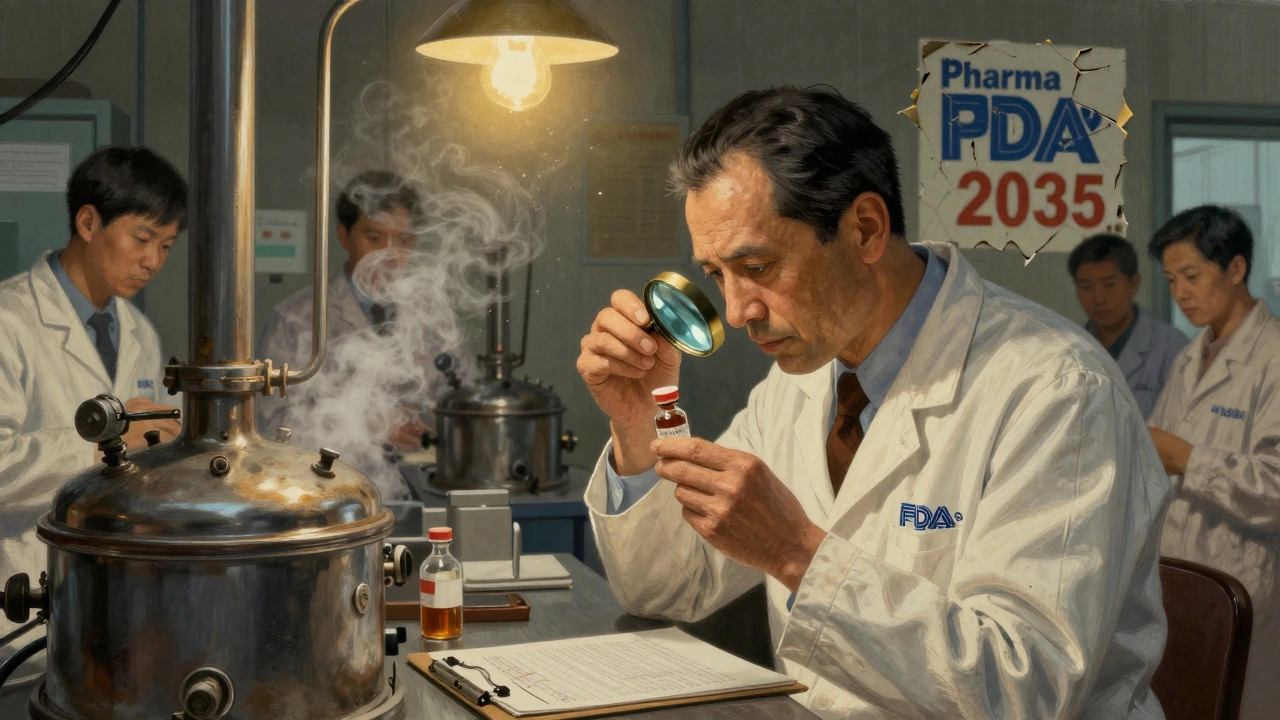



Bonnie Youn
2 December 2025Let’s be real - we’re all just one supply chain hiccup away from running out of metformin or amoxicillin and no one’s talking about how we’ve outsourced our health to a country that edits lab reports like they’re TikTok captions
Suzanne Mollaneda Padin
3 December 2025India’s role here is way more nuanced than people give it credit for. They’re not just middlemen - they’re the ones who actually built the QA systems that make the Chinese APIs safe enough to use. Their regulatory culture is decades ahead of China’s, even if they’re still dependent on the raw materials. It’s a fragile ecosystem, but it’s functional - for now.
Kenny Leow
3 December 2025China’s not evil, it’s just efficient. They figured out how to mass-produce chemistry at a scale no one else can match. The problem isn’t the country - it’s the global economic model that rewards cheap over safe. We built this. We chose the $50 pill over the $300 one. Now we’re surprised when things break?
Edward Hyde
4 December 2025So let me get this straight - we let China make 80% of our life-saving drugs because it’s cheaper, then act shocked when the pills don’t work? Bro, we literally wrote the playbook for corporate greed. The FDA’s inspections are a joke. We don’t want safety - we want a discount. And now we’re mad when the discount comes with side effects?
Kelly Essenpreis
6 December 2025China’s just playing chess while we’re playing checkers. They know we’re addicted to their chemicals so they’ll never fix it. The only way out is war or tariffs. And honestly? I’m fine with both. Let’s make our own damn pills. No more outsourcing our health to a regime that lies about air quality and now our meds too
Karandeep Singh
8 December 2025india is the real hero here. they take the crap from china and turn it into something that actually works. no one talks about that. theyre the unsung middlemen of global pharma
Alexander Williams
9 December 2025The 78% failure rate on lab controls is misleading. It’s not that they’re manufacturing bad drugs - it’s that their documentation is chaotic. The APIs are often chemically identical. The problem isn’t efficacy - it’s reproducibility. And that’s a regulatory, not a chemical, failure. We’re conflating paperwork with potency.
Debbie Naquin
11 December 2025If quality is defined by consistency, and consistency is defined by control - then China’s entire model is fundamentally incompatible with modern pharmacology. Batch processing is pre-industrial. Continuous manufacturing isn’t just an upgrade - it’s a paradigm shift. The fact that we still tolerate 65% batch production in the 21st century is a philosophical failure of capitalism, not a technical one.
Lauryn Smith
13 December 2025It’s not about blaming China or India. It’s about asking: what kind of world do we want to live in? One where medicine is a commodity, or one where it’s a right? We can’t have both cheap and safe - not unless we change how we value human health. Maybe it’s time to pay more so someone else doesn’t pay with their life.
elizabeth muzichuk
13 December 2025Did you know the Chinese government has secret labs that fake FDA inspection reports? They’re not just cutting corners - they’re running a global fraud operation. And the FDA? They’re too scared to shut it down because they don’t want to cause a drug shortage. This isn’t negligence - it’s collusion.
James Allen
14 December 2025Let’s not pretend this is about health. It’s about power. China controls the supply. We’re the customers. And when the customer has no leverage, the supplier writes the rules. The real question isn’t whether the pills work - it’s whether we’re okay being held hostage by a geopolitical adversary for our heart medication.
Mary Ngo
15 December 2025And just how many of these APIs are being diverted to black-market drug cartels? We’re not just talking about failed inspections - we’re talking about a pipeline that could be weaponized. If China can fake purity data, what’s stopping them from injecting something else? The FDA doesn’t inspect enough. And we’re all just hoping our next pill isn’t the one that kills us.