
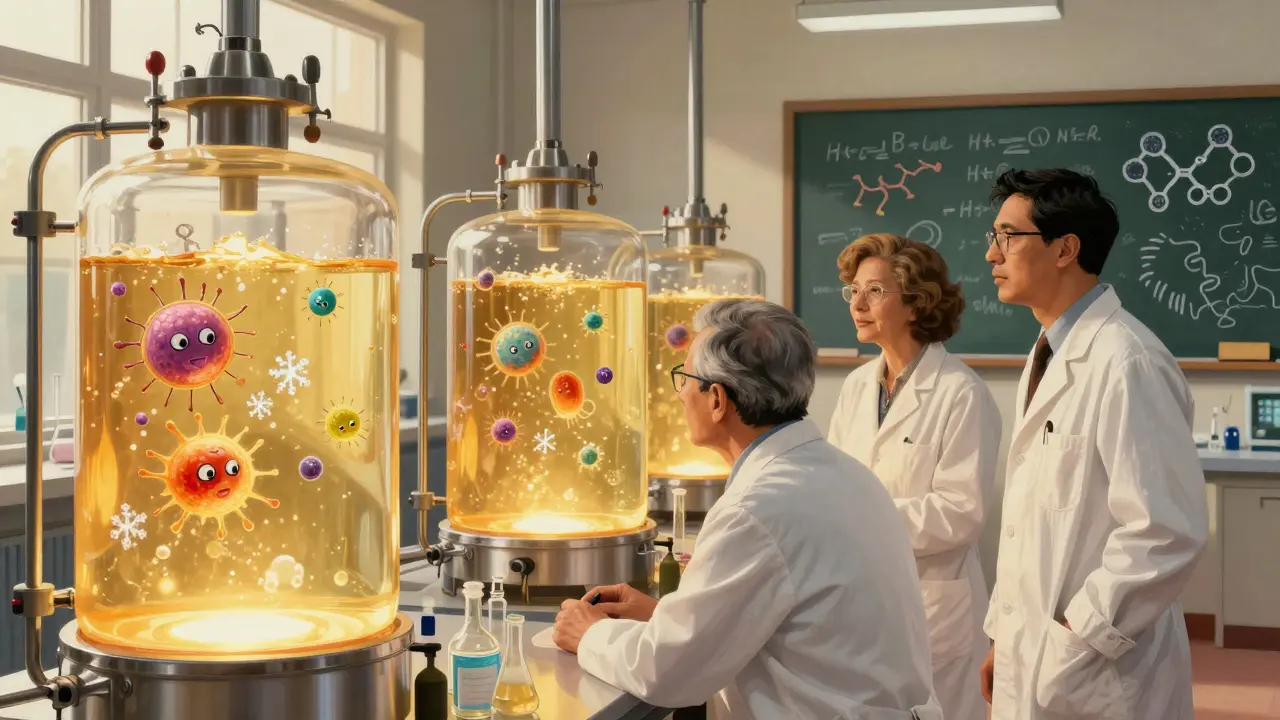

When you take a pill for high blood pressure or diabetes, you expect every tablet to be exactly the same. That’s because most drugs are small molecule chemicals made in labs using predictable chemical reactions. But biologic drugs? They’re a whole different story. These are not pills. They’re not even made in vats like traditional drugs. They’re grown-like plants in a greenhouse-inside living cells. And because of that, no two batches are ever truly identical. That’s why you can’t have an exact copy of a biologic drug, not even close.
What Makes Biologics So Different?
Biologic drugs are made from living organisms-bacteria, yeast, or mammalian cells engineered to produce proteins like antibodies or hormones. Think of them as tiny biological factories. The most common examples are drugs like Humira (for arthritis), Enbrel (for autoimmune diseases), and Ozempic (for weight loss and diabetes). These are not simple molecules. They’re huge, complex structures-up to 1,000 times larger than a typical pill ingredient. A small molecule drug like aspirin has about 20 atoms. A monoclonal antibody biologic can have over 20,000. And each one folds, twists, and chemically modifies itself in ways that are nearly impossible to fully control.
That’s the core problem: you can’t copy a living system like you copy a recipe. A generic version of a small molecule drug is just a chemical twin. Same atoms. Same shape. Same effect. But with biologics, even tiny changes in temperature, pH, nutrient levels, or cell growth time can alter the final product. The FDA says it plainly: “Slight modifications… are expected as a natural process of manufacturing.” That’s not a flaw-it’s biology.
How Are Biologics Actually Made?
Manufacturing a biologic isn’t a single step. It’s a months-long dance of precision. First, scientists insert human genes into host cells-usually Chinese hamster ovary cells-and grow them in massive bioreactors. These tanks hold up to 15,000 liters of nutrient-rich broth, kept at 37°C, just like human body temperature. The cells feed, multiply, and spit out the therapeutic protein. This upstream phase takes 10 to 14 days. Then comes downstream: filtering out dead cells, removing viruses, purifying the protein with specialized chromatography columns, and finally, formulating it into a stable liquid.
Each step has to be perfect. A single drop of contamination can ruin an entire batch. One industry engineer on LinkedIn described a $500,000 loss after a tiny air bubble disrupted oxygen flow in a bioreactor. Quality control isn’t optional-it’s 30-40% of the total cost. Compare that to small molecule drugs, where testing adds just 5-10%. And while a generic pill can be made in days, a biologic takes 3 to 6 months from start to finish. That’s why building a manufacturing facility costs between $100 million and $500 million.
Why There Are No Exact Copies
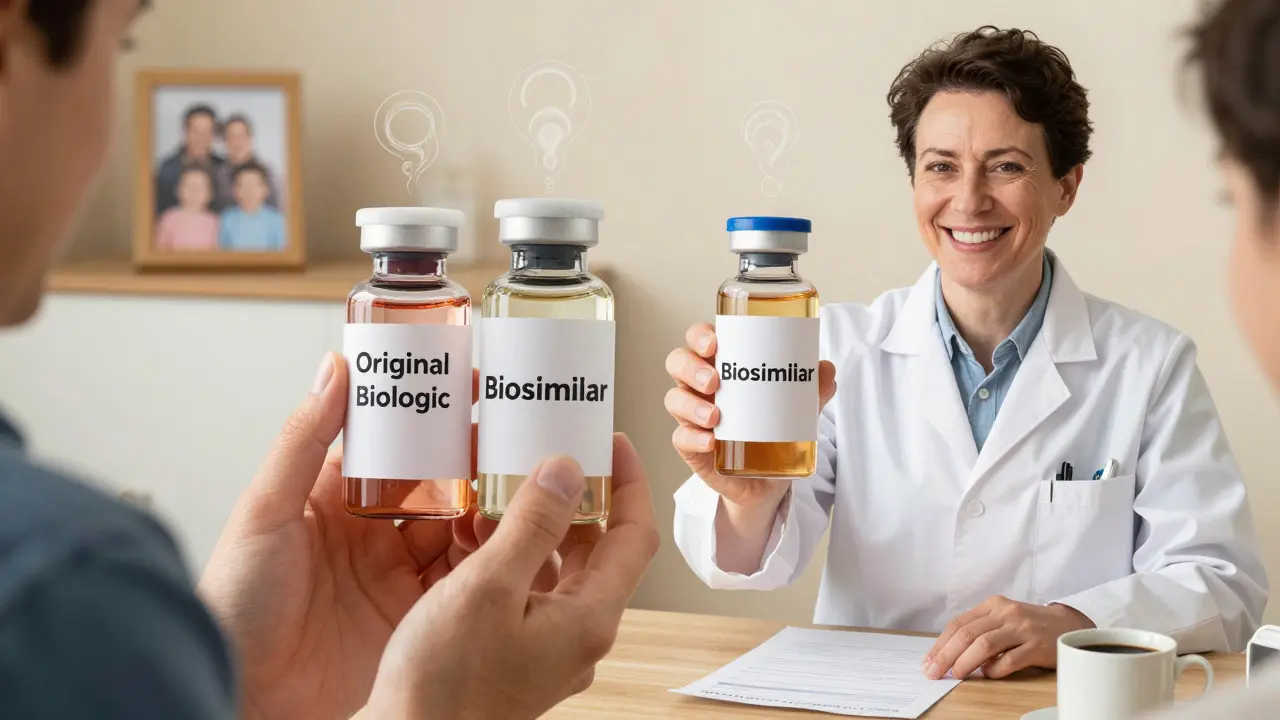
You might hear people say “biosimilars are like generics for biologics.” That’s misleading. Generics are exact copies. Biosimilars are highly similar-but not identical. Think of them as twins, not clones. Even if you use the same cell line and the same process, the final product will have minor differences in sugar chains, folding patterns, or charge variants. These aren’t random errors-they’re natural outcomes of using living cells.
The FDA requires biosimilar makers to prove their product works the same way as the original. That means running over 100 analytical tests, animal studies, and sometimes clinical trials. But even then, the biosimilar isn’t a twin. It’s a cousin with the same job. And because of this complexity, the original biologic drug maker can tweak their own process-say, changing the nutrient mix slightly-and create a new version that’s still approved. That’s why a drug like Humira has had multiple versions over the years, all slightly different, all still effective.
The Cost of Precision
Biologics aren’t just hard to make-they’re hard to make consistently. The industry calls this “process understanding.” If you don’t fully know how every variable affects the final product, you risk batch failure. About 40% of delays come from poor process design early on. And when a batch fails? It’s not just money lost. It’s patients waiting. One survey of 158 biotech facilities found contamination caused 35% of failures. Another 20% were due to cell line instability-where the engineered cells slowly lose their ability to produce the right protein over time.
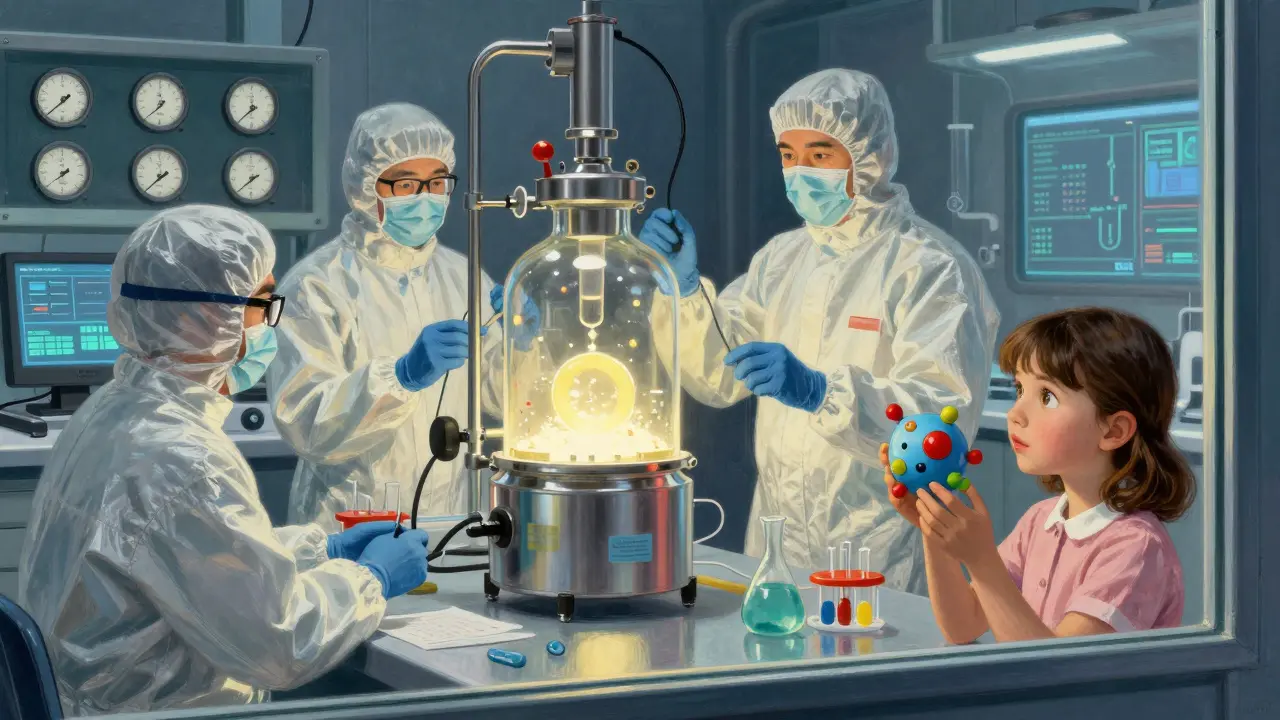
That’s why manufacturers use single-use bioreactors and sterile cleanrooms (ISO Class 5). These systems cut contamination risk by 60%, but they’re expensive. Raw materials alone go up 15-20%. Documentation is another nightmare. Each batch generates over 10,000 pages of records-every temperature reading, every filter change, every test result. The FDA doesn’t just want to know what you did. They want to know why you did it.
Biosimilars: The Workaround
Because exact copies are impossible, regulators created a new path: biosimilars. These are not generics. They’re approved based on a mountain of evidence showing they’re as safe and effective as the original. The first U.S. biosimilar was approved in 2015. By 2023, the global market hit $10.5 billion-and it’s projected to hit $30 billion by 2028. But getting there isn’t easy. A biosimilar developer must spend 8-10 years and $100-$300 million just to get approval. Compare that to a generic drug, which can hit the market in 2-3 years for under $2 million.
Still, biosimilars are changing access. In Europe, where biosimilars are more common, patients pay 30-70% less for drugs like adalimumab. In the U.S., biosimilars are slowly entering the market, but patent thickets and manufacturer tactics have slowed adoption. The real win? When biosimilars force the original makers to lower prices. That’s how competition works in biologics-not by copying, but by competing on cost and access.
What’s Next?
The industry is trying to make biologics manufacturing more predictable. New tools like AI-driven process optimization and real-time monitoring (called PAT-Process Analytical Technology) are helping. Some facilities now use continuous manufacturing, where the product flows through the system nonstop instead of in batches. That cuts production time by 20-30%. Modular factories are also on the rise-small, flexible units that can be moved or scaled up quickly.
But even with all this tech, the fundamental truth won’t change: biologics are made by living cells. And living systems are messy. They’re not machines. You can’t program them to produce the same thing every time. That’s why the FDA and EMA still require such strict testing. It’s not about being overly cautious-it’s about accepting that biology doesn’t follow the rules of chemistry.
For patients, this means better treatments for cancer, autoimmune diseases, and rare conditions. For manufacturers, it means years of work and millions in investment. For regulators, it means evolving rules that don’t treat biologics like pills. And for the future? It means we’ll keep seeing biosimilars-not copies-but smarter, more affordable alternatives built on deep science, not shortcuts.
Can biosimilars be used interchangeably with the original biologic drug?
In most cases, yes-but not automatically. Unlike generics, which are considered interchangeable by law, biosimilars require additional approval for interchangeability. In the U.S., the FDA must specifically designate a biosimilar as "interchangeable," meaning it can be substituted without the prescriber’s involvement. So far, only a handful have received this status. Always check with your pharmacist or doctor before switching.
Why are biologic drugs so expensive?
The high cost comes from the complexity of manufacturing, not profit margins. Building a biologics facility costs hundreds of millions. The process takes months, not days. Quality control alone can consume 40% of the budget. Plus, failure rates are high-10-15% of batches are lost. And because these drugs treat serious, chronic conditions, manufacturers have to recoup costs over a small patient population. Biosimilars are helping bring prices down, but it takes time.
Are biosimilars as safe and effective as the original?
Yes, when approved. Regulatory agencies like the FDA and EMA require biosimilars to undergo rigorous testing-analytical, non-clinical, and clinical-to prove they match the original in safety, purity, and potency. Studies show no meaningful difference in outcomes for patients using biosimilars versus the originator biologic. Millions of doses have been administered worldwide with no new safety concerns.
Can a biologic drug be changed after it’s approved?
Yes, and this is unique to biologics. Manufacturers can make changes to the production process-like switching cell lines, adjusting nutrient mix, or modifying purification steps-as long as they prove the product remains highly similar. These are called "post-approval changes." The FDA allows them because they understand that biological processes aren’t static. But each change requires new data, and the product must still meet strict comparability standards.
Why can’t we just make exact copies of biologics like we do with pills?
Because biologics aren’t made by mixing chemicals-they’re grown. They’re produced inside living cells that respond to tiny environmental changes. Even a slight shift in temperature or pH during growth can alter the protein’s structure. We don’t have tools to fully map every part of a biologic molecule. So even if you had the exact recipe, you couldn’t replicate the living system that makes it. That’s why exact copies are scientifically impossible-not because of regulation, but because of biology.



Agbogla Bischof
22 March 2026Biologics aren't drugs-they're living systems. You can't patent a recipe for yeast fermentation and call it a drug. The whole idea of 'generic' breaks down here because biology doesn't do duplicates. It does variations. And that's not a bug-it's the feature.
Caroline Dennis
23 March 2026Process Analytical Technology (PAT) is the real game-changer. Real-time monitoring of glycosylation patterns, conformational shifts, aggregation states-this isn't QC, it's bio-instrumentation. We're moving from batch validation to continuous assurance. The future isn't cheaper biosimilars-it's smarter manufacturing.
Korn Deno
24 March 2026Biology is messy. Machines aren't. We keep trying to force biology into chemistry's box. It'll never fit. Stop calling them 'copies.' They're analogs. Like jazz covers of a song-not the original, but still valid.
Rama Rish
24 March 2026In India we see this daily-biosimilars saved my dad’s life. Humira was $2k/month. Biosimilar? $300. Not identical. But effective. Science doesn't need perfection to be life-saving.
Kevin Siewe
26 March 2026Manufacturing biologics is like conducting an orchestra where every musician has a different instrument, mood, and sense of timing. You can’t just copy the score-you have to understand the players. That’s why the FDA’s approach makes sense. It’s not about control. It’s about consistency within variability.
Jacob Hessler
28 March 2026We spend billions on this because we're too lazy to just make pills. Why not just engineer bacteria to spit out the exact molecule? Because biology says no. And we're too scared to say 'screw it' and just fix the system.
Darlene Gomez
29 March 2026It's beautiful, really. We're not just treating disease-we're learning to work with life, not against it. The fact that we can grow a protein in a hamster cell and save a human life? That's not engineering. That's collaboration. And biosimilars? They're not copies-they're harmonies.
Chris Farley
29 March 2026The US spends more on biologics than the rest of the world combined. Why? Because we let Big Pharma lock up biology like it's a patent on oxygen. Biosimilars aren't the problem-greed is.
Stephen Alabi
31 March 2026While it's true that biologics are inherently variable, the regulatory framework has been deliberately over-engineered to protect intellectual property under the guise of safety. The analytical methods used to 'prove similarity' are often insufficient to detect clinically relevant differences. We are trading in scientific rigor for commercial convenience.
Katie Putbrese
1 April 2026Why do we even bother with biosimilars? We should just make the original cheaper. Why let China or India grow our medicines? This isn't innovation-it's outsourcing our medical sovereignty. 🇺🇸💔
Amber Gray
2 April 2026Biosimilars are just the FDA's way of saying 'we know you can't copy it so here's a kinda same thing 😊'
Danielle Arnold
3 April 2026So we spent 20 years and $300M to make a drug that's 'highly similar'... and we still can't guarantee it works the same? Cool. I'll take the placebo.
James Moreau
4 April 2026From a global health perspective, biosimilars are the most equitable innovation in modern medicine. They don't just lower prices-they restore dignity. When a mother in rural Kenya can afford to treat her child's rheumatoid arthritis, it's not about science. It's about justice.
J. Murphy
6 April 2026I dont get why people make such a big deal about biologics. Its just proteins. We made insulin from pigs for decades. We can do it again. Stop overcomplicating things.
Jesse Hall
6 April 2026Just want to say-thank you to every scientist, technician, and QA engineer working in those cleanrooms. You're not just making drugs. You're holding back death, one imperfect batch at a time. 🙏