
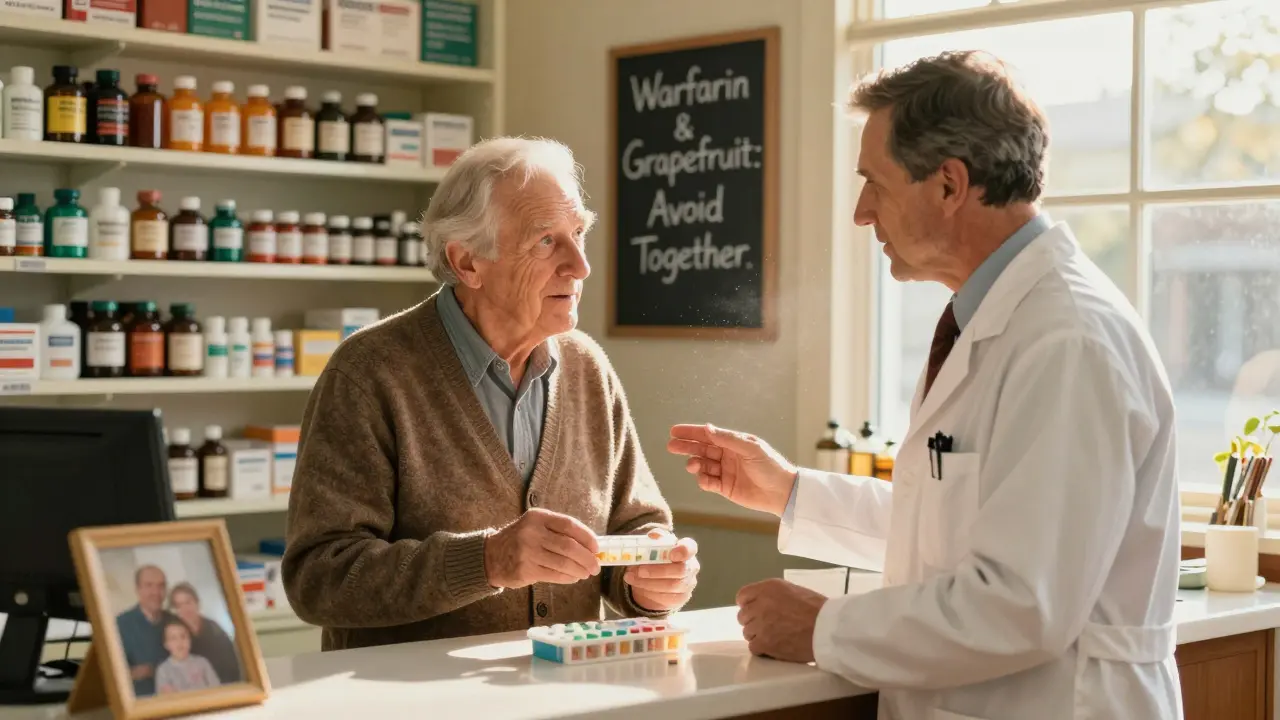

Every year, hundreds of thousands of people in the U.S. end up in the hospital because of something meant to help them: their medication. An adverse drug event isn’t just a side effect-it’s harm caused by a drug, whether it’s a mistake, a reaction, or an interaction you didn’t see coming. These aren’t rare. They’re one of the biggest patient safety problems in modern healthcare.
What Exactly Is an Adverse Drug Event?
An adverse drug event (ADE) happens when a patient gets hurt because of a medicine. It’s not just about the drug itself-it’s about how it was used. The U.S. Agency for Healthcare Research and Quality (AHRQ) defines it as any injury resulting from medical treatment involving a drug. That includes:- Accidental overdoses
- Allergic reactions
- Drug interactions
- Wrong dose or wrong drug given
- Side effects that weren’t expected
This is different from an adverse drug reaction (ADR), which is a harmful response at a normal dose-like a rash from penicillin. An ADE includes those reactions, but also the preventable errors that lead to them. Think of it this way: ADR is the body’s response. ADE is the whole chain of events that led to harm.
Back in 2000, the Institute of Medicine’s report To Err is Human shocked the medical world by revealing that medication errors alone caused at least 7,000 deaths each year in U.S. hospitals. Since then, we’ve learned even more. Today, ADEs contribute to over 1 million emergency room visits and 125,000 hospital admissions annually in the U.S. alone. That’s more than the number of people hospitalized for heart attacks in some years.
The Five Main Types of Adverse Drug Events
Not all ADEs are the same. They fall into clear categories, each with its own causes and risks.1. Adverse Drug Reactions (Type A and Type B)
Type A reactions are the most common-about 80% of all ADEs. These are predictable, dose-related, and usually extensions of the drug’s known effects. For example, taking too much warfarin can cause dangerous bleeding. Taking too much insulin can cause low blood sugar. These are avoidable with proper monitoring.
Type B reactions are rare and unpredictable. They’re not related to the dose. Think of someone going into anaphylactic shock after their first dose of penicillin. These are harder to prevent because they’re based on individual biology, like genetics or immune system quirks.
2. Medication Errors
These are preventable mistakes in prescribing, dispensing, or giving the drug. A doctor writes the wrong dose. A pharmacist gives the wrong pill. A nurse administers the drug at the wrong time. The CDC says nearly half of all ADEs in hospitals come from these kinds of errors. Many happen because of poor handwriting, rushed decisions, or lack of communication.
3. Drug-Drug Interactions
When two or more drugs react inside your body, they can change each other’s effects. For example, mixing blood thinners like warfarin with certain antibiotics can make the blood too thin. Or taking statins with grapefruit juice can cause muscle damage. Over 70% of older adults take five or more medications-making interactions almost inevitable without proper checks.
4. Drug-Food Interactions
Food isn’t just fuel-it can change how your body handles medicine. Grapefruit juice affects over 85 drugs, including cholesterol-lowering statins and blood pressure meds. Dairy products can block absorption of antibiotics like tetracycline. Even high-salt diets can reduce the effect of diuretics. These are often overlooked because patients aren’t told about them.
5. Overdoses
These can be accidental or intentional. Opioids are the biggest concern here. In 2021, over 70,000 overdose deaths in the U.S. involved synthetic opioids like fentanyl. But overdoses aren’t just about street drugs. People accidentally overdose on painkillers, sleep aids, or even OTC meds like acetaminophen. One extra pill a day for a week can lead to liver failure.

The Top Three High-Risk Medications
Some drugs are far more dangerous than others-not because they’re bad, but because they’re powerful and have narrow safety margins.Anticoagulants (like warfarin)
Warfarin is the single most common drug causing ADE-related hospital admissions. Why? It has a tiny window between working and causing bleeding. Too little, and you get a clot. Too much, and you bleed internally. About 33% of all hospital ADEs are linked to anticoagulants. In outpatient settings, INR levels (a blood test to check clotting) are off in 35% of tests. That’s a huge gap in monitoring.
Diabetes medications (especially insulin)
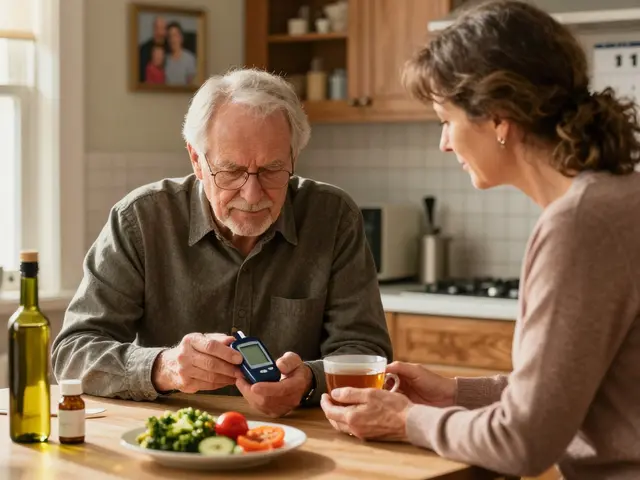
Insulin is life-saving-but it’s also one of the most dangerous drugs if dosed wrong. Over 100,000 emergency visits each year are due to insulin-related hypoglycemia. Sixty percent of those patients are over 65. Older adults are more sensitive to insulin, may forget meals, or take multiple meds that interfere. A simple mistake-like taking insulin without eating-can lead to seizures or coma.
Opioids
Opioids caused over 107,000 overdose deaths in 2021. Fentanyl, a synthetic opioid 50 to 100 times stronger than morphine, is now the main driver. Even when prescribed correctly, opioids can cause respiratory depression, especially in older adults or those with sleep apnea. And when combined with benzodiazepines (like Xanax), the risk of death jumps fivefold.
Proven Ways to Prevent Adverse Drug Events
The good news? Most ADEs are preventable. Studies show up to 50% could be avoided with better systems and communication.1. Medication Reconciliation
This is the process of comparing a patient’s current medications with what’s been prescribed. It’s done at every transition of care-admission, discharge, clinic visits. A 2020 study in the Annals of Internal Medicine found that formal reconciliation reduced post-discharge ADEs by 47%. That’s huge. It catches duplicates, missing meds, and wrong doses.
2. Electronic Prescribing (e-Prescribing)
Handwritten prescriptions are a relic-and a danger. E-prescribing cuts errors by 48%, according to AHRQ. It checks for allergies, correct dosing, and interactions in real time. It also prevents typos like “10 mg” becoming “100 mg.” But here’s the catch: only 45% of U.S. hospitals have fully integrated clinical decision support into their systems. Many just use e-prescribing as a digital pen.
3. Pharmacist-Led Care
Pharmacists aren’t just pill dispensers. They’re medication experts. Medication Therapy Management (MTM) services, led by pharmacists, identify an average of 4.2 medication problems per patient. These include duplicates, interactions, and unnecessary drugs. Pharmacist-run anticoagulation clinics have cut major bleeding events by 60% compared to regular care. In the VA system, pharmacists review all high-risk prescriptions and adjust doses based on genetics-reducing clopidogrel-related ADEs by 35%.
4. Patient Education
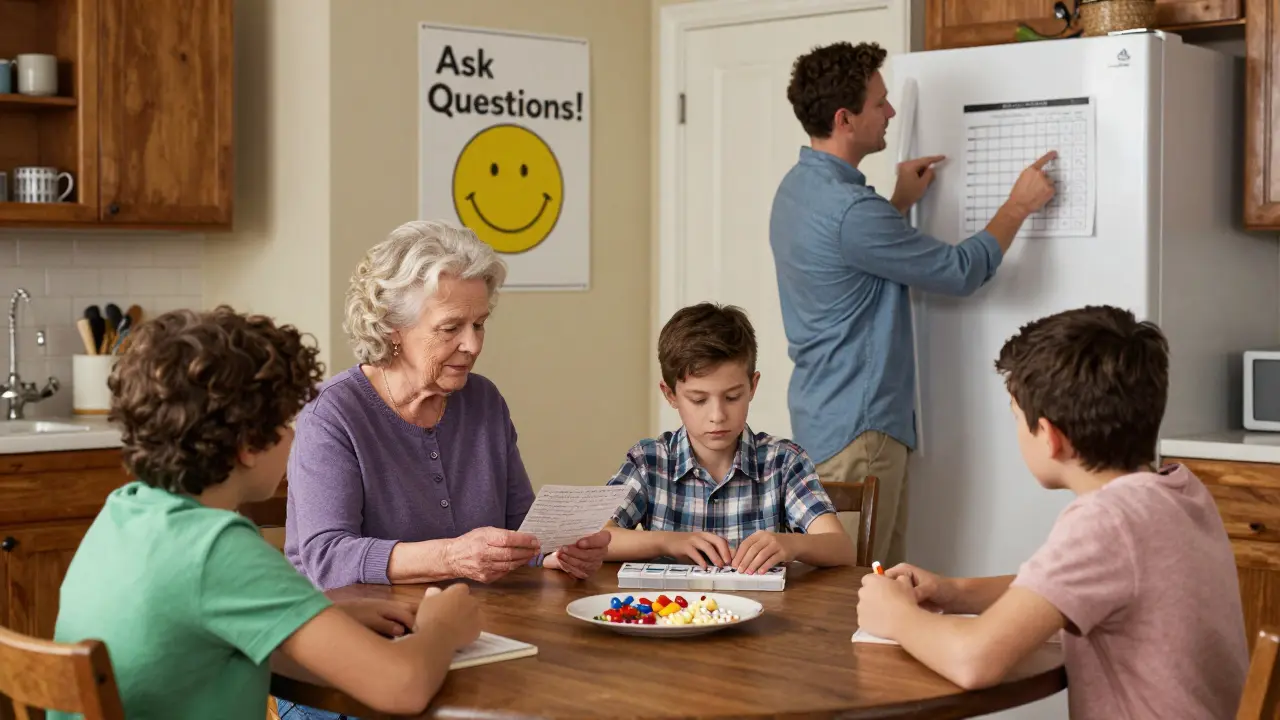
Patients need to know what they’re taking and why. A 2021 Cochrane review found that clear education improved medication adherence by 22%. That means fewer missed doses, fewer accidental overdoses, and better control of conditions like high blood pressure or diabetes. Simple tools-like pill organizers, written instructions in plain language, and video demos-make a big difference.
5. Deprescribing
Sometimes, the best thing you can do is stop a drug. Especially in older adults, long-term use of anticholinergics (used for allergies, bladder issues, or sleep) increases dementia risk. Benzodiazepines for anxiety can cause falls. The VA’s deprescribing protocols reduced anticholinergic-related ADEs by 40%. But here’s the problem: only 15% of primary care doctors routinely screen for inappropriate meds in seniors, even though guidelines like the Beers Criteria exist.
The Future of ADE Prevention
Technology is changing the game. AI-powered tools are now being tested to predict who’s at risk for an ADE before it happens. At Johns Hopkins, a machine learning model analyzed 50+ patient factors-age, kidney function, genetics, other meds, lab results-and reduced ADEs by 17% in pilot programs.Pharmacogenomics-testing your genes to see how you’ll respond to drugs-is expanding fast. Right now, only 5% of patients get tested. But by 2027, that could jump to 30%. Imagine knowing before you take a drug whether you’ll metabolize it too slowly (risking overdose) or too quickly (making it useless). That’s the future.
But tech alone won’t fix this. The WHO’s Medication Without Harm campaign reduced global harm by 18% from 2017 to 2022-but missed its 50% goal. Why? Because systems are still fragmented. Doctors, pharmacists, nurses, and patients don’t always talk to each other. Paper records still exist. Alerts get ignored because there are too many.
The real solution? Teamwork. It’s not about one tool or one person. It’s about a culture where everyone-patients included-asks questions, double-checks, and speaks up. When a pharmacist catches a dangerous interaction. When a nurse verifies the dose. When a patient says, “I’ve never taken this before-why am I on it?” That’s when ADEs stop happening.
What You Can Do Right Now
You don’t need to wait for the system to change. Here’s what you can do today:- Keep a written list of every medication you take-including vitamins, supplements, and OTC drugs. Update it every time your doctor changes something.
- Ask your pharmacist: “Could this interact with anything else I’m taking?”
- If you’re on warfarin, insulin, or an opioid, know the warning signs of danger: unusual bruising, confusion, extreme drowsiness, trouble breathing.
- Don’t be afraid to ask: “Is this drug still necessary?” Especially if you’re older or taking five or more meds.
- Use one pharmacy for all your prescriptions. That way, they can see everything you’re on.
Medications save lives. But they can also hurt you-sometimes badly. The difference between safety and harm often comes down to awareness, communication, and asking the right questions. You’re not just a patient. You’re a partner in your care. Use that power.
What’s the difference between an adverse drug reaction and an adverse drug event?
An adverse drug reaction (ADR) is a harmful response to a drug at a normal dose, like a rash or nausea. An adverse drug event (ADE) is any injury caused by a drug, including ADRs, but also mistakes like wrong doses, drug interactions, or overdoses. All ADRs are ADEs, but not all ADEs are ADRs.
Which medications are most likely to cause adverse drug events?
The top three are anticoagulants (like warfarin), diabetes drugs (especially insulin), and opioids. Warfarin causes the most hospital admissions due to its narrow safety range. Insulin leads to hypoglycemia, especially in older adults. Opioids cause overdoses, often fatal when mixed with other sedatives. These three classes account for over 70% of serious ADEs in hospitals.
Can adverse drug events be prevented?
Yes. Up to 50% of ADEs are preventable. Key strategies include medication reconciliation at every care transition, using electronic prescribing with built-in safety checks, pharmacist-led medication reviews, patient education, and deprescribing unnecessary drugs-especially in older adults. Tools like pharmacogenomic testing and AI risk predictors are making prevention even more precise.
How do drug interactions increase the risk of adverse events?
Drug interactions happen when one drug changes how another works in your body. For example, grapefruit juice can block the enzyme that breaks down statins, causing toxic levels. Antibiotics can boost the effect of blood thinners, leading to bleeding. Over 70% of adults over 65 take five or more medications, making interactions almost unavoidable without careful review. Pharmacists use databases like Lexicomp to flag these risks before a prescription is filled.
Why are older adults more at risk for adverse drug events?
Older adults are more vulnerable because their bodies process drugs differently-kidneys and liver slow down, body fat increases, and brain sensitivity rises. They’re also more likely to take multiple medications for chronic conditions, increasing interaction risks. Drugs like benzodiazepines, anticholinergics, and insulin are especially dangerous in this group. Studies show that 60% of insulin-related ER visits involve people over 65, and 40% of anticholinergic ADEs are preventable with deprescribing.


Meghan Hammack
8 January 2026Just started taking metformin and my pharmacist sat me down for 20 minutes to explain everything. Seriously, don't skip these chats. They save lives.
Pooja Kumari
9 January 2026I used to think meds were just pills you swallow and forget about-until my grandma ended up in the ER because she took her blood pressure pill with grapefruit juice. She didn’t even know it was a thing. Now I print out interaction charts and tape them to the fridge. Everyone needs this kind of info. It’s not complicated, but no one talks about it. My mom’s on six meds and I’m the only one who checks them. Why is it always on family members to be the safety net? We shouldn’t have to be pharmacists too.
Darren McGuff
10 January 2026Pharmacists in the UK have been doing MTM for over a decade. We call it ‘meds check’-free, routine, and integrated into GP visits. The US could cut ADEs in half overnight if it just paid pharmacists to do their job instead of treating them like order-takers. It’s not rocket science. It’s basic healthcare infrastructure.
tali murah
10 January 2026Oh wow, another ‘awareness’ article. Let me guess-next you’ll tell us to ‘ask questions’ and ‘keep a list.’ Groundbreaking. Meanwhile, 80% of hospitals still use fax machines to send prescriptions, and insurance companies block pharmacist consultations because they ‘cost too much.’ Your ‘proven ways’ are just Band-Aids on a hemorrhage. The system is broken. Stop pretending education alone will fix it.
Aron Veldhuizen
12 January 2026You say ADEs are preventable-but who defines ‘preventable’? If a patient forgets to take their pill, is that their fault? If a doctor prescribes based on outdated guidelines, is that negligence? If the AI flags an interaction but the clinician ignores it because there are 47 other alerts, whose responsibility is it? You’re assigning blame like a moralist, not analyzing systems. We need structural reform, not pamphlets.
Angela Stanton
13 January 2026Let’s be real-warfarin is a nightmare. INR levels are like playing Russian roulette with a thermometer. I’ve seen patients on warfarin get flagged for ‘non-compliance’ when their lab was delayed by 3 days. Meanwhile, DOACs exist and are 70% safer. Why are we still clinging to 1950s tech? #PharmaInertia
Heather Wilson
14 January 2026Insulin errors in elderly patients are not ‘accidents.’ They’re systemic failures. Nursing homes don’t have trained staff. Families aren’t educated. Pharmacies don’t follow up. And yet we blame ‘non-adherence.’ This isn’t about patient behavior-it’s about resource allocation. Stop moralizing. Start funding.
Elisha Muwanga
15 January 2026Why are we letting foreigners dictate our healthcare? The WHO’s ‘Medication Without Harm’ campaign? That’s a UN agenda. We’ve got our own problems here. Why not fix our own broken system instead of chasing global metrics? We don’t need another international report-we need American solutions.
Jerian Lewis
16 January 2026People don’t realize that taking two Tylenol extra a day for a week can kill you. I’ve seen it. No drama. No fanfare. Just liver failure. We treat meds like candy. We’re not kids anymore.
Diana Stoyanova
17 January 2026Think about this: every pill you take is a conversation between your body and a molecule you can’t see. We treat medicine like a magic wand, but it’s more like a scalpel-powerful, precise, and dangerous in the wrong hands. The real question isn’t how to prevent ADEs-it’s how we stopped seeing patients as partners in this dance. We outsourced our health to professionals and forgot how to listen to our own bodies. Maybe the cure isn’t more tech… it’s more presence.
Alicia Hasö
19 January 2026My sister is a nurse in a rural hospital. She once spent her lunch break calling a patient’s pharmacy because the prescription was handwritten and illegible. That’s not healthcare-that’s triage with a pen. We need e-prescribing everywhere, not just in fancy cities. If you’re in a small town, you shouldn’t have to gamble with your life because your doctor still uses a fountain pen.
Gregory Clayton
21 January 2026Oh here we go again. ‘Ask questions!’ ‘Keep a list!’ Yeah, because that’s what’s stopping fentanyl from killing 100k people a year. You think a grandma with dementia is gonna keep a spreadsheet of her meds? This whole post is feel-good nonsense for people who don’t live in the real world. Fix the supply chain. Stop letting cartels and pharma CEOs run the show. That’s the real problem.
Maggie Noe
23 January 2026Deprescribing is the quiet revolution no one talks about. My aunt was on 12 meds at 82. After a pharmacist reviewed them, they cut it to 5. She stopped falling. Her memory improved. She started gardening again. No one told her those meds were making her worse. We treat aging like a disease to be medicated, not a phase of life to be supported. We need to stop treating symptoms and start treating people.
Catherine Scutt
23 January 2026If you’re taking more than 5 meds, you’re probably being overmedicated. Period. Your doctor isn’t evil-they’re just overwhelmed. But you’re the one paying the price in dizziness, falls, and confusion. Time to be the adult in the room.
Ashley Kronenwetter
24 January 2026Thank you for this comprehensive overview. The data is clear, the risks are well-documented, and the solutions are actionable. I hope this reaches every primary care provider, pharmacist, and patient. Safety isn’t optional-it’s foundational.