
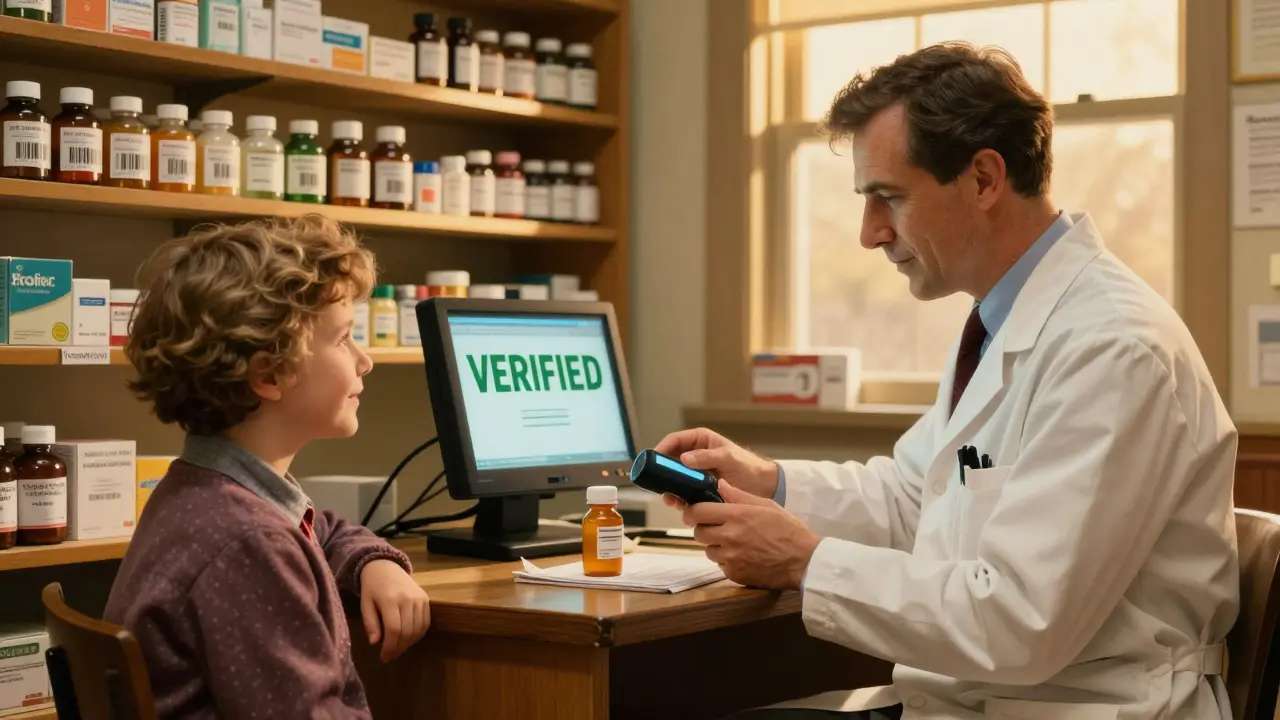

Every year, millions of prescription drugs move through a complex network of manufacturers, wholesalers, and pharmacies before reaching your medicine cabinet. But what if one of those pills wasn’t made in a licensed lab? What if it was fake? The DSCSA track-and-trace system was built to stop exactly that.
What Is the DSCSA, and Why Does It Matter?
The Drug Supply Chain Security Act (DSCSA) is a federal law passed in 2013 to protect Americans from counterfeit, stolen, or contaminated drugs. Before this law, there was no national standard for tracking prescription medications. Each state had its own rules-or none at all. That meant a drug sold in California might have a completely different paper trail than the same drug sold in Texas. Criminals took advantage of this patchwork, slipping fake pills into the system with little risk of detection. The DSCSA changed all that. It created a single, uniform system that requires every prescription drug package to have a unique identifier. That identifier includes the National Drug Code (NDC), a serial number, the lot number, and the expiration date. These details are printed in both human-readable text and machine-readable barcode format. This way, anyone in the supply chain-manufacturers, distributors, pharmacies-can scan and verify a drug’s authenticity in seconds. The goal? To make it nearly impossible for counterfeit drugs to slip through. According to FDA estimates, this system has already reduced counterfeit drug incidents by 95% in the channels where it’s fully implemented.How the DSCSA Track-and-Trace System Works
The system doesn’t rely on guesswork. It uses three key pieces of electronic data for every drug package:- Transaction Information (TI): This includes the product’s name, NDC, serial number, lot, and expiration date.
- Transaction History (TH): A record of every time the drug changed hands-from manufacturer to wholesaler to pharmacy.
- Transaction Statement (TS): A digital certification that the drug was legally distributed and hasn’t been tampered with.
What Changed on November 27, 2024?
The big deadline arrived on November 27, 2024. That’s when the DSCSA reached its final phase: full electronic, interoperable, unit-level traceability. Before this date, some companies still used paper records or partial systems. After this date, every prescription drug sold in the U.S. must be tracked electronically from manufacturer to dispenser. This meant pharmacies had to upgrade their systems. Many had to replace old scanners, install new software, and train staff to handle electronic verification. Manufacturers had to ensure every pill bottle, blister pack, and vial had a unique serial number. Even repackagers-like those who put generic pills into unit-dose containers for nursing homes-had to comply. The FDA gave a one-year stabilization period after the deadline to let systems work out kinks. But there’s no grace period for fake drugs. If a product can’t be verified, it’s treated as illegitimate-and must be quarantined immediately.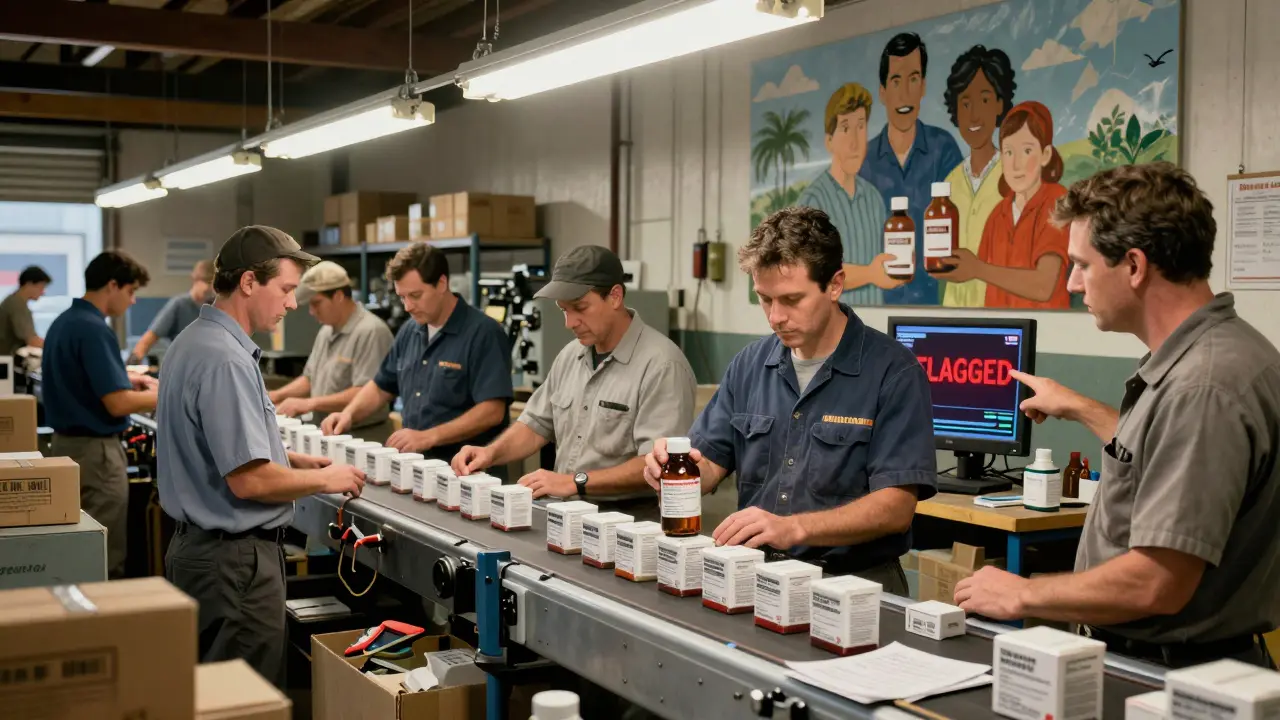
Real-World Impact: Successes and Struggles
The results are clear in places where the system is fully adopted. CVS Health reported a 75% drop in suspect product investigations after rolling out automated verification. McKesson, one of the largest distributors, processed over 1.2 billion serialized transactions in 2023 with 99.98% accuracy. But not everyone had an easy path. Independent pharmacies struggled the most. A 2023 survey by the National Community Pharmacists Association found that 68% of small pharmacies said DSCSA compliance was their biggest technology challenge. The average cost to upgrade systems? Around $185,000 per pharmacy. Some had to delay purchases, cut staff hours, or even shut down temporarily while they got their systems online. Data mismatches were another major issue. If a wholesaler’s system recorded a serial number as “ABC123” but the manufacturer’s system said “abc123,” the verification failed. These small errors caused delays of two to three days in getting drugs to pharmacies. Many companies had to hire specialists just to fix these data mismatches. The biggest winners? Large pharmacy chains and manufacturers. They had the budget, the IT teams, and the leverage to demand compliance from their suppliers. By Q2 2023, 98% of manufacturers and 95% of wholesalers were fully compliant. But only 72% of pharmacies were-highlighting the gap between big players and small ones.How It Compares to Other Countries
The European Union has its own system, the Falsified Medicines Directive (FMD). It’s stricter in some ways: it requires anti-tampering seals on every package and a central database that stores all serial numbers. The U.S. doesn’t do that. Instead, the DSCSA relies on direct communication between trading partners. No central database. No single point of failure. That’s both a strength and a weakness. Without a central system, there’s less risk of a hack or crash taking down the entire network. But it also means each company has to build its own connections. If one pharmacy uses SAP software and another uses TraceLink, they still need to talk to each other. That’s why interoperability-making different systems work together-has been the biggest technical challenge.
What Happens When a Fake Drug Is Found?
When a pharmacy scans a package and the system says “not verified,” it doesn’t just ignore it. The law requires immediate action:- The product must be physically isolated-no one can sell or use it.
- The pharmacy must notify the manufacturer and the FDA.
- The manufacturer must investigate: Was this a data error? A stolen shipment? Or a counterfeit?
- If confirmed as fake, the FDA issues a public alert and begins tracing where else the product went.




trudale hampton
20 March 2026This is actually one of those quiet wins in healthcare that nobody talks about but saves lives every single day. 🙌 Glad we finally got this system rolling. No more guessing if your pills are legit.
Timothy Olcott
21 March 2026YESSSS!!! Finally some real progress 😎👏 The feds actually did SOMETHING right for once. Fake pills? Nah. We got this. 🇺🇸💥
Desiree LaPointe
21 March 2026Oh, so now we’re celebrating bureaucratic compliance like it’s a TED Talk? 🤦♀️ The system’s overengineered, costs small pharmacies a fortune, and still relies on humans typing serial numbers correctly. One typo and the whole chain collapses. Brilliant.
shannon kozee
22 March 2026The 99.98% accuracy stat is wild. That’s better than most banking systems.
Thomas Jensen
24 March 2026You know who really benefits from this? Big Pharma. They’re the ones who *made* the system. Meanwhile, small pharmacies get crushed. This isn’t safety-it’s consolidation. The FDA’s just helping them buy out mom-and-pop shops. 🤔
matthew runcie
25 March 2026It’s not perfect but it’s working. That’s more than most federal programs can say.
Shaun Wakashige
26 March 2026Lmao imagine spending $185k just to scan a pill bottle. We’re rich. 😴
Solomon Kindie
28 March 2026So we built a system that prevents counterfeits but ignores that most drugs are overpriced because of the same supply chain. The real problem is profit, not pills. We’re fixing symptoms, not disease
Nicole James
30 March 2026Wait… what if the manufacturers themselves are the ones slipping in fake batches? And the system just… verifies their own data? Isn’t that like letting a fox guard the henhouse? 🤨
Nishan Basnet
30 March 2026This is impressive. In India, counterfeit meds are still a huge issue. Seeing how the US is tackling this gives me hope. The tech is solid-now we just need global adoption.
Allison Priole
1 April 2026I just think it’s beautiful that we’re finally trying to make sure people don’t die because someone cut corners. I mean, imagine your grandma takes a fake pill for her heart and it’s just sugar. That’s not a mistake. That’s a crime. And now, at least, we have a shot at stopping it. 🫶
Paul Cuccurullo
2 April 2026The level of coordination required here is nothing short of monumental. From manufacturers to corner pharmacies-every single link had to adapt. This is a quiet triumph of American logistics. The world should take note.
Johny Prayogi
2 April 2026This system is 🔥. I work in pharmacy tech and let me tell you-when the scanner says ‘verified,’ it feels like a victory. 🎉 No more panic calls from nurses wondering if their meds are safe. We’ve got peace of mind now.
Casey Tenney
3 April 2026If you’re still complaining about cost, you’re part of the problem. Lives > balance sheets.
Desiree LaPointe
3 April 2026And yet, the FDA still allows unverified OTC drugs to flood the market. Funny how the ‘life-saving’ system stops at prescriptions, huh? 🤷♀️